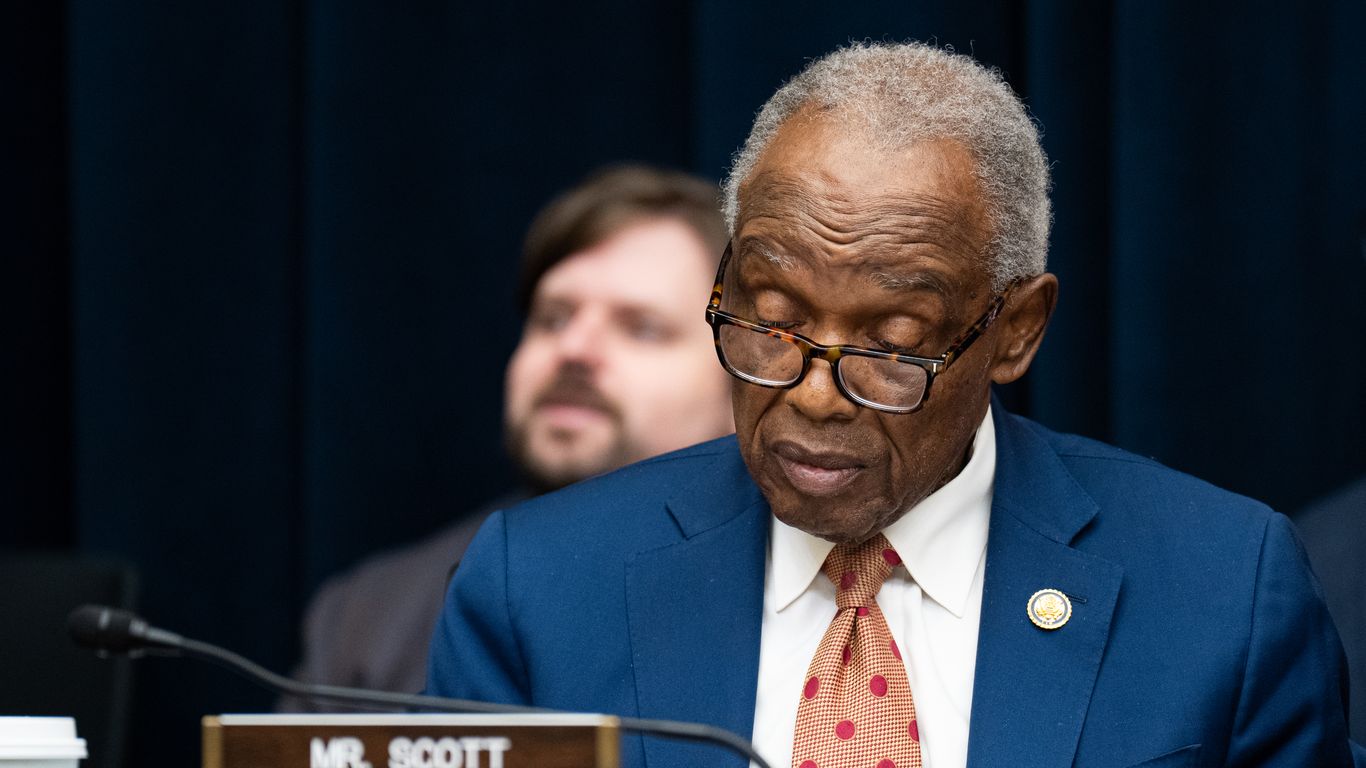
Rep. David Scott has died in office, making him the fifth member of Congress to die during this congressional session and the fourth Democrat. The article includes statements from Sen. Jon Ossoff and primary challenger Everton Blair praising Scott's service to Georgia's 13th Congressional District. The news is factual and political in nature, with no direct market-moving financial implications.
The market impact here is not on the vacancy itself but on the sequencing risk it creates for the majority math in the House. Any open seat that leans Democratic increases the probability of a tighter chamber through the next fundraising and committee cycle, which raises the value of every marginal vote on appropriations, debt-limit brinkmanship, and executive oversight. The second-order effect is higher legislative volatility rather than a durable policy shift: coalitions get harder to hold, and that tends to widen the range of outcomes for defense, healthcare, and regulated industries over the next 3-9 months.
The most important near-term catalyst is candidate quality. If the district produces a consolidating successor, the market will quickly fade the event; if the field fragments, it can lift the odds of a competitive primary and reduce donor efficiency for the party heading into the next cycle. That matters because fundraising is a finite resource: money redirected to defend an otherwise safe seat is money not spent on offensive races, which can indirectly improve the odds of a divided Congress and lower the probability of aggressive fiscal or regulatory changes.
The consensus trap is treating this as purely local and transitory. The broader setup is that governance fragility itself becomes an asset-class input: a narrower governing majority raises policy noise but also caps the ability to push structural reforms. That is modestly supportive for sectors that dislike rate/inflation surprises or sector-specific intervention, while leaving event-driven names vulnerable to headline-driven swings around committee assignments and district-specific succession dynamics.
From a timing perspective, the biggest move is likely in the next 1-4 weeks as the successor field crystallizes; the medium-term trade is over the next 1-2 quarters if this contributes to a more disordered legislative calendar. Tail risk is that the vacancy accelerates a broader perception of governing instability, which could steepen risk premiums around Washington-sensitive assets if paired with other political shocks.
AI-powered research, real-time alerts, and portfolio analytics for institutional investors.
Request TrialOverall Sentiment
neutral
Sentiment Score
-0.10
