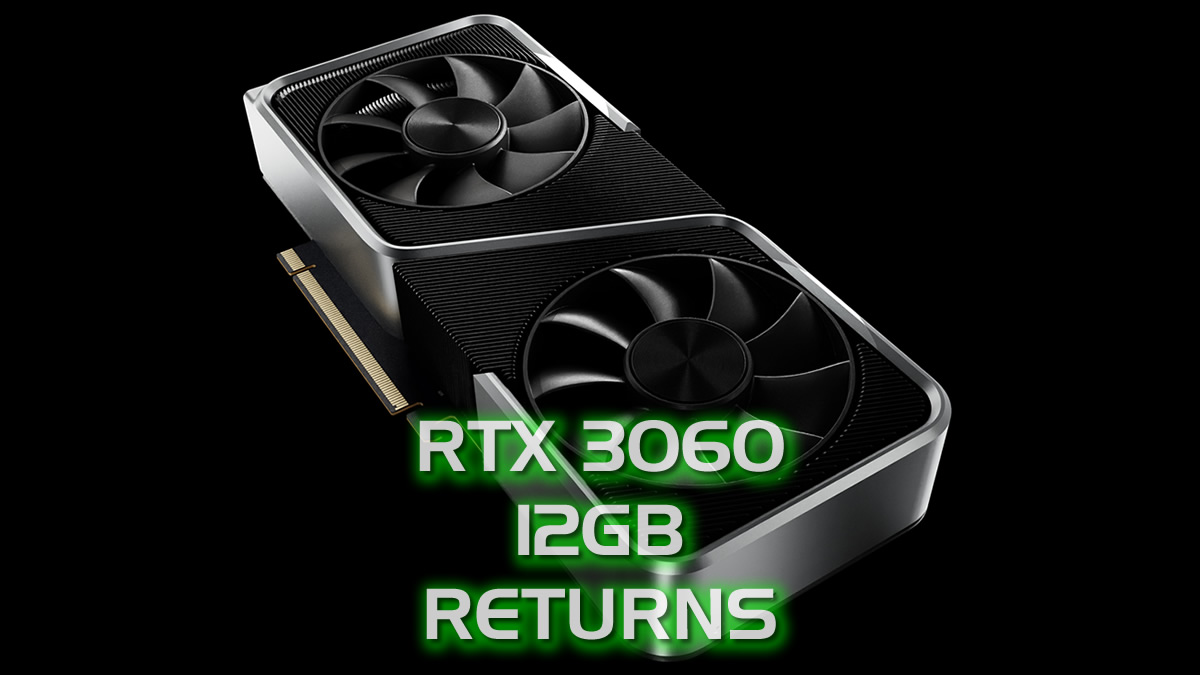
Nvidia’s RTX 3060 12GB may resume production in June, with partner manufacturing from Colorful, ASUS, MSI and Galax and mass production reportedly starting in July. The move appears aimed at addressing relatively limited GPU supply and meeting demand for a lower-priced card with 12GB of VRAM, rather than signaling a new product cycle. The article frames the decision as a supply-chain adjustment that could modestly affect the GPU market, but it is still unconfirmed.
This is less about a nostalgic SKU revival and more about Nvidia choosing the lowest-opportunity-cost supply path to satisfy a price-sensitive end market without touching constrained next-gen capacity. If true, it implies demand at the low/mid end is still strong enough that Nvidia prefers monetizing an older design rather than letting board partners lose share to AMD or to channel inventory arbitrage. The second-order effect is that this can temporarily flatten the value proposition gap in discrete GPUs: buyers who only care about VRAM-per-dollar may delay upgrading to newer RTX tiers, which could cap attach rates for the newest feature stack in the near term.
For NVDA, the earnings impact is likely immaterial, but the strategic signal matters: it suggests the company is prioritizing unit coverage over mix purity. That usually helps defend ecosystem share, but it can also be read as an admission that premium demand elasticity is not sufficient to absorb all available capacity at attractive pricing. TSM should be largely insulated; the read-through is actually positive for foundry allocation discipline because older-node volume can satisfy incremental demand without cannibalizing leading-edge wafers.
The key risk is that this becomes a tell for broader GPU supply tightness extending beyond a one-off tactical refresh. If retail/channel pricing for the revived part lands too close to newer cards, the move could backfire by compressing ASPs and creating a weak-signal overhang for the entire consumer GPU channel over the next 1-2 quarters. The contrarian view is that the market may be underestimating how value-conscious the gaming buyer has become: a 'good enough' 12GB card can be a volume winner even in 2026 if newer alternatives remain meaningfully more expensive.
AI-powered research, real-time alerts, and portfolio analytics for institutional investors.
Request DemoOverall Sentiment
neutral
Sentiment Score
0.10
Ticker Sentiment
