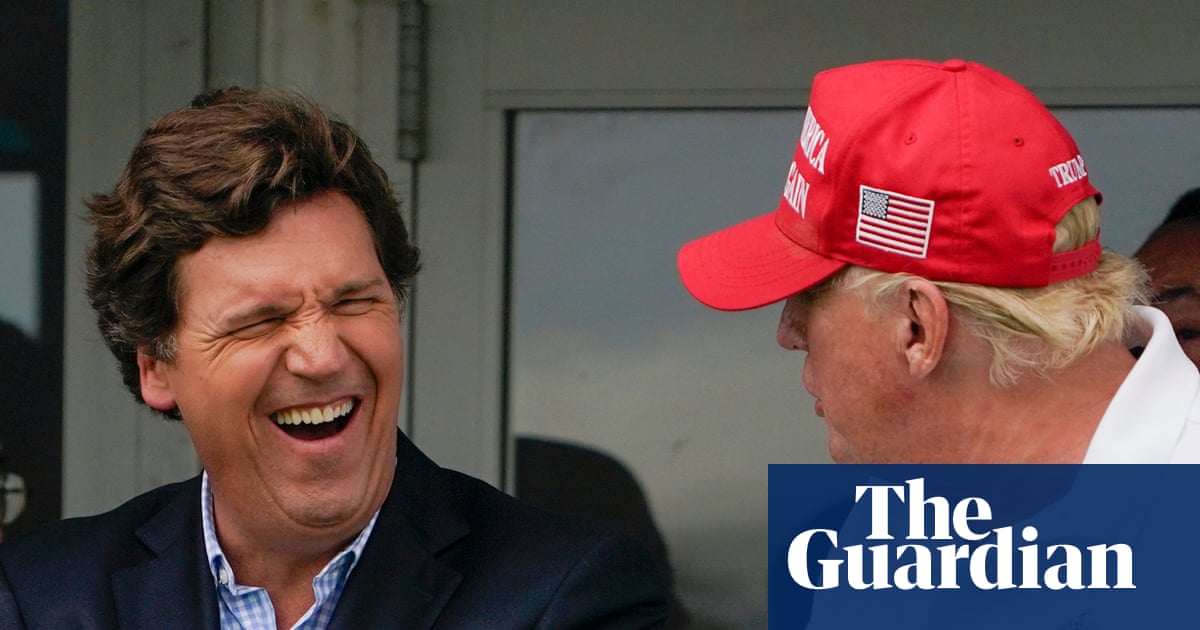
Tucker Carlson publicly said he is "tormented" by his support of Donald Trump and apologized for misleading people, marking a notable break with the president after years of advocacy. He also reiterated criticism of Trump’s Iran policy and described the president’s language on Iran as "vile," while resurfaced texts showed he privately called the first Trump presidency a "disaster." The article is primarily political/media commentary with limited direct market impact.
This is less about one commentator’s credibility than about an accelerating fracture inside the right-wing attention complex. When the loudest validators begin publicly distancing themselves from the movement’s core sponsor, it raises the cost of compliance for adjacent creators, advertisers, and platform partners that monetize MAGA engagement. The second-order effect is a more fragmented media ecosystem: audience share may hold, but monetization quality deteriorates as brands, sponsors, and distribution partners price in reputational volatility rather than raw reach.
For NMAX, the direct P&L impact looks negligible, but the governance signal matters. If high-profile right-of-center personalities become more willing to posture as independent critics, the competitive edge shifts toward platforms that can aggregate ideological conflict without overreliance on one personality. That benefits diversified news/creator platforms and hurts single-figure franchises whose traffic is personality- or outrage-dependent.
The geopolitical angle is the real catalyst risk. Intra-MAGA disagreement over Iran suggests that foreign-policy messaging inside the administration may become less coherent, increasing headline volatility around defense, energy, and risk assets on a days-to-weeks horizon. Markets should not assume the critique is purely rhetorical: if the base perceives betrayal on war/Christianity issues, it can force sharper policy zigzags, which raises option-implied vol across defense and oil-linked names.
Consensus may be underestimating how quickly a public schism can migrate from culture-war theater into commercial consequences. The likely first order move is not a broad selloff, but a repricing of political-media optionality: more dispersion in individual creator economics, more skepticism toward “MAGA-aligned” monetization, and a higher probability of short-lived spikes in volatility around any new Trump-media confrontation.
AI-powered research, real-time alerts, and portfolio analytics for institutional investors.
Request TrialOverall Sentiment
mildly negative
Sentiment Score
-0.15
Ticker Sentiment
