
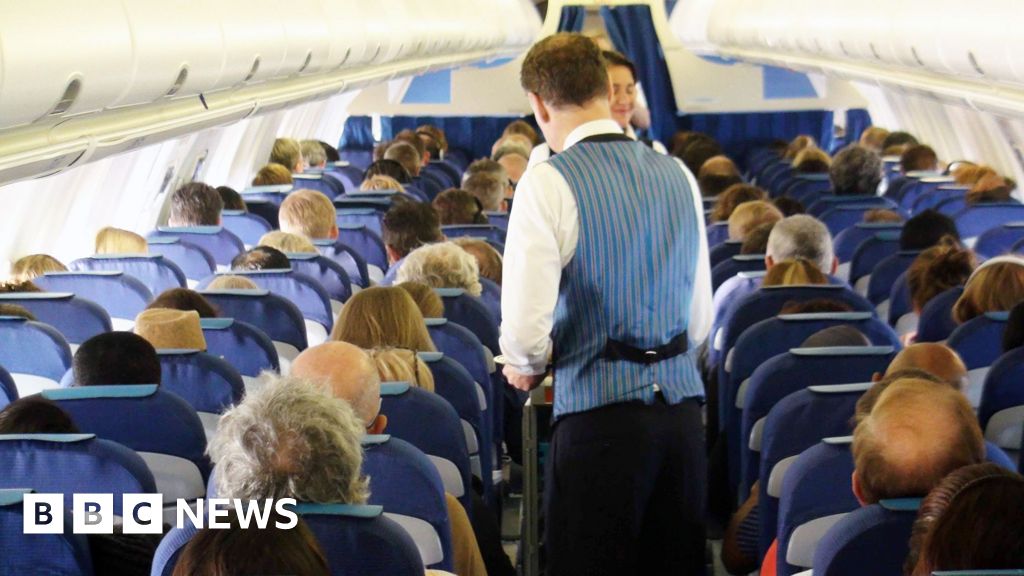
The UK government is considering a national blacklist that would let airlines share information on disruptive passengers and potentially ban them across carriers. Officials say the proposal could be implemented without changing current law, but GDPR and passenger-data sharing remain unresolved issues. The move has support from Jet2 and Airlines UK, and is aimed at reducing flight disruptions rather than altering airline fundamentals.
This is structurally bearish for the cheapest, most price-sensitive carriers because it raises the expected cost of disruption management without adding revenue. The near-term economic impact is not the blacklist itself, but the operational layer beneath it: extra screening, appeals, staff training, and data-sharing compliance will add fixed costs while doing little to change unit revenue. Large network airlines can absorb that overhead more easily; ultra-low-cost carriers with thinner margins and higher ancillary reliance are the most exposed to even modest increases in turnaround friction and customer-service expense.
The second-order effect is that the policy may reduce one specific source of irregular operations, which is quietly bullish for on-time performance metrics and compensation costs across the sector. That matters most into peak travel periods, when disruption already compounds across aircraft rotations and crew legality. If a national scheme is actually implemented, the biggest beneficiary could be the industry as a whole through lower incident frequency, but the first-order market reaction will likely overweight the legal/privacy burden and underweight the longer-run reduction in operational noise.
The key risk is that implementation drags for months, and GDPR/data-sharing constraints become the gating item. That means the headline is tradable, but the fundamental effect is probably not; if the proposal weakens into a voluntary industry memo, the earnings impact disappears while the compliance overhang remains. The article also reinforces that enforcement is now a management-quality issue: carriers with stronger gate discipline, incident logging, and customer-experience infrastructure should see lower disruption leakage and better brand resilience.
Contrarian view: the market may be too quick to treat this as negative for airlines, when the distributional impact is likely very uneven. This is more a governance and operations story than a demand story, and if anything it supports premium carriers versus discount names by reducing the reputational penalty from chaotic passengers. The investable edge is in relative performance, not outright sector direction.
AI-powered research, real-time alerts, and portfolio analytics for institutional investors.
Request TrialOverall Sentiment
neutral
Sentiment Score
-0.05
Ticker Sentiment
