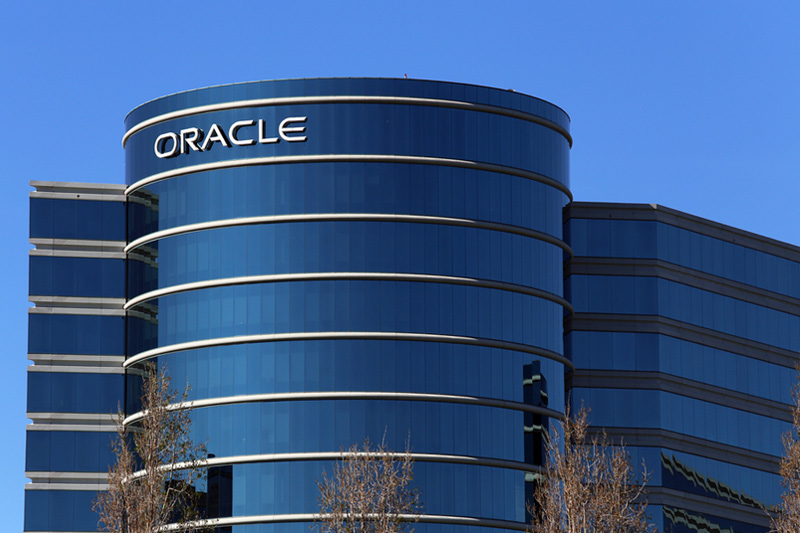
Investors are demanding higher premiums on a $14 billion bond offering tied to an Oracle-backed 1 gigawatt data center in Michigan, reflecting concern over repayment risk if the project is delayed or Oracle exits the lease. The facility is part of a $300 billion OpenAI agreement for 4.5 gigawatts of computing power, but the news underscores rising market anxiety around AI-related debt and Oracle’s aggressive spending plans. The issue is more likely to affect Oracle and AI infrastructure financing than the broader market.
The market is starting to price AI infrastructure not as a growth story but as a balance-sheet stress test. When financing costs rise faster than utilization ramps, the equity value migrates from “option on AI demand” to “residual claim on a levered project,” which compresses multiples even if the headline revenue opportunity remains intact. For ORCL, the second-order issue is not just project execution; it is that any funding friction can force a re-rating of the broader AI-capex narrative, raising the hurdle rate for every vendor exposed to hyperscaler-style buildouts.
Credit is the more interesting transmission channel here than equity. If investors demand more spread on one marquee AI-linked deal, that immediately bleeds into pricing for adjacent data-center and power-infrastructure financings, especially names with long-duration lease structures and limited hard collateral. That favors asset-light sellers of picks-and-shovels over the capital-intensive owners/operators, while suppliers of power, cooling, networking, and land may keep better negotiating power as the pool of lenders gets more selective.
The contrarian angle is that the market may be overestimating near-term default risk and underestimating sponsor support optionality. Large strategic customers cannot afford multi-quarter delays in AI capacity without risking model training and inference bottlenecks, so they may tolerate richer lease terms or softer economics to keep projects moving. But that same dynamic argues the equity upside is capped: if the project is so strategically important that it must be rescued, the incremental value is often transferred to lenders and contractors rather than the common stock.
Catalyst-wise, the next 1-3 months matter most: spreads on this bond will signal whether this is an isolated case or the first visible crack in AI credit. If additional deals price wider, ORCL and peers tied to aggressive capex should underperform on any growth-day rally; if financing clears with minimal concessions, the stock can re-trade on reduced execution fear, but the longer-term lesson will still be higher capital intensity and lower terminal margins.
AI-powered research, real-time alerts, and portfolio analytics for institutional investors.
Request TrialOverall Sentiment
mildly negative
Sentiment Score
-0.15
Ticker Sentiment
