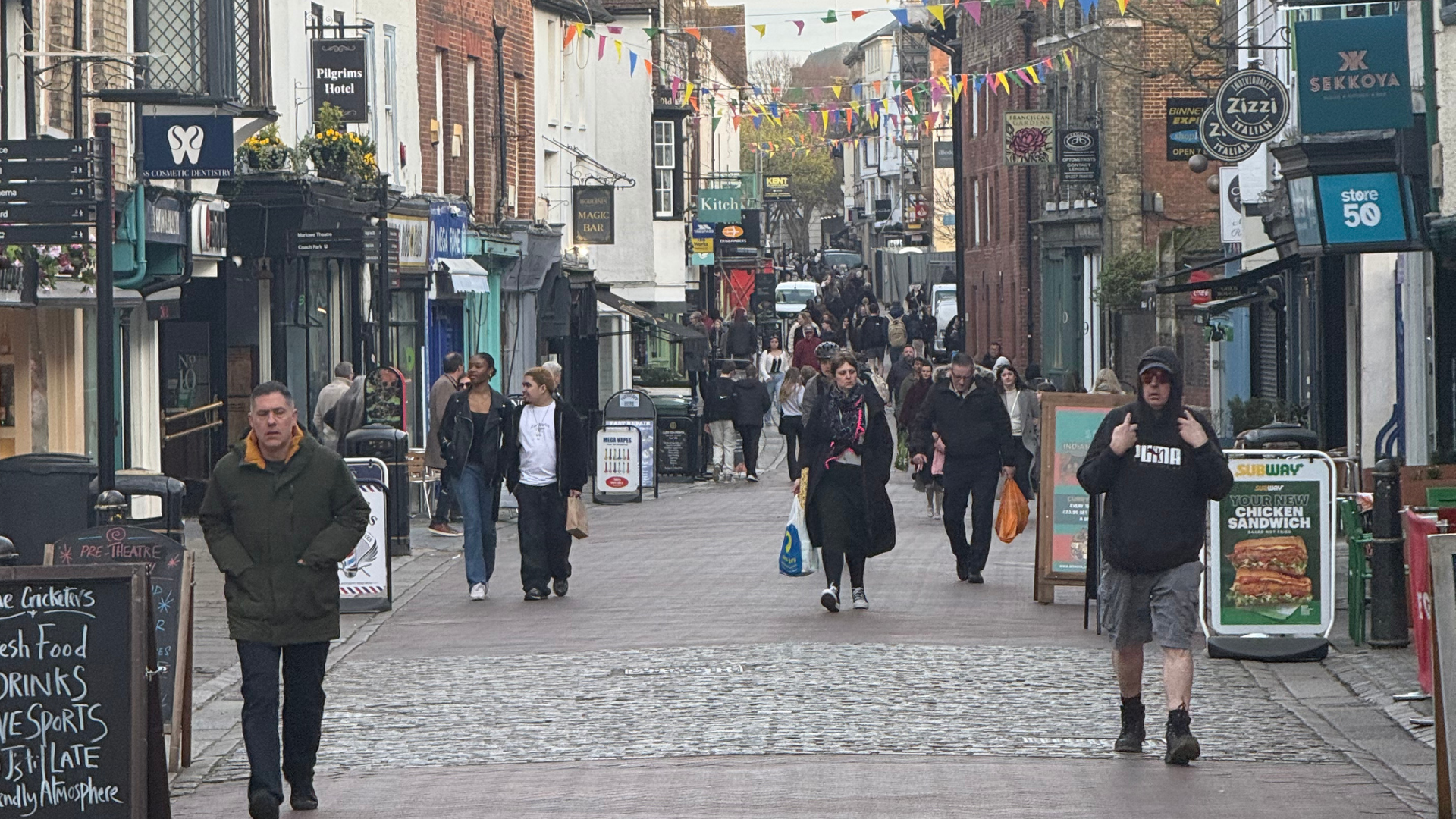
Two deaths and 27 hospitalisations have been linked to a suspected meningitis B outbreak in Canterbury, and roughly 10,000 people have been contacted as possible close contacts. Public health teams have deployed pop-up vaccine clinics and provided preventative antibiotics, while local consumer activity is down sharply (coffee shop takings ~40% down, a B&B lost ~33% of weekly revenue, a food truck sold 10 vs ~200 typical meals, ~95% drop). Events and bookings have been cancelled or capacity-limited, creating localized pressure on travel, leisure and hospitality revenues.
This is a localized demand shock driven by behavioral risk rather than supply disruption; the real value at stake is the duration of avoidance behavior across discretionary daytime and evening consumption. If fear-driven footfall suppression persists beyond the immediate containment window (2–6 weeks), smaller hospitality operators and event-driven revenues will see concentrated cashflow stress that can cascade into higher short-term borrowing, deferred rent, and weaker Q2 trading vs consensus. Localized outbreaks are asymmetric: losses to high-frequency cash businesses (cafes, food trucks, B&Bs, small venues) occur almost instantly while any incremental revenues to vaccine makers or primary care providers are distributed across large global sales bases and show up in guidance only modestly.
Second-order impacts to watch: accelerated cancellations compress back-of-house inventory turnover for perishable suppliers and increase working-capital strain on micro-franchises, raising regional credit risk for short-term lenders and merchant acquirers. Events and festivals that reduce concession capacity shift margin from F&B operators to fixed-cost venues and insurers — if cancellations cluster, expect a lumpier revenue stream for municipal service providers and regional REITs. Politically, heavy-handed national measures would be the largest negative catalyst — conversely, rapid, visible vaccination campaigns and clear public-health messaging shorten the disruption window and produce a sharp reversion in consumer activity.
Tactically, the trade-off is timing: the market often misprices the duration of behavioral shock. A sensible opportunistic posture is to hedge downside to small-cap UK leisure into any near-term kneejerk selloff and to selectively buy short-dated optionality on public vaccine/diagnostics names that will re-rate on even modest positive narrative flow (clinic rollouts, stock replenishment contracts). Monitor contact-tracing volumes and local NHS messaging as high-frequency indicators — a sustained drop in newly contacted individuals or a shift to “no further action” guidance is the earliest sign the revenue shock is rolling over.
AI-powered research, real-time alerts, and portfolio analytics for institutional investors.
Request DemoOverall Sentiment
mildly negative
Sentiment Score
-0.30
