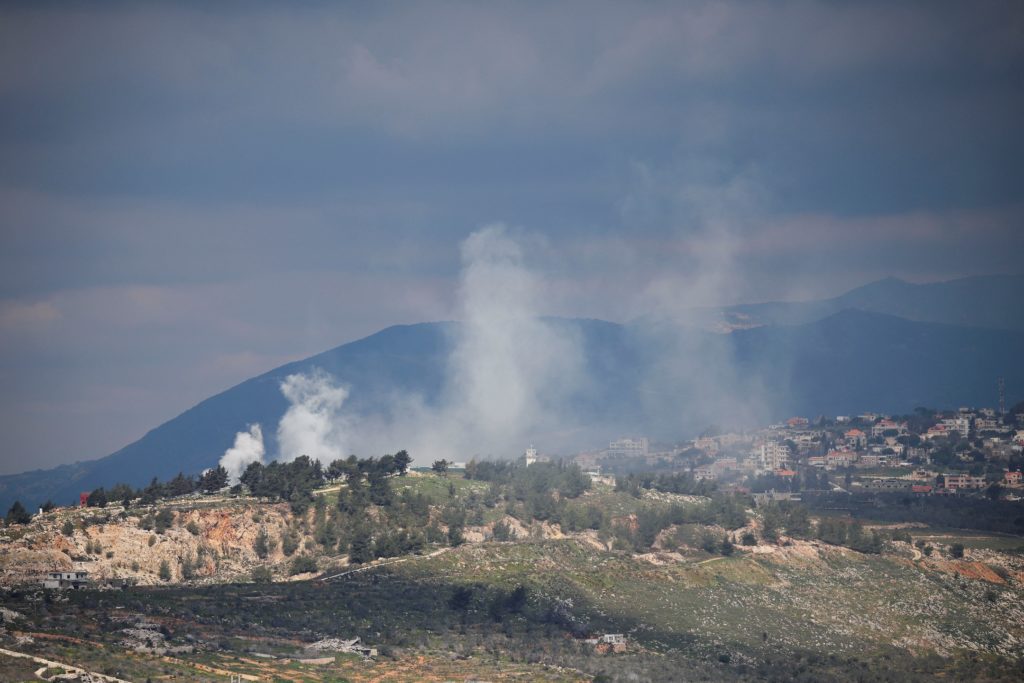
Israel launched heavy airstrikes in Beirut and initiated a ground incursion into southern Lebanon after Hezbollah, citing support for Iran, began firing on Israel; Hezbollah deputy chief Naim Qassem declared the group "will not surrender." The Lebanese government reports nearly 85,000 people displaced amid escalating cross-border hostilities, signaling a meaningful humanitarian and security shock in the region. For investors, the situation raises short-term risk-off dynamics for regional assets and potential spillovers to broader emerging-market sentiment and defense-related sectors if the conflict further intensifies.
Market structure: Immediate winners are defense contractors (RTX, LMT, GD) and energy producers (XOM, CVX, XLE) as geopolitical risk lifts defense spending expectations and upward pressure on oil; losers include airlines (AAL, LUV), regional EM equities (EEM) and tourism/reinsurance sectors where near-term revenue loss and claims rise. Supply/demand: a measurable supply risk in crude and shipping insurance can push Brent +10-30% in weeks if Strait of Hormuz or shipping lanes are disrupted, improving pricing power for integrated producers and refiners while tightening global oil product availability.
Risk assessment: Tail risks include direct Iran involvement or closure of strategic chokepoints (probability 10-30+) that would drive extreme oil/gold moves and equity dislocations; immediate (days) expect risk-off flows into USD/Treasuries (TLT) and gold (GLD), short-term (weeks–months) expect elevated volatility and credit spread widening (HYG), long-term (quarters+) could lock in higher defense budgets if conflict persists. Hidden dependencies: marine insurance, shipping reroutes, and commodity hedging positions can amplify price moves; catalysts to watch are casualty thresholds (>500), airspace/shipping closures, OPEC statements, and US military posture.
Trade implications: Tactical: establish 2–3% long positions in RTX and LMT (scale over 1–4 weeks) and 1–2% long in XOM or XLE; buy 1% GLD as tail hedge. Hedging: purchase SPX 2-month 5% OTM puts (~1–1.5% notional) or VIX call exposure to protect equity risk for 30–60 days. Reduce EM equity beta by trimming EEM exposure by 3–5% and cut airline exposure (AAL, LUV) by 2–4%. Entry/exit: initiate hedges within 48–72 hours, scale defense/energy longs over 2–6 weeks, take profits if Brent reverses >15% from peak or a ceasefire is declared within 14 days.
Contrarian angles: Consensus may overprice escalation—historical parallel 2006 Lebanon showed markets normalize within months absent wider regional war; if escalation stays contained, defense/energy rallies can mean-revert 20–40% from peak. Mispricings: EM sell-offs can create 4–8% re-entry windows for high-quality EM exporters if Brent-driven inflation stabilizes. Watch triggers: Brent >$100, casualty counts >500, or Iran-engagement signals; these justify moving from hedges to larger directional positions.
AI-powered research, real-time alerts, and portfolio analytics for institutional investors.
Request TrialOverall Sentiment
strongly negative
Sentiment Score
-0.60
