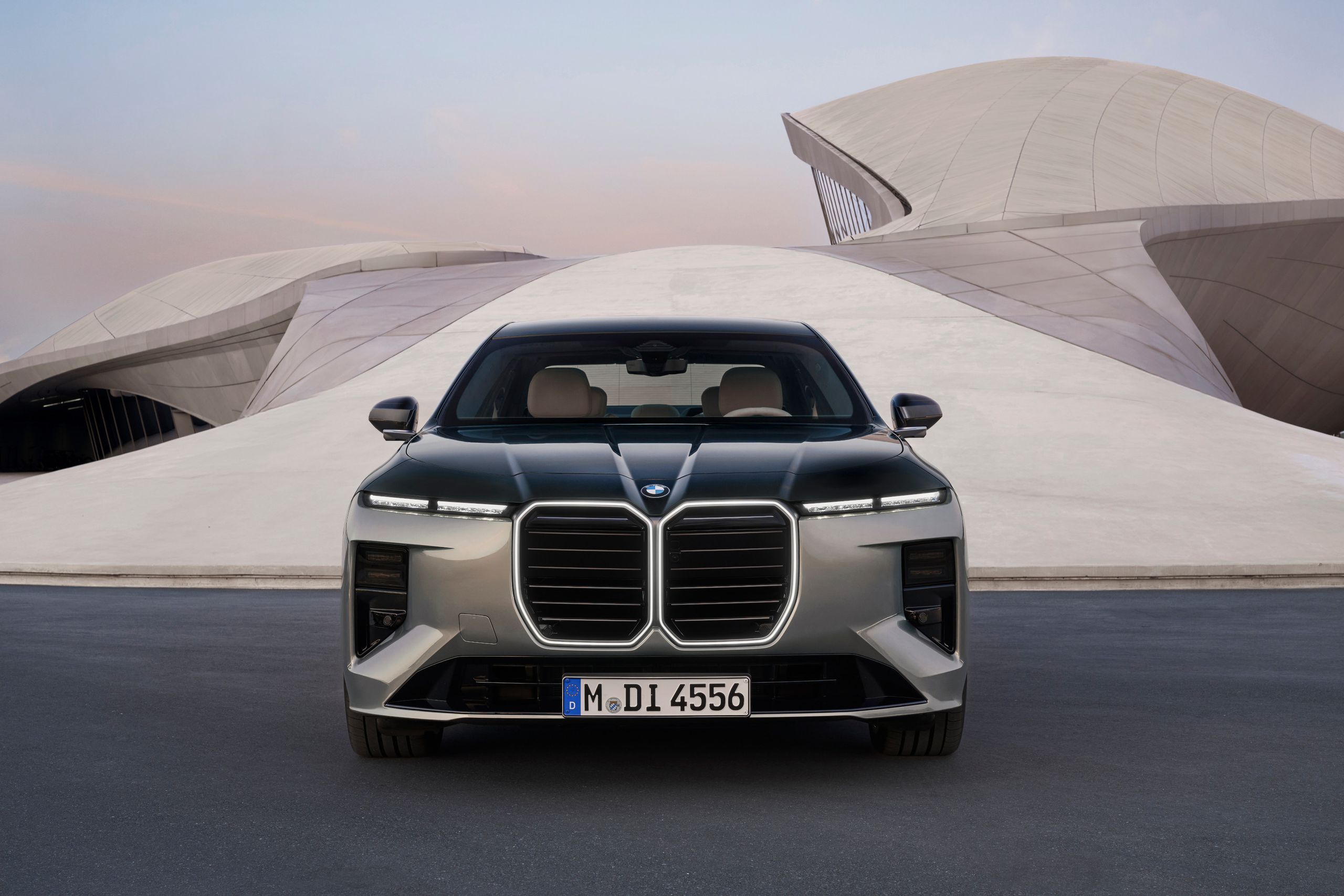
BMW’s new 7 Series receives a major tech-heavy update, including an 8K 31.3-inch Theatre Screen with Dolby Atmos, Panoramic Vision across the windscreen, Alexa+ integration, and expanded driver-assistance features. The lineup starts with all-electric i7 variants, led by the i7 50 xDrive with up to 452 miles of range and the i7 M70 xDrive with 680 hp and 0-62 mph in 3.8 seconds. The article frames the launch as a showcase of flagship innovation rather than a material financial event.
BMW is signaling that the premium-luxury battle is moving from drivetrain prestige to software-defined cabin differentiation. That favors suppliers with content per vehicle leverage—high-end displays, audio, ambient lighting, sensors, and compute—more than legacy powertrain vendors. The second-order effect is margin defense: in an EV-heavy flagship, incremental feature density can offset some pricing pressure, but only if BMW can convert those options into take-rate rather than one-off press-release theater.
The risk is that this is a value-destructive escalation game. Chinese OEMs have already normalized the expectation that rear-seat entertainment, multiple screens, and intelligent cockpit features are table stakes; BMW may be catching up just as the novelty premium is commoditizing. If consumers view this as feature bloat, repair costs and warranty complexity rise while residual values can suffer, especially for the first model years of heavily digitized luxury vehicles.
From a timing standpoint, the market will likely reward the narrative over the next 1-3 months if launch enthusiasm supports order books and helps BMW defend share in China and the Middle East. But over 6-18 months, the more important question is whether this architecture improves software monetization and upsell cadence or simply inflates BOM and service risk. The contrarian read is that the most compelling beneficiaries are not BMW itself, but the suppliers whose content becomes non-optional once the cockpit turns into the main selling point.
A broader catalyst to monitor is whether Mercedes responds with another round of tech escalation, which would compress returns across the German luxury segment. If that arms race accelerates, the winners become the best-equipped component and software enablers, while the automakers absorb the capex and warranty burden.
AI-powered research, real-time alerts, and portfolio analytics for institutional investors.
Request DemoOverall Sentiment
mildly positive
Sentiment Score
0.25
