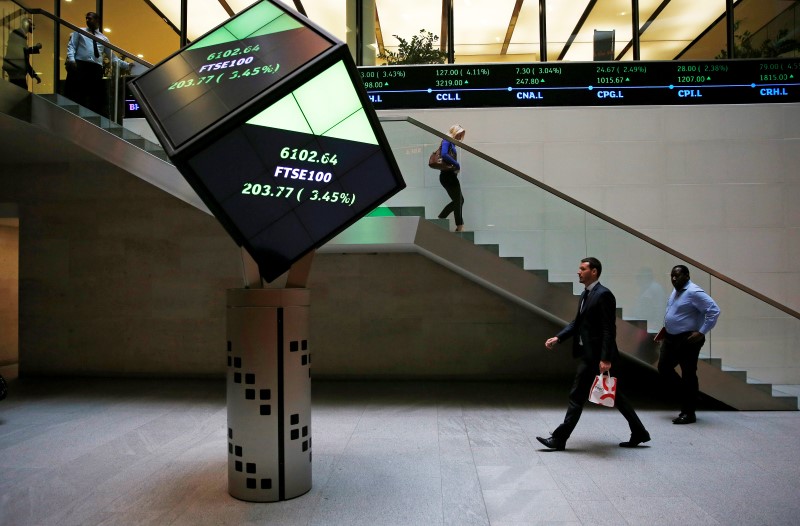
UK stocks fell 0.65% as decliners outnumbered advancers 1095 to 692, with Antofagasta down 4.43% and Barratt Redrow off 3.98%. Commodities were mixed but volatile: June crude oil jumped 5.86% to $87.43 and Brent rose 5.49% to $95.34, while June gold fell 1.25% to $4,818.69. FX was steady, with GBP/USD unchanged at 1.35 and EUR/GBP flat at 0.87.
The move in crude looks less like a clean demand signal and more like a geopolitical volatility repricing: energy is bid while gold is sold, which is consistent with the market shifting from crisis hedge into growth/terms-of-trade sensitivity. That matters because UK indices are mechanically exposed to this rotation through energy weights, while domestic cyclicals with fuel/logistics intensity face a margin headwind within days if the oil bid holds. The equity tape is telling us investors are not pricing a broad risk-on regime; they are pricing a narrower winners/losers split around commodity shock transmission.
Shell is the cleanest direct beneficiary, but the second-order winner is upstream capital discipline: a sustained move toward the high-$80s Brent area improves buyback sustainability and lowers equity duration for integrateds relative to renewables-heavy peers. The underappreciated loser is UK consumer-discretionary and construction-linked names, where transport, materials, and financing costs can pressure earnings revisions over the next 1-2 reporting cycles. If energy prices stay elevated for even 4-8 weeks, expect dispersion to widen between producers with flexible capex and domestic businesses with no pricing power.
The contrarian risk is that this is a headline-driven spike rather than a durable supply reset; those moves often fade once traders realize physical disruptions are not immediate. If diplomatic progress reduces tail risk, crude can give back a meaningful fraction quickly, and the high-beta energy equity bid will unwind faster than the commodity because positioning is crowded. Gold’s weakness reinforces that this may be a short-volatility event rather than a structural inflation impulse.
For SHEL specifically, the market may still be underestimating how much a sustained Brent move improves near-term capital returns, but the asymmetry is better expressed with options than cash equity because geopolitics can reverse sharply. The key watchpoint is whether crude holds above the recent breakout level for multiple sessions; if it does not, this is likely a tradable squeeze rather than a durable repricing.
AI-powered research, real-time alerts, and portfolio analytics for institutional investors.
Request DemoOverall Sentiment
mildly negative
Sentiment Score
-0.15
Ticker Sentiment
