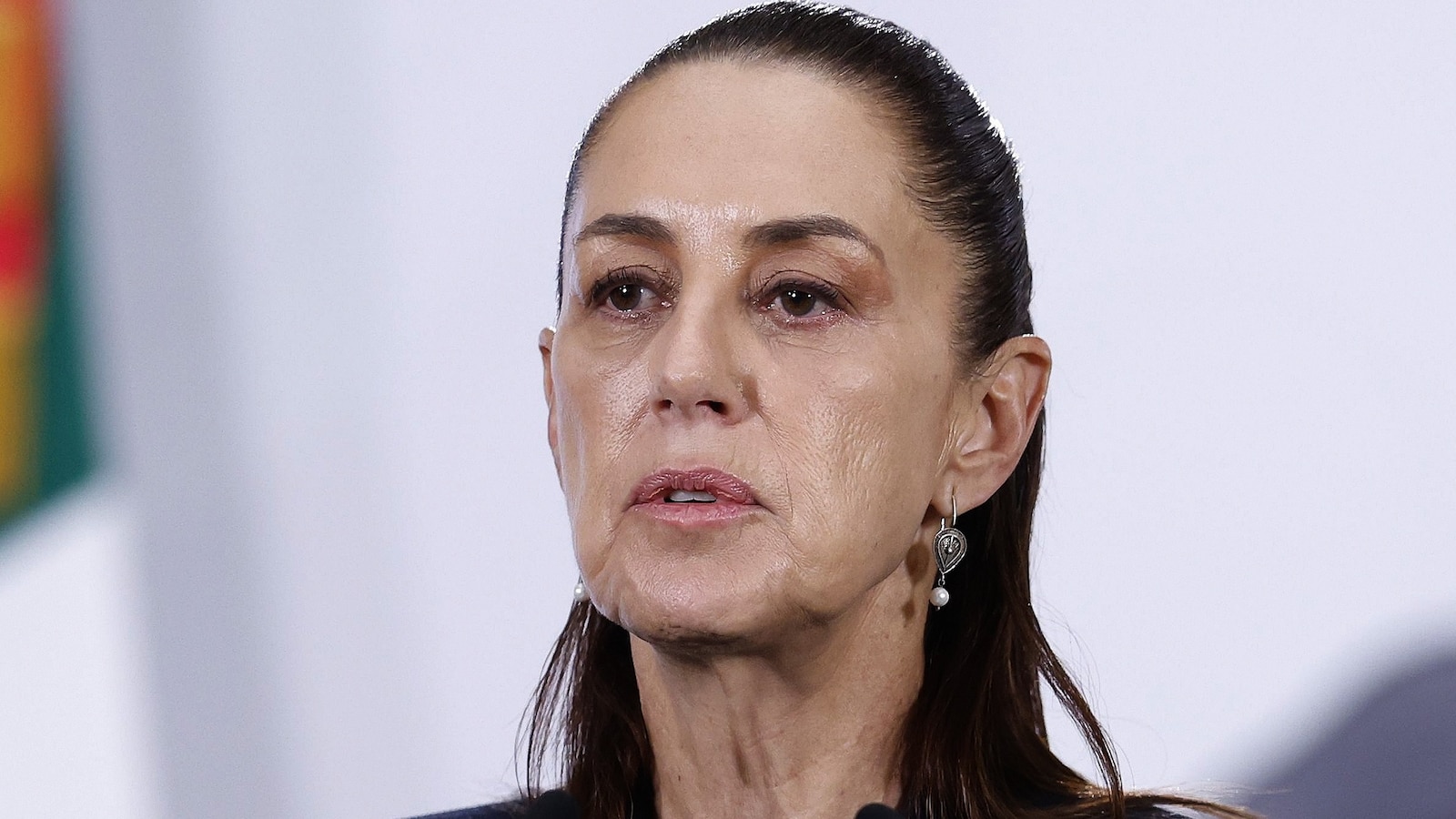
Four people, including two U.S. Embassy staffers, died in a vehicle accident in Chihuahua after returning from an operation targeting clandestine drug labs. Mexican President Claudia Sheinbaum said the operation may have lacked required federal approval and that her government is reviewing possible National Security Law violations. The U.S. and Mexico are coordinating on the incident, but the story is primarily diplomatic and legal in nature with limited direct market impact.
This is less a single-incident headline than a stress test of U.S.-Mexico security coordination. The key second-order risk is bureaucratic: if federal approval standards tighten, cross-border intelligence sharing and field training can slow materially for months, reducing the effectiveness of anti-cartel operations even if rhetoric remains cooperative. That tends to benefit the operationally nimble actors on the ground, while hurting firms exposed to Mexican rule-of-law premia and any asset whose thesis depends on seamless north-south security collaboration.
The market implication is not an immediate macro shock but a gradual widening of geopolitical and legal risk premia around Mexico-linked assets. The most vulnerable names are transport, nearshoring, and infrastructure beneficiaries that rely on stable corridor security and predictable permitting; even a modest increase in convoy delays, security escorts, or federal oversight can trim margins and extend project timelines. Over a 3-6 month horizon, the bigger effect may be on investment committees: headline risk can stall capex decisions before it shows up in earnings.
The contrarian view is that the market may overestimate the chance of a true policy rupture. Both governments have incentives to compartmentalize the incident because a public confrontation would weaken anti-narcotics capacity and raise domestic political costs. If the story resolves as a local procedural violation rather than a sovereignty breach, the risk premium should fade quickly, making any broad selloff in Mexico-exposed assets a better fade than a trend.
Tail risk is a forced centralization of security operations in Mexico City, which would slow state-level coordination and create temporary gaps in enforcement around cartel infrastructure. That would likely be bullish for groups that profit from higher logistics/security spend, but bearish for industrials and real assets tied to border efficiency. The event is also a reminder that legal/regulatory friction can move faster than fundamentals in cross-border trades, especially when U.S. personnel are involved.
AI-powered research, real-time alerts, and portfolio analytics for institutional investors.
Request TrialOverall Sentiment
moderately negative
Sentiment Score
-0.45
