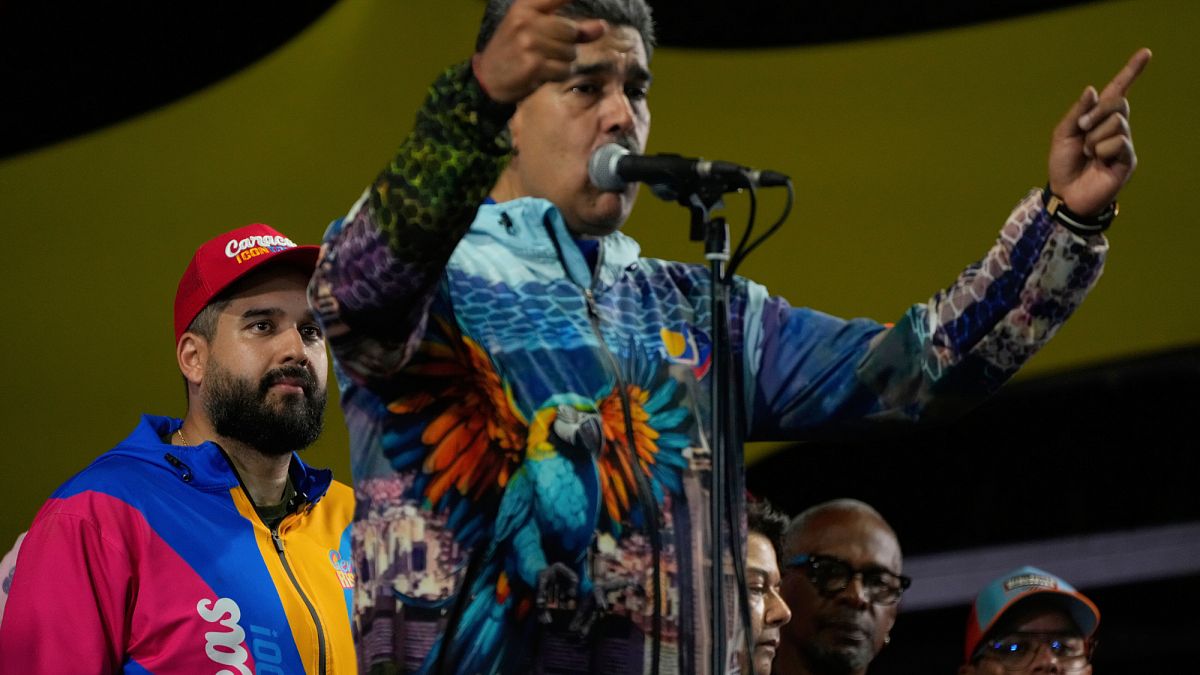
Venezuela is holding elections for parliamentarians, local governors, and the governor of the disputed Guayana Esequiba region, amidst opposition calls for a boycott and government repression, including dozens of arrests. A recent poll indicates low voter turnout, with a majority of those likely to vote favoring the ruling party; the opposition views participation as legitimizing Maduro's regime, while the ruling party anticipates a landslide victory, similar to past elections. The US has expressed support for Venezuelan opposition leaders, further complicating the political landscape.
Venezuela is conducting elections for parliamentarians, local governors, and notably, the governor of the disputed Guayana Esequiba region, under a cloud of significant political tension and government repression. Opposition calls for a boycott are prominent, fueled by dozens of arrests preceding the vote, including high-profile opposition figures. A Delphos poll conducted between April 29 and May 4 indicated a low propensity to vote, with only 15.9% of respondents stating they were highly likely to participate; of this segment, 74.2% intended to vote for the ruling United Socialist Party of Venezuela or its allies, versus 13.8% for non-boycotting opposition candidates. The opposition largely views participation as a means of legitimizing President Maduro's administration, which has reportedly arrested over two thousand individuals since the July 2024 presidential elections. Conversely, the ruling party anticipates a decisive victory, mirroring outcomes in previous regional elections irrespective of opposition involvement. The U.S. has demonstrated support for opposition leaders, with Secretary of State Marco Rubio recently meeting a group who had sought refuge in a diplomatic compound. Despite the electoral activity, the results are expected to have minimal impact on the daily lives of Venezuelans due to the highly centralized nature of Maduro's government, which has historically circumvented opposition gains, such as by establishing the Constituent Assembly after the opposition won the National Assembly in 2015. The inclusion of Guayana Esequiba in the elections adds a layer of geopolitical complexity, given the longstanding territorial dispute with Guyana.
AI-powered research, real-time alerts, and portfolio analytics for institutional investors.
Overall Sentiment
moderately negative
Sentiment Score
-0.45
