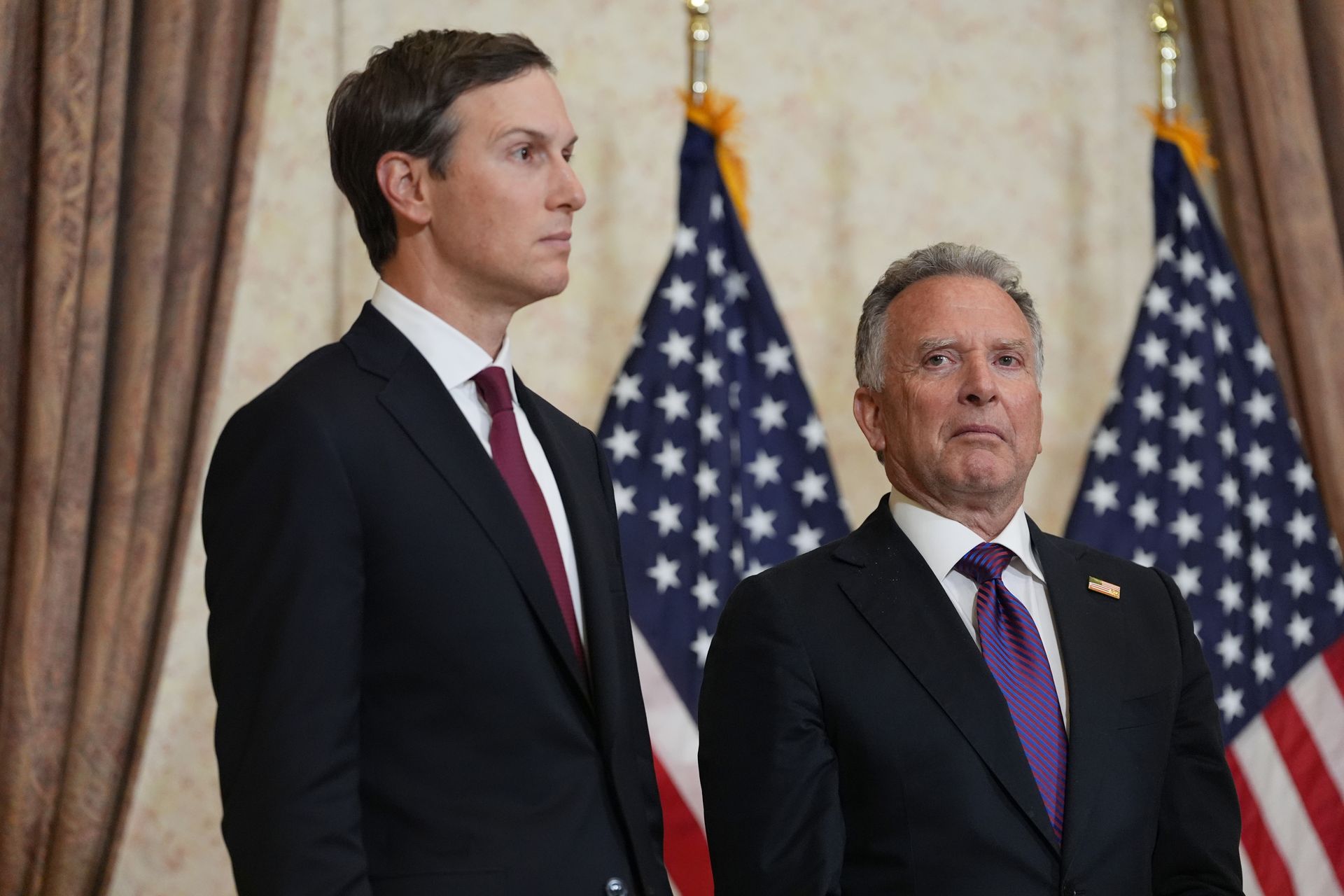
Rep. Jamie Raskin opened a sweeping inquiry into Jared Kushner’s dual role as a Trump peace envoy and head of Affinity Partners, citing a potential conflict of interest tied to Saudi, Emirati and other foreign capital. The request seeks communications and financial records related to Kushner’s diplomacy on Ukraine, the Middle East and Iran, but no immediate regulatory or market action is expected. The article is primarily a political/governance risk story with limited direct market impact.
This is less a near-term market event than a governance overhang that raises the probability of policy-making being litigated through disclosure, ethics, and congressional subpoenas. The first-order impact is reputational, but the second-order effect is a higher discount rate applied to any asset or sector that depends on opaque sovereign capital flows, especially Gulf-linked private markets, defense-adjacent Middle East exposures, and companies seeking regulatory favor in foreign-policy sensitive areas. The key market implication is not that capital stops moving, but that deal timelines lengthen and counterparty diligence tightens.
The real risk is to private markets sponsors and growth companies with fundraising exposure to sovereign wealth funds. If even a modest share of LP relationships in Gulf capital becomes politically radioactive, managers will spend more time on structure, reporting, and optics, which can slow deployment and compress fundraising velocity over the next 2-4 quarters. That is a subtle but meaningful headwind for smaller GPs that rely on one or two anchor sovereigns; larger managers with diversified LP bases should be insulated and may even gain share.
A second-order geopolitical channel is that any perceived conflict in U.S. diplomacy makes negotiated outcomes in Ukraine, Iran, and the broader Middle East harder to price. That tends to increase tail risk premia in energy, defense, and shipping, but only if the inquiry evolves into sustained media and congressional scrutiny rather than a one-off headline. If the story fades or is institutionally bottlenecked, the tradeable impact likely mean-reverts quickly because the current administration appears willing to treat the role as informal and non-binding.
The contrarian view is that this may be underpriced as a process risk but overestimated as a policy risk. Markets usually care more about whether decisions change than whether conflicts exist; unless there is evidence of altered sanctions, aid, or investment screening outcomes, the direct macro impact remains limited. The higher-probability opportunity is to fade overreaction in the broad market while selectively positioning for a higher-risk-premium regime in politically sensitive private assets and Middle East-exposed names.
AI-powered research, real-time alerts, and portfolio analytics for institutional investors.
Request TrialOverall Sentiment
mildly negative
Sentiment Score
-0.15
