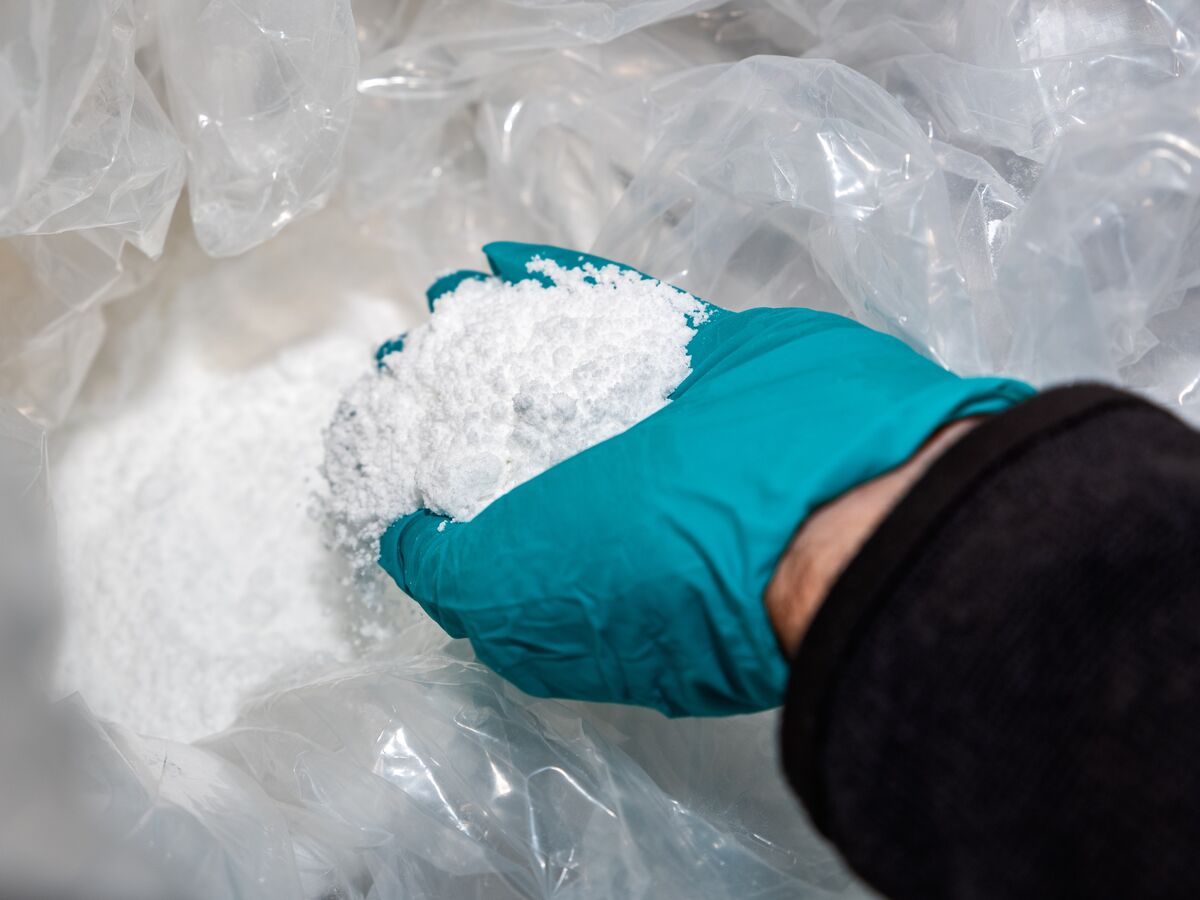
The USGS estimates the Appalachian region holds 2.3 million metric tons of undiscovered, economically recoverable lithium, enough to replace 328 years of U.S. imports at last year’s pace. The resource could support about 130 million electric vehicles or 1.6 million grid-scale batteries, highlighting major domestic supply potential for critical minerals. The news is broadly positive for U.S. lithium supply security but is unlikely to move markets immediately.
This is more a strategic optionality event than an immediate supply shock. The market should treat Appalachian lithium as a long-dated call on domestic mining, permitting reform, and midstream processing buildout — the real bottleneck is not resource availability but conversion of geology into battery-grade output. That means the first-order beneficiaries are likely not pure-play miners, but the engineering, equipment, water-treatment, rail/logistics, and specialty chemicals names that get paid during feasibility, permitting, and pilot phases.
For EV supply chains, the second-order effect is improved bargaining power for US cathode/anode and cell makers if even a fraction of the deposit becomes commercial over the next 5-10 years. That can pressure the premium embedded in import-dependent precursor supply chains, especially if policymakers attach tax incentives or defense-production style financing to domestic critical minerals. The flip side is that any credible domestic lithium pipeline can cap long-duration lithium-price expectations, which is structurally negative for high-beta lithium equities that are already pricing a scarcity premium.
The contrarian view is that this headline may be over-read as near-term bearish on imports. A 2.3Mt undiscovered estimate does not solve grade heterogeneity, water constraints, environmental opposition, or capex intensity; those frictions usually add years, not quarters. In the meantime, global lithium pricing will still be set by Chinese conversion capacity and South American brine economics, so the immediate trade is less about commodity collapse and more about multiple compression in the most crowded “scarcity” names.
Catalyst path matters: over the next 3-6 months, expect a policy narrative trade; over 12-24 months, expect permitting, state incentives, and offtake announcements to determine whether this becomes real supply or just a valuation overhang. Tail risk to the bearish lithium thesis is a federal or state-backed fast-track that unlocks domestic processing faster than the market expects. Tail risk to the bullish domestic-supply thesis is that the discovery proves too expensive or too slow to matter before the next global supply cycle turns.
AI-powered research, real-time alerts, and portfolio analytics for institutional investors.
Request DemoOverall Sentiment
moderately positive
Sentiment Score
0.35
