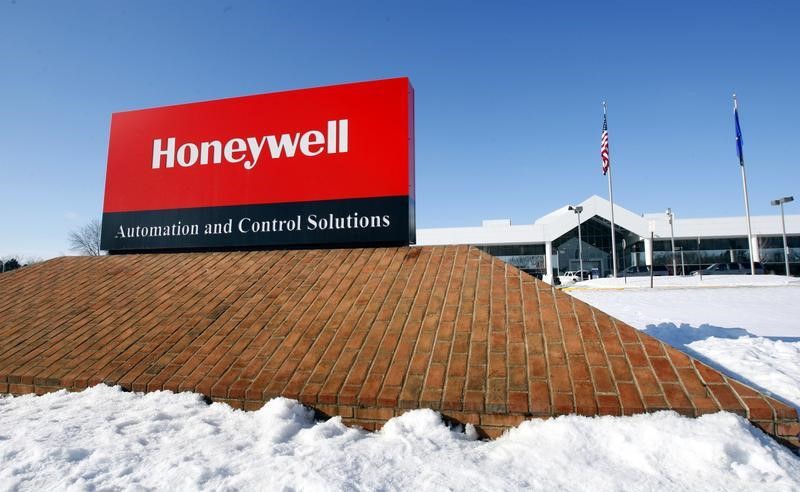
Honeywell is advancing a major portfolio reset, with its aerospace spin-off targeted for early July 2026 and a planned S-1 for Quantinuum that analysts say could unlock more than $10 billion in value, or about $14 per share. Q4 2025 adjusted EPS of $2.59 slightly beat the $2.56 consensus, but 2026 guidance is cautious and Industrial Automation remains a key weak spot. The stock also supports the case with a 2.13% dividend yield, 15 straight years of dividend increases, and multiple analyst price targets as high as $293.
HON is setting up as a classic catalyst stack: a hard dated separation, a potential asset monetization, and a management team using portfolio simplification to re-rate a conglomerate that the market still treats as one risk bucket. The key second-order effect is that the spin should force investors to underwrite the remaining industrial portfolio on a cleaner margin/organic growth basis, which can expose both the quality of automation cash flows and the drag from stranded costs; that tension usually creates volatility before it creates upside.
The more interesting piece is that the aerospace spin may actually improve the quality of the remaining earnings more than the headline multiple suggests. Once the higher-beta, more cyclical aerospace earnings are removed, the market will likely focus on whether industrial automation can compound at even mid-single digits; if it cannot, the valuation ceiling on the stub remains lower than bulls assume. In that sense, the spin is not just a value-unlock event — it is a forced diagnostic on whether HON’s core industrial portfolio deserves a “premium quality” multiple or simply a cleaner discount.
Quantinuum is the underappreciated swing factor. A public market comp for quantum could reset how investors think about HON’s embedded growth assets, but the bigger near-term implication is capital allocation: monetization could become a source of buybacks or debt reduction, which would support the stub during the post-spin transition. The contrarian risk is that the market is already pricing the narrative before execution risk is resolved; if first-quarter guidance confirms soft automation demand and the company starts talking about stranded costs in a more explicit way, the stock could de-rate even as strategic headlines stay positive.
Net: this is positive over 6-12 months, but likely messy over the next 1-2 quarters. The cleanest expression is not an outright long into the event, but a structures-based way to own upside while respecting execution risk.
AI-powered research, real-time alerts, and portfolio analytics for institutional investors.
Request DemoOverall Sentiment
mildly positive
Sentiment Score
0.35
Ticker Sentiment
