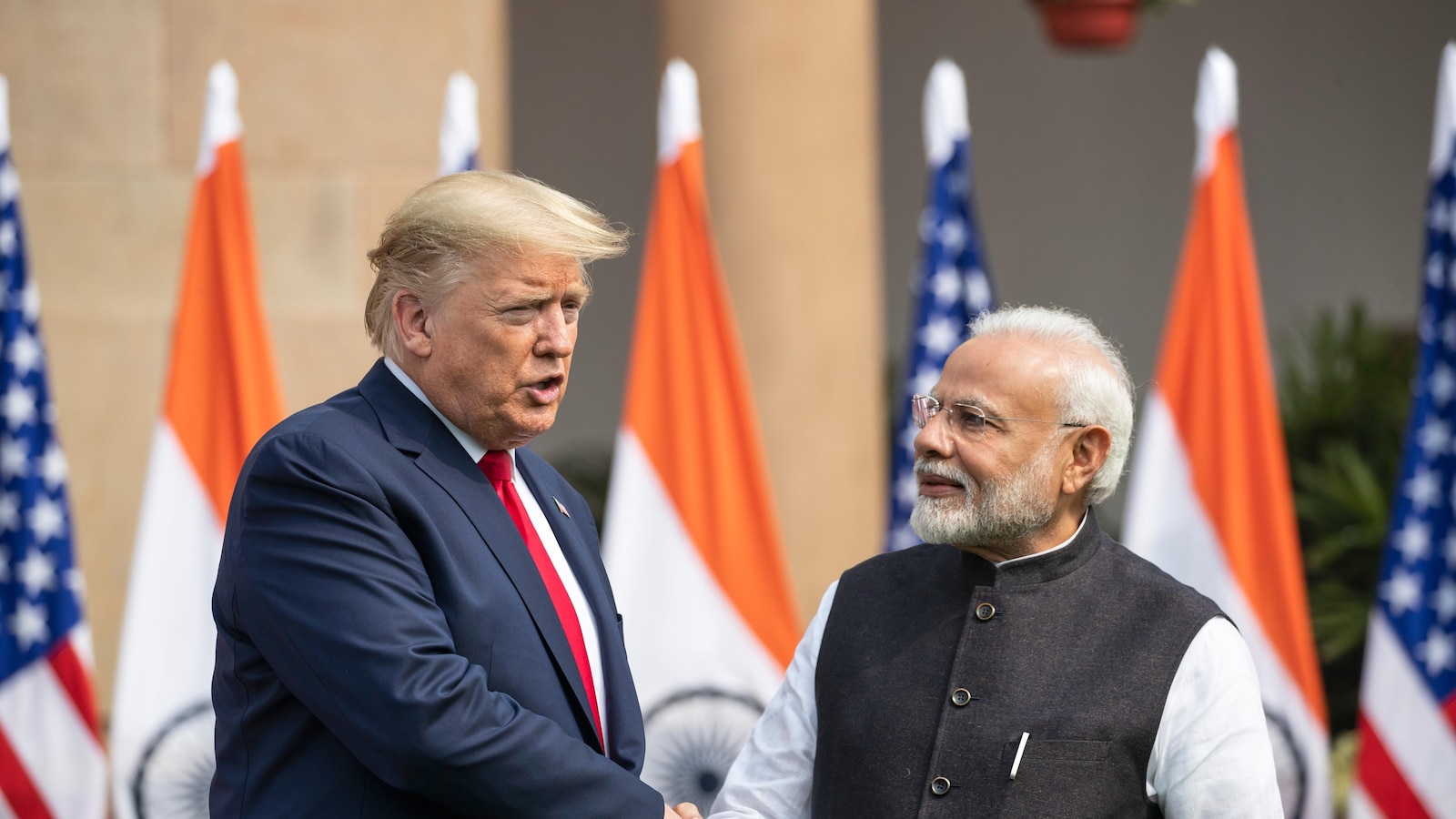
The U.S. announced a trade understanding with India that cuts an import tariff to 18% from 25% (removing an additional penal component that had pushed combined tariffs as high as ~50%) while the U.S. says India will reduce import taxes on U.S. goods toward zero and purchase $500 billion of American products. New Delhi’s government has been reticent on whether it agreed to stop Russian crude purchases — a central U.S. claim — and Indian ministers stress sensitive sectors such as agriculture and dairy are protected, while analysts warn timelines, product coverage and the feasibility of a $500bn target (current U.S. imports ~ $50bn) remain unclear. The announcement eases pressure on Indian exporters and creates upside for U.S. farm exports if implemented, but significant uncertainty and domestic political pushback make near-term market impact moderate.
Market structure: Cutting the effective U.S. tariff on Indian goods from as high as ~50% to 18% materially restores price competitiveness for Indian merchandise exporters (textiles, gems/jewelry, pharma intermediates, auto components). Expect incremental market-share gains in the U.S. over 3–12 months if logistics/ROOs align; downside for discounted Russian Urals flows if India reduces purchases, causing tighter supply at the low end of the crude curve and upward pressure on Brent/Urals spreads.
Risk assessment: The highest-probability tail is this being a partial/PR agreement without legal schedules — reversal risk within 30–90 days if India resists energy commitments or domestic politics blocks concessions. Short-term (days–weeks) volatility will be driven by statements; medium-term (3–12 months) by tariff-line schedules and customs implementation; structural follow-through to hit $500bn imports is >10 years and should not be priced now.
Trade implications: Tactical plays favor India-focused equity exposure and INR long/FX appreciation, plus modest oil upside. Cross-asset: expect INR appreciation (pressures Indian bond yields lower), modest upward pressure on Brent, and US farm exporters’ gains to be limited since agriculture/dairy reportedly protected.
Contrarian angles: Consensus (U.S. agriculture wins big) is likely overstated—India protects sensitive ag lines, so US farm upside is limited near term. The underappreciated outcome is a faster, low-double-digit percentage rebound in selected Indian exporters and a 2–4% rupee strength if implementation is confirmed within 30–60 days; conversely, failure to publish tariff schedules is a catalyst for sharp mean-reversion.
AI-powered research, real-time alerts, and portfolio analytics for institutional investors.
Request DemoOverall Sentiment
mixed
Sentiment Score
0.05
