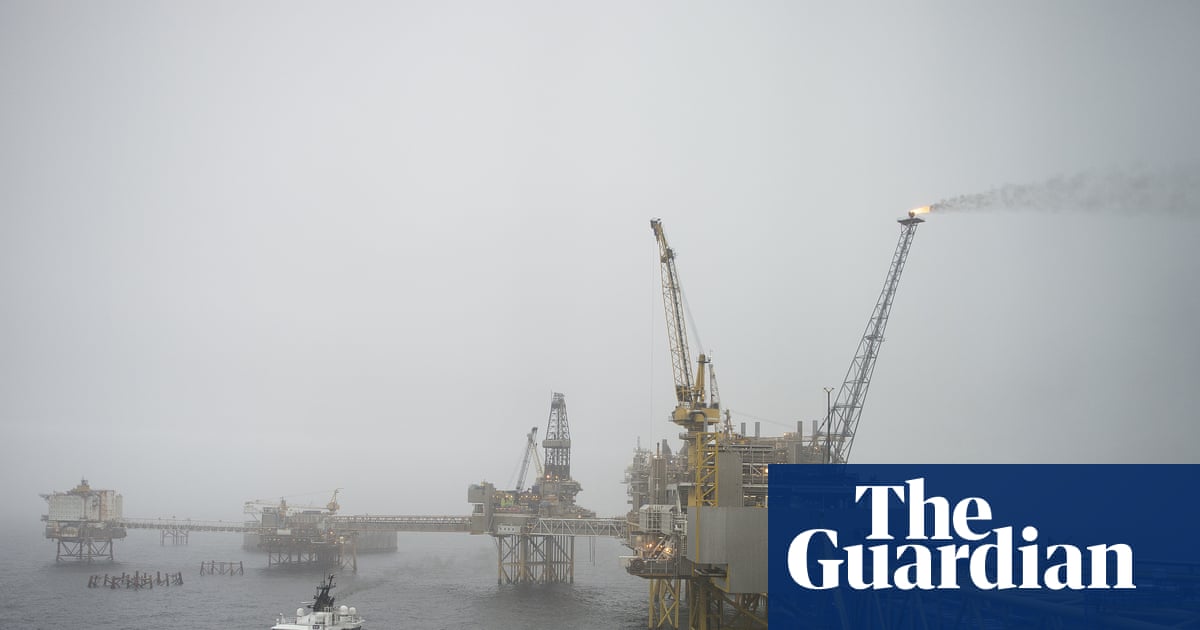
Norway approved reopening three North Sea gasfields and opening 70 new exploration areas, backing 19bn kroner ($1.5bn) of restart spending through 2028 and extending production to 2048. The move supports Europe’s gas supply after the Middle East conflict and Russia-related disruption, but it drew criticism from environmental agencies and climate groups. Equinor also reported record first-quarter output of 2.31m barrels of oil equivalent a day, nearly 9% higher year over year, as higher prices boosted profits.
This is a marginally bullish supply signal for European gas prices, but the real market effect is time-horizon sensitive: the reopening plan matters more as a policy marker than as near-term molecules. The incremental barrels and gas volumes are back-end loaded, so the first-order trade is not spot price but a longer-dated “higher-for-longer” optionality premium across North Sea-linked assets, midstream capacity, and European utilities with unhedged procurement exposure.
The second-order winner is Norway’s domestic service and offshore supply chain, which should see a multi-year capex pipeline and tighter utilization, while the loser is any European buyer relying on imported LNG to fill marginal demand. If these projects proceed, they can also steepen the differentiation between North Sea domestic supply and Atlantic Basin LNG: local production reduces transport and regas costs, which can compress delivered prices for nearby offtakers even if benchmark gas stays elevated.
For equities, the market is likely underestimating the asymmetry between policy approval and execution risk. Political backlash, permitting delays, and final investment decision slippage can easily push the cash-flow impact out by 12–24 months, which means front-end enthusiasm in E&P names may fade if investors realize the announcement is not equivalent to incremental supply. Conversely, the environmental pushback increases the probability of future licensing tightening elsewhere, which can support a scarcer long-duration reserve base and indirectly benefit established operators with permitted inventory.
The contrarian angle is that this may be less bullish for European gas than it looks, because the signal it sends is a willingness to prioritize energy security over climate constraints. That can reduce the “policy premium” embedded in European gas prices if the market interprets Norway as a reliable backstop, but it also raises the value of producers with existing infrastructure and low decline rates. In other words, the move is more supportive of cash-rich incumbents than of a broad rerating in the whole sector.
AI-powered research, real-time alerts, and portfolio analytics for institutional investors.
Request DemoOverall Sentiment
mixed
Sentiment Score
0.15
Ticker Sentiment
