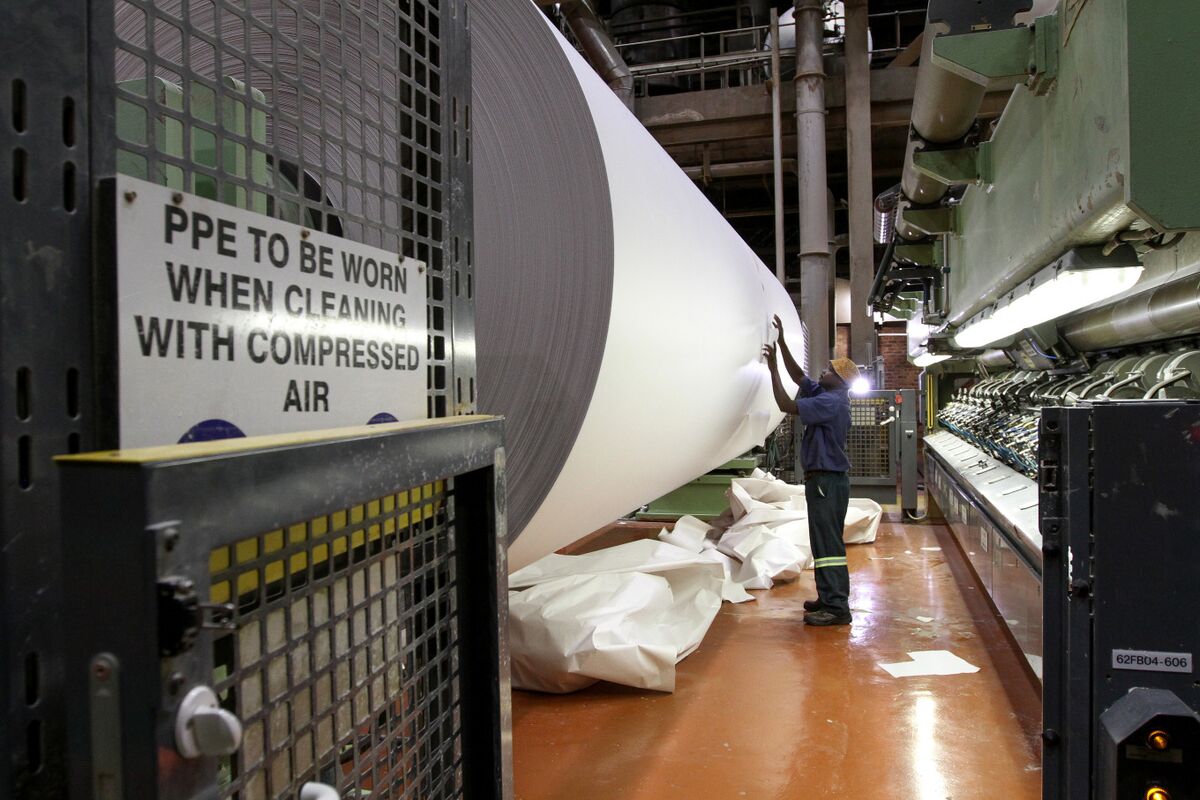
UPM-Kymmene and Sappi signed a non-binding letter of intent to form a 50/50 joint venture combining UPM’s entire communication papers business (eight mills) with Sappi’s European graphic paper business (four mills), creating an enterprise-value business of €1.42 billion ($1.7 billion). The move consolidates European graphic paper production and could unlock scale and cost synergies, altering competitive dynamics and meriting attention from investors monitoring capital allocation and operational performance at both companies.
Market structure: The JV creates a top-tier European graphic-papers cluster (12 mills) that should allow the partners to remove duplicate capacity and re-negotiate contracts with large printers; expect 200–400 bps EBITDA margin tailwind if 10–15% of capacity is idled over 12–24 months. Direct winners are UPM (HE: UPM1V) and Sappi (JSE: SAP / ADR: SPPJY) and upstream pulp suppliers; large printers and specialty paper buyers face higher input costs and weaker negotiating leverage. Currency/macro: earnings accretion will be euro-denominated, modestly positive for EUR vs ZAR for Sappi net flows; pulp commodity prices likely to firm, pressuring pulp buyers and lifting pulp producers' bonds and equity yields.
Risk assessment: Key tail risks are an EU antitrust block or forced divestitures that could remove >50% of synergies (plausible 10–25% probability), and operational shocks (strikes, mill modernization overruns) that could push capex +€100–200m. Immediate (days) risk is headline volatility on LOI details; short-term (30–90 days) risk is due diligence surprises; long-term (12–36 months) is stranded-asset risk if graphic-paper demand declines >3% p.a. Hidden dependencies include recycled-fiber supply, ETS carbon costs and power prices that can swing margins +/-€20–40/ton.
Trade implications: Tactical: size small, conditional exposure now and scale on confirmation—buy UPM1V and SPPJY exposure to capture rerating but hedge regulatory risk with options. Relative plays: long integrated pulp producers (e.g., Suzano NYSE: SUZ) vs short pure-play printers (e.g., Cimpress NASDAQ: CMPR) to capture upstream squeeze. Use 3–12 month expiries: call spreads to capture upside and inexpensive puts (10% OTM, 3–6 month) to protect against antitrust/asset impairment events.
Contrarian angles: Market may underprice the sustainability/ETS risk — forced decarbonization could turn expected synergy gains into higher capex, reducing IRR by >5 percentage points. Historical precedent (2000s Europe paper consolidations) shows near-term margin spikes but frequent 18–36 month restructurings with large write-offs; position sizes should be idiosyncratically limited until definitive agreement and EU clearance (target: file/clearance within 90–180 days).
AI-powered research, real-time alerts, and portfolio analytics for institutional investors.
Request DemoOverall Sentiment
mildly positive
Sentiment Score
0.25
