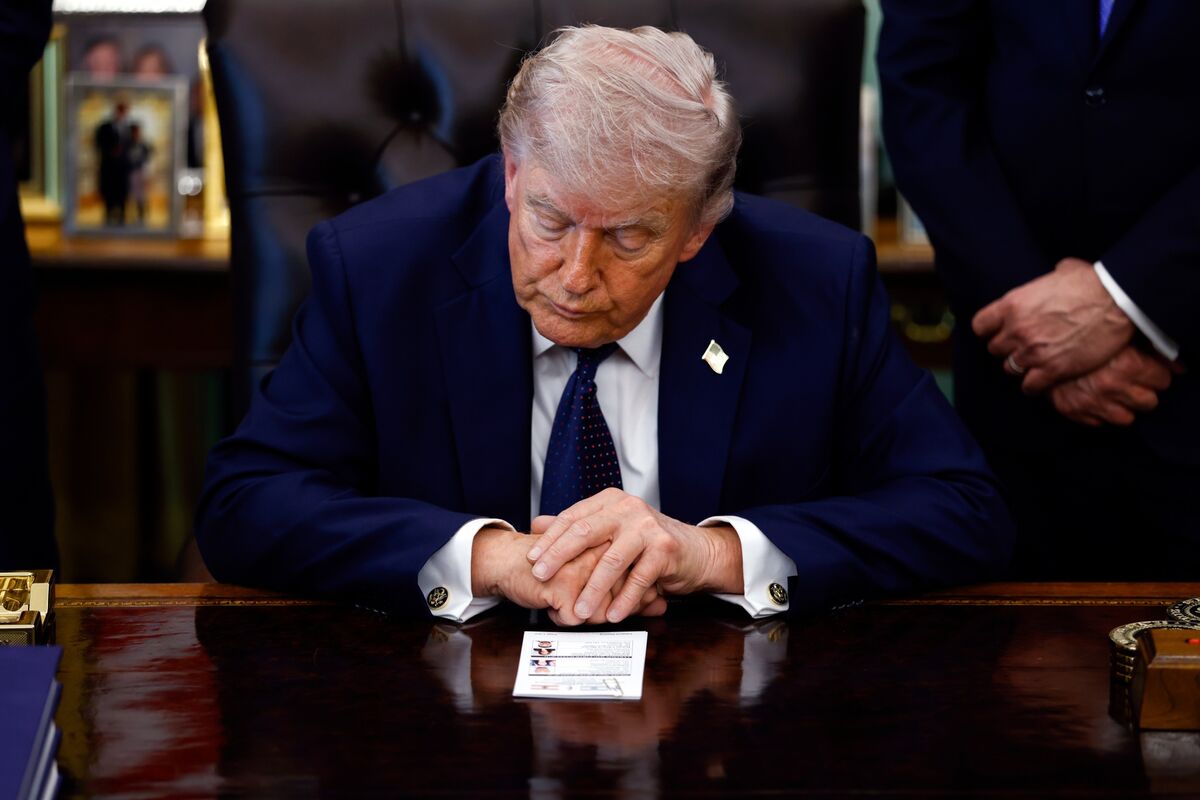
Republican midterm anxiety intensified this week after a botched redistricting effort and the standoff in the war with Iran, both of which are creating political headwinds. The article says blame is increasingly being directed at President Donald Trump’s political operation, signaling growing intra-party frustration. The piece is political in nature and unlikely to drive direct market moves, but it may add to uncertainty around the policy backdrop.
The immediate market implication is not directionally about “Republicans down” so much as higher policy uncertainty and a lower probability of clean fiscal/legislative execution over the next 6-12 months. When intra-party blame starts spilling into campaign infrastructure, it usually signals weaker message discipline, more candidate selection noise, and a greater chance that the party overreaches on populist or retaliatory policy just to reassert control. That matters for sectors that trade on stable rule-setting: regulated utilities, defense procurement, healthcare reimbursement, and any domestic capex story that depends on predictable federal budgeting.
The second-order effect is on the volatility surface rather than outright equity levels. A more chaotic midterm setup tends to widen dispersion between headline-sensitive names and cash-flow compounding businesses, because investors begin pricing a higher odds distribution: a legislative clampdown, a delayed appropriations process, or a post-election attempt to re-litigate districting and election administration. In practice, that supports relative longs in companies with low policy beta and penalizes cyclicals and regulated assets that need Washington to be boring.
The geopolitics overlay raises the tail-risk premium. If the external conflict remains elevated into the next few weeks, it will reinforce a “government under stress” narrative that tends to benefit defense and cyber while pressuring consumer confidence proxies and small-cap domestic cyclicals. The more interesting point is that political fragility can become self-reinforcing: fundraising and candidate recruitment weaken, which then increases the odds of an adverse election result, which then further reduces policy visibility into 2027.
The contrarian read is that this may be closer to noise than a regime change unless it bleeds into polling and fundraising data over the next 4-8 weeks. Markets often overprice internal political dysfunction before the first hard evidence of seat loss; if approval and donor flows stabilize, the current angst can unwind quickly, especially for the most crowded “gridlock” trades.
AI-powered research, real-time alerts, and portfolio analytics for institutional investors.
Request DemoOverall Sentiment
moderately negative
Sentiment Score
-0.35
