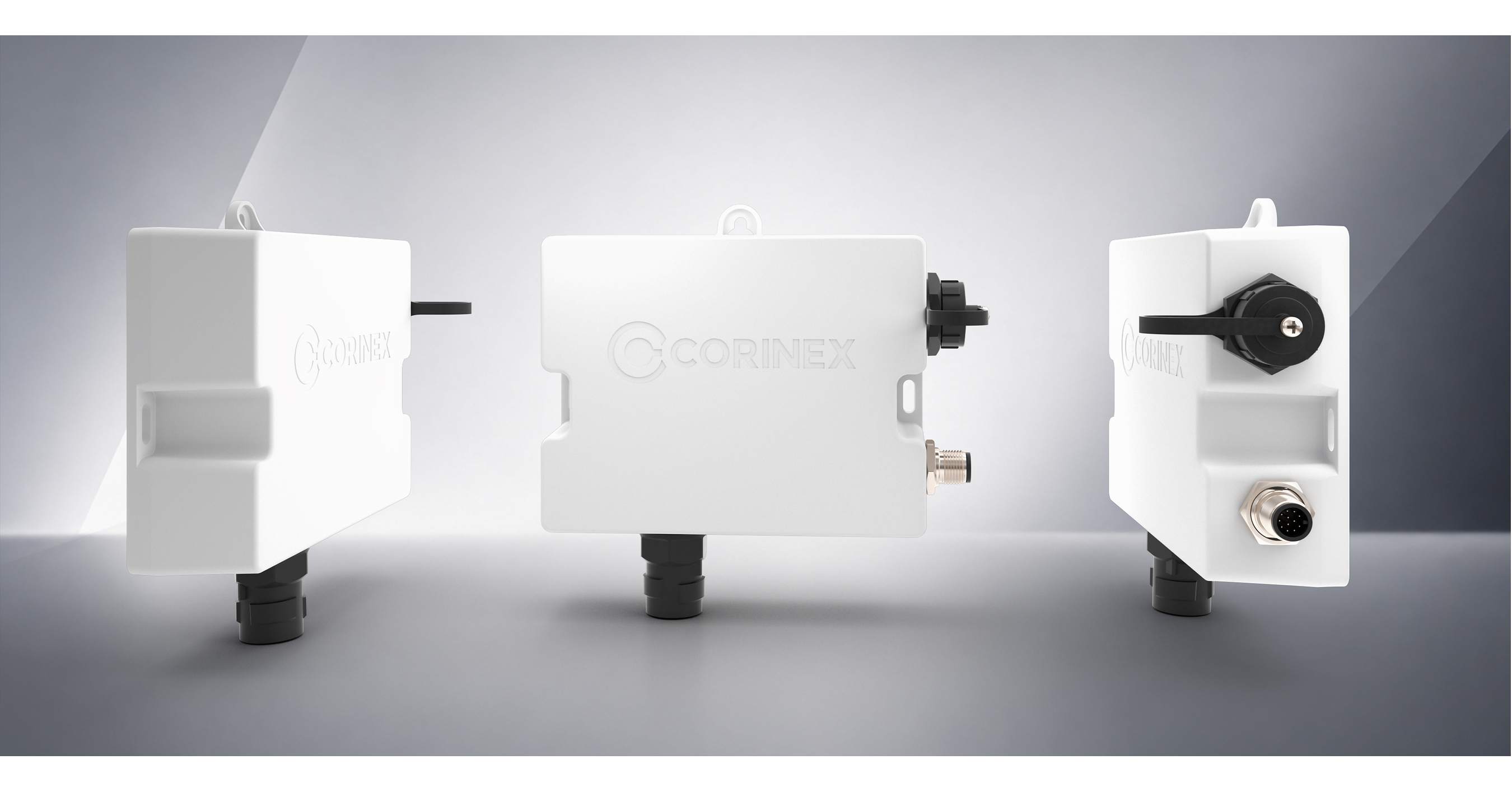
Corinex lance le « Grid Intelligence Node » (GIN) pour fournir des mesures quasi en temps réel sur les départs basse tension, avec une précision de tension/courant annoncée à une erreur efficace ≤0,5% et des instantanés opérationnels toutes les minutes. Le dispositif détecte creux/pics de tension, surcharges et déséquilibres de phase jusqu’à la 51e harmonique, et s’intègre à Plexigrid Intelligence pour améliorer l’estimation d’état et l’évaluation de capacité (VE, PAC, PV). Le nœud est commercialement disponible via des pilotes et déploiements, sans indication chiffrée d’impact financier immédiat.
This is a data-layer inflection, not an equipment breakthrough. The economic consequence is that utilities can now prove where low-voltage congestion exists, which tends to unlock selective spend on automation, phase-balancing, and targeted reinforcement rather than broad, indiscriminate capex. That is bullish for grid electrification enablers with exposure to distribution automation and power quality, but it can be mildly negative for vendors whose pitch depends on utilities buying a full parallel sensing/communications stack.
The bigger second-order effect is on capital allocation: better observability can defer some physical upgrades by letting DSOs squeeze more capacity out of existing assets via flexibility and control. Over 1-3 months the real catalyst is not product adoption headlines but utility procurement language, especially in Europe/UK where hosting-capacity constraints are already binding. If pilots show measurable reduction in interconnection delays, the spend curve likely shifts from “more meters everywhere” to “fewer, smarter nodes plus software,” which favors integrated grid infrastructure names over pure connectivity plays.
Contrarian view: the market usually treats any grid digitalization as linear capex uplift, but more data can also reveal that some projects are overbuilt or unnecessary. If this turns into a standard planning tool, the winner is whoever sits closest to the utility workflow; if it remains a pilot-grade overlay, public-market impact is negligible. The thesis is falsified if utilities begin referencing this as a mandatory layer in rate-case filings and convert pilots to scale faster than expected; otherwise, this is a watch item, not an immediate catalyst trade.
AI-powered research, real-time alerts, and portfolio analytics for institutional investors.
Request DemoOverall Sentiment
mildly positive
Sentiment Score
0.20
