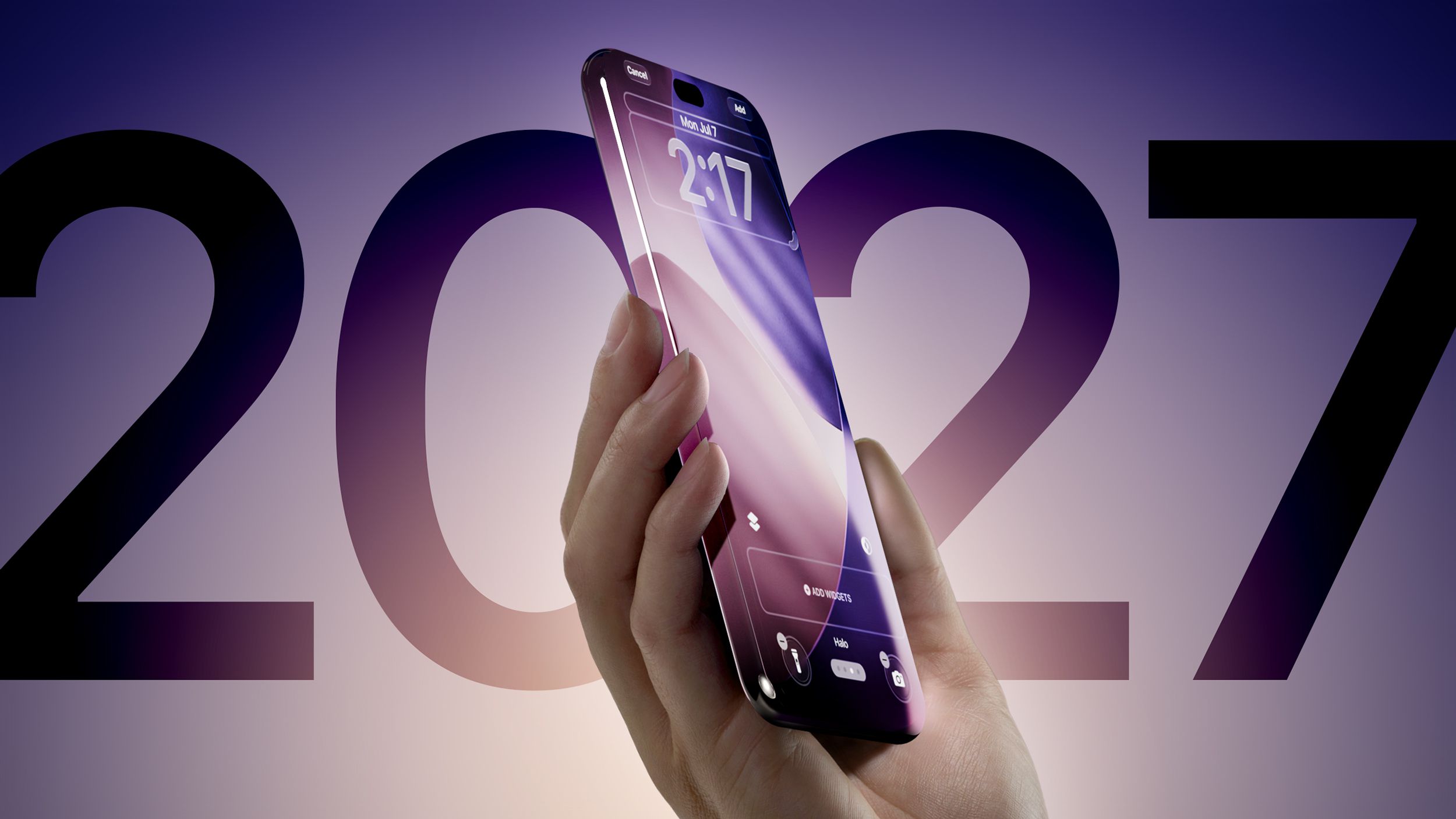
Apple is reportedly developing a 20th-anniversary iPhone with a custom Samsung-made micro-curved OLED display that is thinner, brighter, and potentially bezel-less. The rumored design also includes COE 'pol-less' display technology, a crater-shaped light diffusion layer, and possible under-display Face ID/camera features for a 2027 launch. The article is supply-chain driven and speculative, with limited near-term market impact.
This reads less like a near-term iPhone demand driver and more like a signal that Apple is willing to spend design complexity to protect premium pricing at the top end. The economic point is not the curved glass itself; it is the implication that Apple wants a materially more differentiated 2027 flagship to widen the gap between the base iPhone and the halo device, which should support higher ASPs and mix even if unit growth stays flat. That is modestly supportive for AAPL fundamentals, but the bigger alpha is likely in the supply chain: any validated move to a thinner, polarizer-less stack increases the strategic value of display vendors with process leadership and could compress the field of OLED competitors that cannot meet yield/spec targets.
The second-order effect is that the more exotic the display architecture, the more Apple’s launch timing becomes a function of manufacturing maturity rather than product intent. That raises the odds of a staggered feature rollout in 2027-2028, which tends to create a short window where component suppliers capture premium pricing before competition catches up, then margins normalize sharply as the design gets commoditized. The market should also discount the narrative that this is purely a user-experience upgrade: thinner/brighter panels and tighter optical stacks are typically about power budget and industrial design headroom, which can be monetized in battery life, thermals, and enclosure redesigns more than in headline specs.
The main contrarian risk is that investors overstate the revenue impact on AAPL while underestimating execution risk. If under-display sensors remain incomplete, Apple may ship a compromised version that dilutes the wow factor; historically, consumers reward cohesive industrial redesigns more than incremental screen architecture changes. Longer term, a successful bezel-less, low-reflection implementation would reinforce Apple’s premium moat, but near term the trade is more about supplier optionality and launch-cycle sentiment than a step-change in earnings power.
AI-powered research, real-time alerts, and portfolio analytics for institutional investors.
Request TrialOverall Sentiment
neutral
Sentiment Score
0.15
Ticker Sentiment
