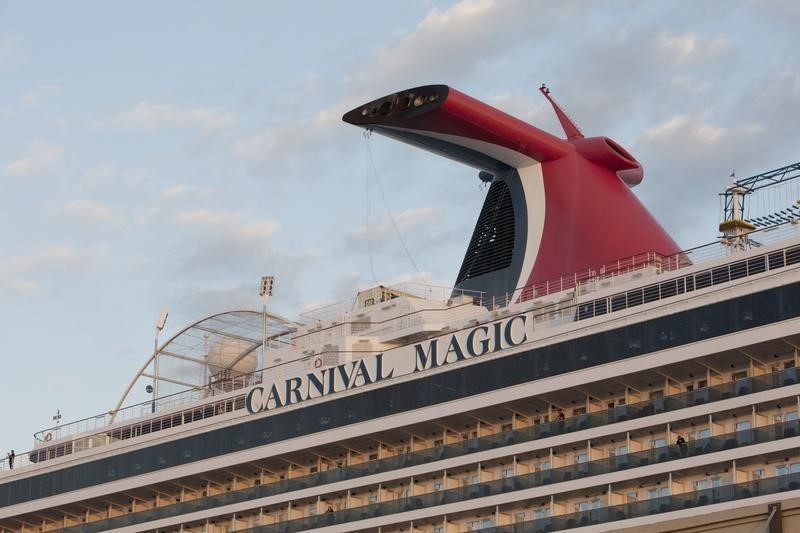
Morgan Stanley upgraded Carnival to Overweight, citing an improved risk-reward after a -28% YTD decline; the bank cut EPS forecasts by 14% for FY26 and 6% for FY27 and lowered its FY26 net revenue yield assumption by 100 bps to 2.0%. MS reduced the U.S. price target to $31 and the U.K. target to 2,350p, noted Carnival's limited Middle East exposure (1–2% of capacity) and high fuel sensitivity (each $10/barrel move changes FY26 EPS by ~5%), and argued historical 30% drops have preceded 40–120% rebounds.
The cruise complex remains a convex, lumpy business where supply is sticky (multi-year newbuild timelines and limited short-term capacity reallocation) while demand is front-loaded through booking windows — that creates asymmetric upside if a normalization of discretionary travel occurs within the next 6–12 months. Margins will amplify small demand changes because onboard revenue and itinerary mix are highly leverageable; expect operating leverage to show up in quarterly earnings once load factors and ancillary spend recover, not immediately.
Fuel-price volatility is the principal macro tail risk that can erase multi-quarter earnings gains; unlike airlines, cruise operators cannot rapidly reconfigure networks or materially shorten itineraries, so fuel hedges and bunker cost pass-through mechanisms are critical to watch. Currency and European retail softness create a layered regional risk: a modest FX move or consumer-income shock in Europe can compress yields more quickly than a broad decline in US leisure demand.
Second-order beneficiaries include ports, shore-excursion operators, onboard supply chains (provisions, beverage suppliers), and shipyards/maintenance contractors — these nodes see concentrated revenue when cruise itineraries restart, producing idiosyncratic opportunities in small-cap suppliers. Conversely, businesses exposed to short-lead corporate travel or low-margin regional itineraries will lag; positioning should separate pure leisure discretionary exposure from broader travel cyclicals to avoid cross-contamination of alpha.
AI-powered research, real-time alerts, and portfolio analytics for institutional investors.
Overall Sentiment
mildly positive
Sentiment Score
0.20
Ticker Sentiment
