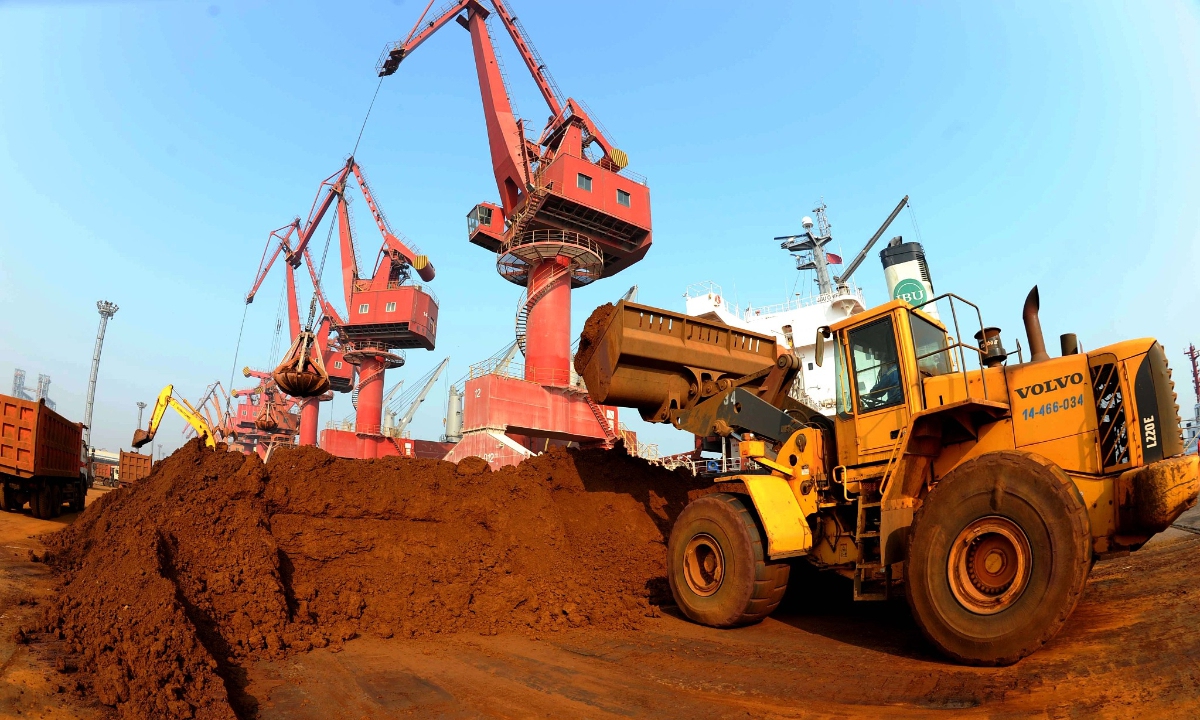
G7 countries are reportedly discussing a permanent secretariat and tighter coordination on critical minerals to reduce reliance on China, including rare earths, lithium, and cobalt. China responded that excluding it from supply chain strategies could deadlock Western efforts, while reiterating that its export controls are tied to national security and WTO-consistent oversight. The article highlights ongoing tension around rare-earth supply chains and the difficulty of building independent Western capacity without China.
The market is underpricing the asymmetry between rhetoric and execution in Western critical-minerals policy. A coordinated G7 framework sounds credible, but the biggest constraint is not mining capacity — it is permitting, refining chemistry, capital intensity, and the lack of a unified procurement regime. That means the first-order beneficiaries are not broad miners, but the narrow set of non-China processors, separation specialists, and downstream OEMs that can secure offtake before policy money becomes real.
Second-order, this is a medium-term bullish setup for non-China substitution narratives, but a near-term negative for any supply chain that depends on stable pricing from China’s export-license system. If Europe insists on country-level control of stockpiles, the bloc will likely replicate the same fragmentation that has slowed energy-security coordination for a decade. That increases the odds of redundant inventory build, higher working capital, and a more volatile spot market for heavy rare earths over the next 6-18 months.
The contrarian point: the more Western governments talk about exclusion, the more likely China is to respond with calibrated licensing rather than a broad cutoff, because a full embargo would accelerate substitution capex and destroy bargaining power. So the base case is not a supply shock, but a regime of chronic uncertainty with periodic squeeze risk. That favors volatility over direction and argues for owning optionality on both sides rather than chasing linear exposure.
AI-powered research, real-time alerts, and portfolio analytics for institutional investors.
Overall Sentiment
mildly negative
Sentiment Score
-0.15
