




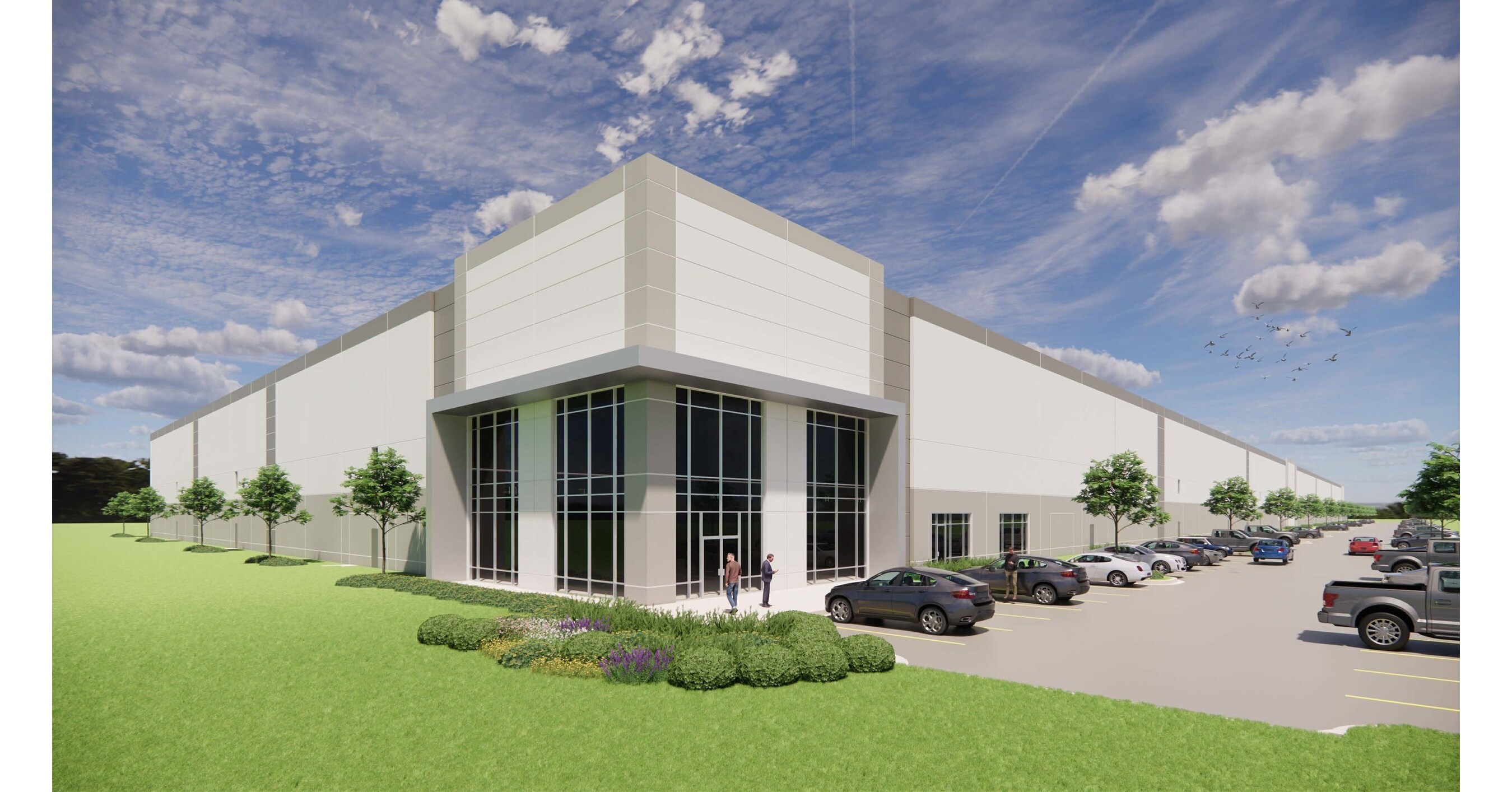
Buchanan Capital Partners (BCP) capitalized a 397,556 SF industrial development, “Cass White Business Center,” in Georgia’s I-75 North corridor, marking its second joint venture with Crow Holdings Development. The project leverages nearby EV/battery and solar manufacturing investment (~$5B Hyundai Motor Group & SK On plus $2.5B Hanwha Qcells) and targets logistics demand near freight and rail connections to the Port of Savannah. Overall, it expands BCP’s Sun Belt industrial footprint with a location-focused JV structure, but the news is unlikely to move broader public markets materially.
This reads more like a confirmation of capital formation in the Southeast industrial corridor than a single-asset catalyst. The market implication is that high-quality logistics locations tied to hard manufacturing nodes should keep pricing power even if broader industrial supply is less tight, because tenant demand is being anchored by non-discretionary capex clusters rather than generalized e-commerce growth. The second-order winner is the adjacent land bank and rail/port-connected industrial set; the loser is marginal Class B space in inland submarkets that cannot offer the same labor, utility, and intermodal advantages.
The key time horizon is not today’s tape but the next 1-3 quarters of leasing data. If absorption around Bartow/Atlanta remains strong, developers with balance-sheet flexibility can underwrite lower downtime and higher rent resets, which should support NAVs for quality industrial REITs and private platforms with disciplined basis. The falsifier is a slowdown in the underlying manufacturing pipeline: if EV/solar project timelines slip, lease-up assumptions compress quickly, and the “strategic corridor” premium can narrow by 100-200 bps in cap rates.
Contrarianly, the consensus may be overpaying for any asset near a growth node; the real edge is disciplined execution at delivery, not adjacency alone. Higher-for-longer rates make construction timing and pre-leasing more important than headline location, so speculative industrial supply without anchors remains vulnerable. For public markets, the cleaner expression is quality-vs-quality within industrial, not a broad REIT beta bet.
AI-powered research, real-time alerts, and portfolio analytics for institutional investors.
Request TrialOverall Sentiment
mildly positive
Sentiment Score
0.12
Ticker Sentiment
