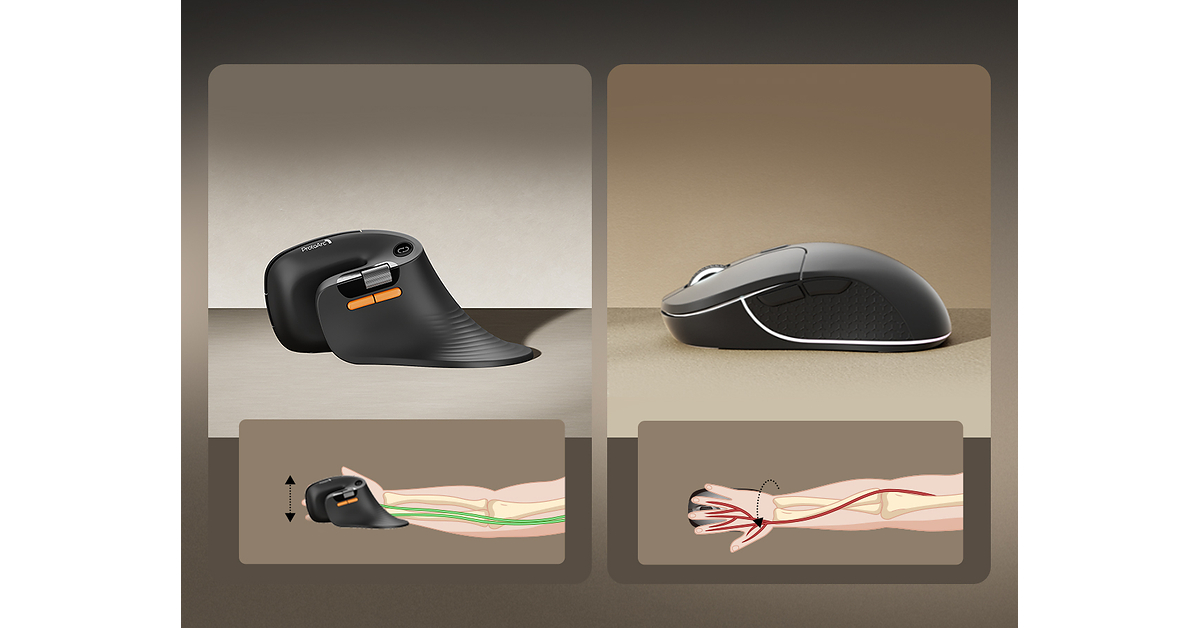
ProtoArc launched the EM11 Pro Ergonomic Vertical Mouse priced at $49.99, featuring a 58° vertical design, a side-mounted metal horizontal scroll wheel, browser-based remapping/macros, six programmable buttons, and adjustable DPI (800–7200). It supports up to three connected devices (Bluetooth + 2.4GHz) with USB-C charging from a 500mAh rechargeable battery and is compatible across Windows/macOS and multiple OS/device ecosystems. The company also cites a 2026 iF Design Award for product design recognition, but the news appears product-marketing oriented with limited expected market-wide price impact.
This is a category signal, not an earnings signal. For AMZN, the only meaningful exposure is incremental marketplace GMV and ad spend from a long-tail accessory launch; the dollar contribution is immaterial, but the launch tells us where consumer demand is migrating: buyers will pay a modest premium for peripherals that reduce context-switching, not just wrist strain. The economic value is in conversion efficiency, not unit volume, so the real question is whether Amazon can keep “productivity accessory” launches discoverable without heavy subsidy.
The second-order winner is the ecosystem of software-light, retail-native peripheral brands; the loser is any incumbent whose premium is tied to desktop software lock-in. Browser-based configuration lowers IT friction and makes the product more deployable in managed environments, which is a small but real advantage versus legacy mouse software that gets blocked on enterprise laptops. That matters more for Logitech-type premium SKUs than for the broad mouse category, because the feature set is aimed at spreadsheet-heavy power users who already own multiple devices and care about workflow more than design.
Near term, the catalyst path is Amazon rank and review velocity over the next 1-3 months; if the launch does not sustain visibility, the story fades quickly. Over 6-18 months, the structural question is whether “productivity peripherals” become a recurring subcategory with higher ASPs and lower software-install friction; if yes, that is mildly positive for marketplace platforms and direct-to-consumer accessory brands, but still not enough to move the platform earnings needle. The thesis is falsified if review quality slips, discounting is required to move units, or the product cannot hold a premium versus commodity vertical mice.
AI-powered research, real-time alerts, and portfolio analytics for institutional investors.
Request DemoOverall Sentiment
mildly positive
Sentiment Score
0.15
Ticker Sentiment
