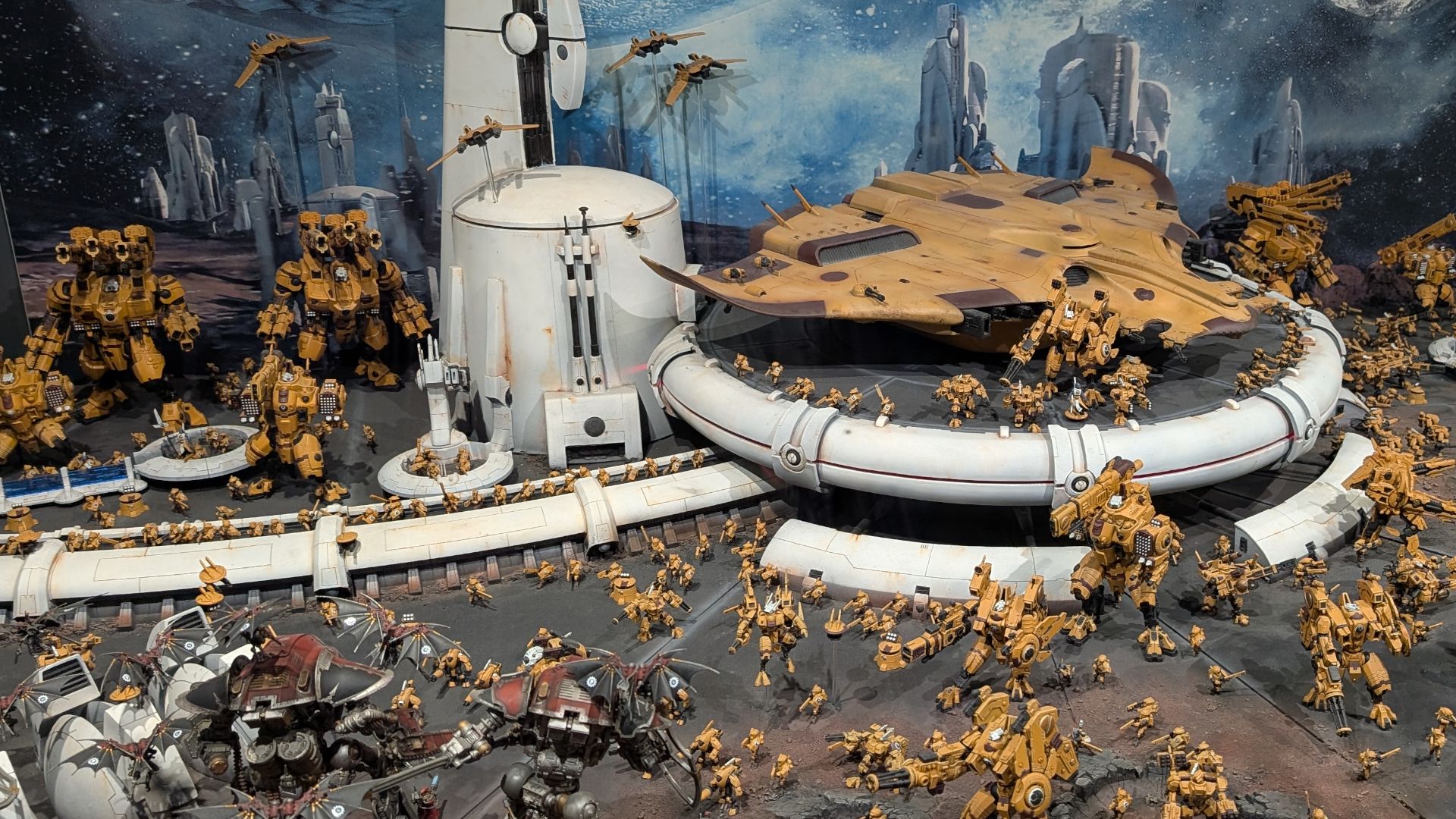
Games Workshop is previewing major Warhammer 40,000 11th Edition rule changes that could materially refresh gameplay, including terrain-based objectives, revised cover mechanics, new movement rules for flying units, and multiple detachments. The article frames the changes as a meaningful improvement over 10th Edition, with stronger support for melee, battleshock-driven armies, and list-building flexibility. This is positive for engagement and the Warhammer franchise, but the story is mostly product/design commentary rather than a near-term financial catalyst.
This is less a product refresh than a monetization reset for the tabletop ecosystem. The biggest second-order effect is not just higher engagement, but higher content elasticity: by making list construction more modular and mission structure more variable, the publisher can extend the commercial life of each codex-like release and increase the value of future rulebooks, faction supplements, and boxed sets. That should support a stronger recurring revenue mix over the next 12-24 months, with the most important KPI likely being attach rate per active player rather than raw unit sell-through.
The rule changes appear designed to reduce the feel-bad factors that suppress casual retention while also widening the gap between organized play and kitchen-table play. That is structurally bullish for organized play venues, hobby retail, and content creators because complexity usually drives demand for guidance, terrain, and premium accessories. The trade-off is that any major balance misstep will hit faster than in prior editions: if one or two archetypes become overdominant, tournament-driven sentiment can reverse within a single quarter and dampen release cadence through delayed purchase decisions.
The contrarian view is that the market may underestimate how much of the near-term upside is already in the base case. A rules shake-up alone does not guarantee an incremental wave of new players; the real monetization lever is whether the company can convert rule interest into starter-set demand, terrain purchases, and repeated faction refreshes. If the launch lands cleanly, the follow-on winners are adjacent hobby suppliers and gameplay-accessory sellers rather than the core game publisher alone. If balance is poor, the impact is likely a temporary enthusiasm spike followed by deflation in discretionary spend, especially among competitive players who buy aggressively only when the meta is stable.
AI-powered research, real-time alerts, and portfolio analytics for institutional investors.
Request DemoOverall Sentiment
mildly positive
Sentiment Score
0.35
