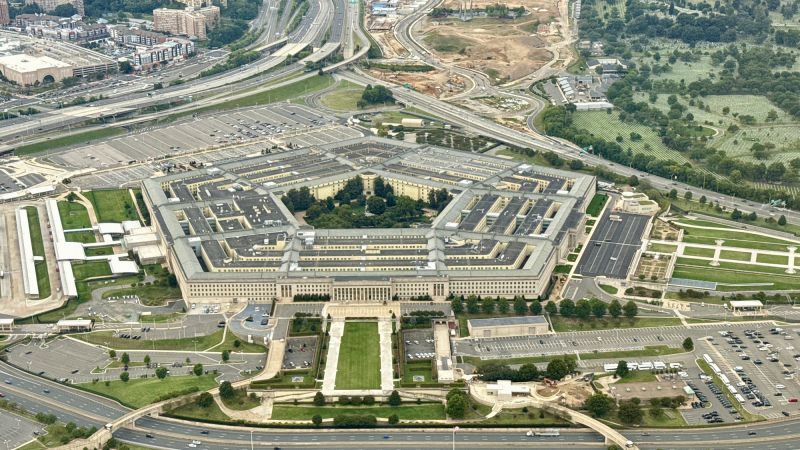
The Pentagon awarded AI contracts to seven major tech companies, including SpaceX, OpenAI, Google, Microsoft, Nvidia, Amazon Web Services and Reflection, to use their tools in classified networks. Anthropic was excluded after disputes over military-use guardrails and is now litigating the Trump administration’s blacklist, though the White House has reopened talks following recent product announcements. The deal could shift substantial Pentagon AI spending toward Anthropic’s competitors and reinforces demand tied to defense and classified cybersecurity use cases.
This is less about a single contract win and more about the Pentagon institutionalizing a vendor ecosystem that will likely concentrate spend around a few hyperscalers plus GPU supply. The second-order effect is that model access becomes a distribution war: once a platform is embedded in classified workflows, switching costs rise sharply and the winning stack can monetize not just inference, but adjacent cloud, security, and workflow tools over several budget cycles. That favors the firms with full-stack integration and procurement credibility more than pure-play model vendors.
GOOGL and MSFT look like the clearest near-term beneficiaries because the marginal value here is not just AI usage, but cloud trust, identity, and admin tooling layered onto defense workflows. NVDA benefits more indirectly but with a powerful compounding effect: if multiple approved vendors scale inside DoD, the bottleneck shifts to compute and data-center buildout, which can extend GPU demand beyond consumer AI into a more stable government budget stream. PLTR is the most vulnerable to narrative dilution; defense AI spend may broaden, but platform buyers will likely negotiate harder if they can source models and infrastructure from the large incumbents already inside the door.
The contrarian miss is that Anthropic’s exclusion may prove temporary and even bullish for the sector if litigation or political pressure forces a later re-entry; in that case, the market may be underestimating how quickly a “blacklisted” vendor can regain access once security or cyber capabilities become strategically useful. Near term, the bigger catalyst is budget execution: the spend authorization is one thing, but classified-network integration can take months, so this is a 3-12 month earnings and backlog story rather than an immediate revenue step-up. Tail risk is a policy reversal if safety/warfare guardrails become a public issue again, which would compress the valuation premium on the defense AI complex and hit the most compliance-sensitive names first.
AI-powered research, real-time alerts, and portfolio analytics for institutional investors.
Request DemoOverall Sentiment
neutral
Sentiment Score
-0.10
Ticker Sentiment
