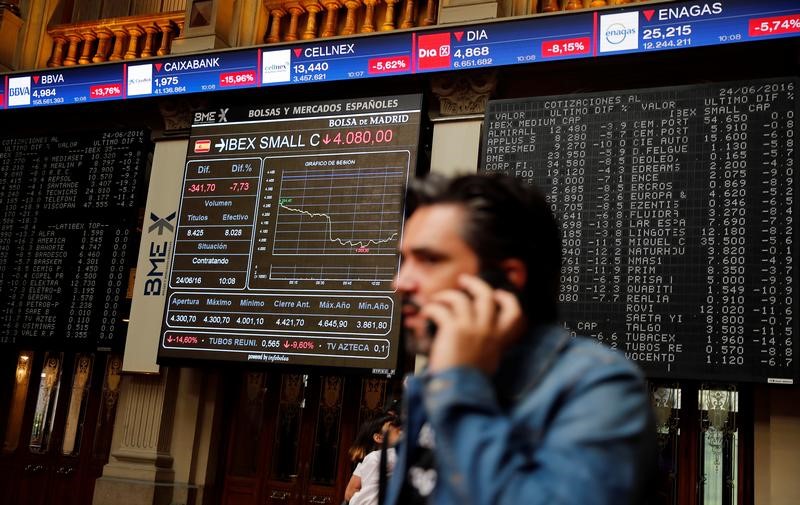
Spain’s IBEX 35 rose 0.06% at the close, with 112 gainers versus 84 decliners. ArcelorMittal led the index up 3.89%, while Puig Brands fell 13.44%, Repsol lost 2.75%, and Cellnex declined 1.65%. In commodities, June gold fell 0.49% to $4,520.17/oz, July crude oil rose 0.81% to $97.13/bbl, and July Brent gained 0.98% to $103.59/bbl; EUR/USD was unchanged at 1.16 and the US Dollar Index Futures rose 0.17% to 99.28.
The clean read-through is not broad risk-on/risk-off, but a sharper inflation-input bifurcation: higher crude with softer gold and a firmer dollar is a mild headwind for the broad European complex and a relative tailwind for upstream energy versus transport, chemicals, and power-intensive industrials. For Iberia, that matters because Spain has a heavier-than-average sensitivity to imported energy costs, so any sustained move in Brent toward triple digits compresses operating leverage for domestic cyclicals faster than the index-level move suggests.
MT is the more interesting second-order beneficiary. Higher oil and a stable-to-stronger dollar tighten scrap and raw-material economics for some marginal producers while supporting pricing discipline across steel, but the trade is only durable if commodity strength is demand-led rather than geopolitically induced. If the move is purely supply-risk premia, the best setup is not chasing beta; it is owning the names with pricing power and low energy intensity, and fading highly leveraged cost-takers.
The contrarian risk is that the market is treating the energy bid as a short-lived headline hedge, while the more durable effect may be on rates and FX: firmer oil keeps inflation sticky, which can delay easing and support the dollar. That combination is usually bad for long-duration growth and for European equities that depend on cheaper input costs and a weaker currency to preserve margins. Over a 2-8 week horizon, the path of least resistance is relative underperformance for airline/consumer discretionary proxies and outperformance for energy-linked commodity producers.
The move in MT is not enough to call a new trend on its own, but in a commodity tape like this it is the better expression than chasing the index. The edge is to use any further crude strength as a catalyst to add to producers with visible cash-flow sensitivity, while keeping a tight stop if Brent fails to hold above the recent spike zone. If geopolitical negotiations de-escalate, the unwind could be fast and violent because positioning is likely tactical rather than structural.
AI-powered research, real-time alerts, and portfolio analytics for institutional investors.
Request DemoOverall Sentiment
neutral
Sentiment Score
0.05
Ticker Sentiment
