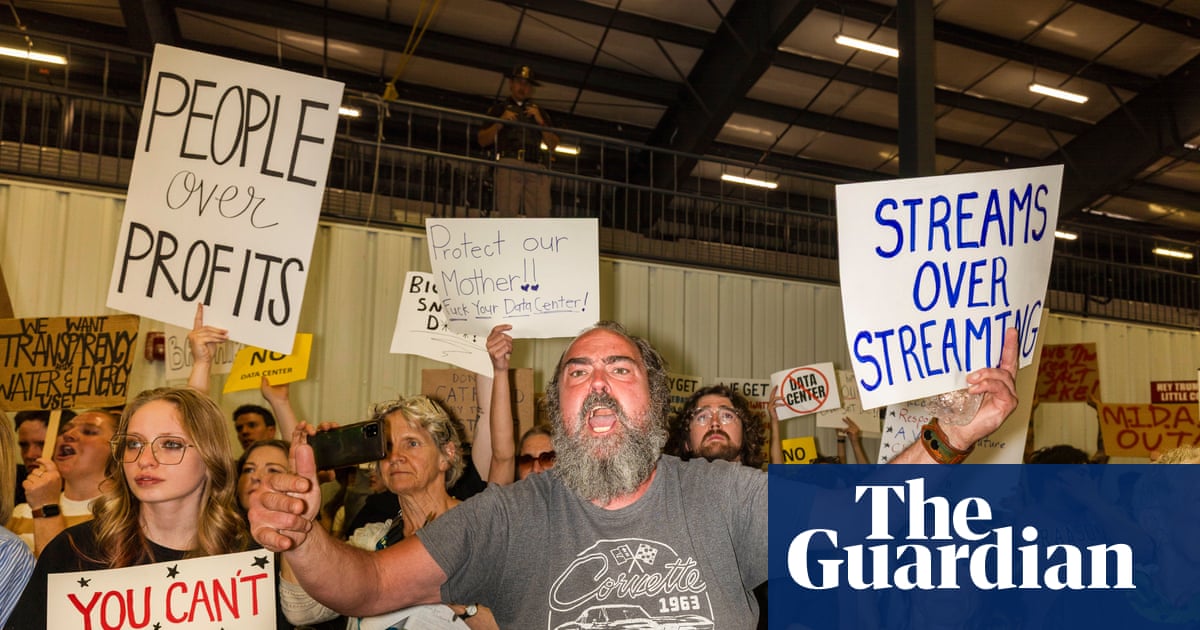
Utah approved the Stratos AI datacenter, a 40,000-acre project across three sites that would require about 9GW of power and significant water use, triggering major public backlash. Critics say it could raise the state's planet-heating pollution by roughly 50%, worsen Great Salt Lake stress, and increase local temperatures by 2F to 12F; the governor now says the project must not harm the lake or raise power bills. A referendum effort is underway, and developers have withdrawn an initial water-diversion filing while planning a new application.
This is less an isolated Utah zoning fight than an early signal that AI infrastructure is colliding with physical scarcity constraints. The first-order losers are not just the project sponsors; it is the adjacent power stack—utilities, gas infrastructure, cooling, water services, and eventually ratepayers—because mega-loads force capital spending upfront while monetization remains uncertain over a multiyear buildout. The market is underpricing the likelihood that permitting risk, not compute demand, becomes the binding constraint on datacenter growth in inland western states.
The second-order impact is a policy wedge: once local backlash becomes tied to power bills, drought, and ecosystem damage, governors and regulators will force phased approvals, bespoke water contracts, and possibly curtailment rights. That favors incumbents with regulated generation, grid interconnection optionality, and site diversification, while hurting pure-play datacenter developers and hyperscale-adjacent land banks that rely on frictionless scale. The more this becomes a referendum on “AI vs. local resources,” the more every new project inherits a higher cost of capital and a longer permitting timeline.
The contrarian miss is that the bearish ESG headline may not translate into immediate project cancellation; instead, it can accelerate a redesign toward smaller phased assets, on-site generation, and higher-value workloads. That means the near-term trade is not to short AI broadly, but to fade the “infinite buildout” narrative in names exposed to power scarcity and approval bottlenecks. Over 3-12 months, the key catalyst is whether local referendum mechanics and state-level conditions force a precedent that other jurisdictions copy.
AI-powered research, real-time alerts, and portfolio analytics for institutional investors.
Request DemoOverall Sentiment
moderately negative
Sentiment Score
-0.45
