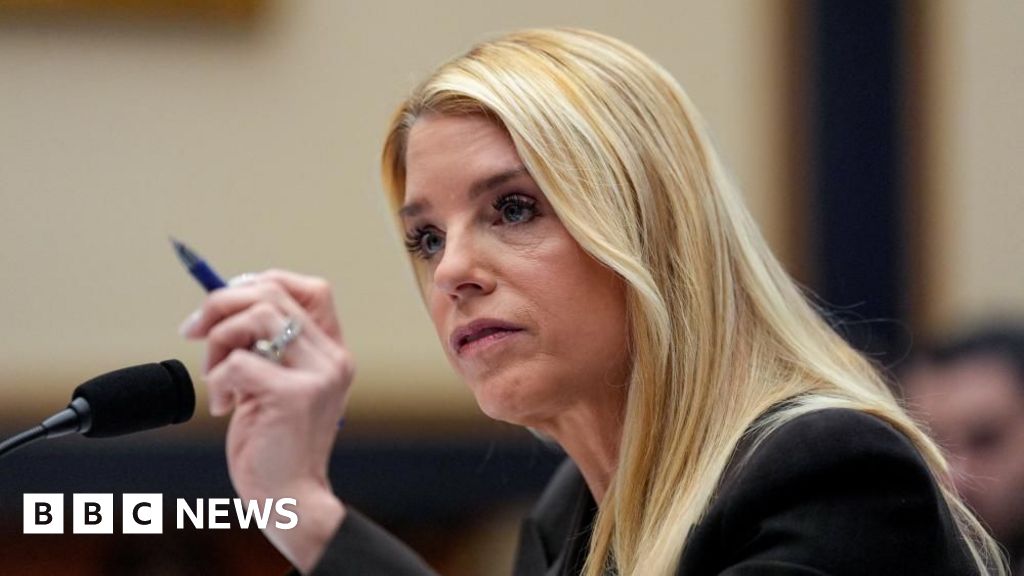
Attorney General Pam Bondi faced a contentious four-hour House Judiciary hearing over the Justice Department's release of millions of Jeffrey Epstein investigative files, defending redaction practices amid bipartisan criticism that victims' names and images were improperly disclosed and that some non-protected names were inappropriately redacted. Lawmakers probed accountability for specific redactions involving figures such as Les Wexner, displayed images tied to Andrew Mountbatten-Windsor, and pressed Bondi on unrelated federal actions in Minneapolis—developments that heighten legal and political risk for the DOJ and could prompt further oversight and litigation.
Market structure: This is a governance/privacy shock that enlarges demand for cybersecurity, e-discovery, redaction/forensics and compliance services (enterprise spend uplift of 5–15% above baseline over 12–36 months is plausible). Winners: large cloud/SaaS security vendors (CRWD, FTNT, OKTA) and consultancies handling litigation/forensics (FTI). Losers: mid-size ad-driven platforms and any service provider exposed as host of sensitive content — reputational risk can compress multiples 5–20% on headline-driven selloffs.
Risk assessment: Tail risks include bipartisan legislation tightening FOIA/data-release rules or large class-action suits with damages in the high hundreds of millions to low billions (0.5–5% hit to a large-cap host). Immediate (days) risk = headline volatility and IV spikes; short-term (weeks–months) = subpoenas/unredactions driving targeted stock moves; long-term (quarters) = sustained compliance budgets and potential margin pressure for cloud providers. Hidden dependency: third-party vendors performing redaction (outsourced contractors) are single points of failure that could trigger outsized reputational/legal costs.
Trade implications: Tactical allocations favor cybersecurity and legal-tech: establish 1–3% position sizes, expect 12–24 month payoff horizons. Use options to buy asymmetric upside: 3-month call spreads on CRWD and 6–9 month call calendars on FTI to capture earnings-driven rerating; hedge with 1–2% put protection on large cloud hosts (MSFT/AMZN) if names appear in future releases. Rotate out of speculative consumer luxury names that have direct founder/associate exposure and reduce gross exposure by 2–4%.
Contrarian angles: Consensus treats this as political noise; miss is the structural multi-year uplift to compliance/security budgets (analogue: post-9/11 security spend). Overreaction risk: a headline-driven dip in platforms (META, GOOGL) could create 10–20% buying opportunities if no direct legal liability emerges. Watch for legislative windows (next 30–90 days) — confirmation or new statutes will reprice sectors.
AI-powered research, real-time alerts, and portfolio analytics for institutional investors.
Request DemoOverall Sentiment
mildly negative
Sentiment Score
-0.25
