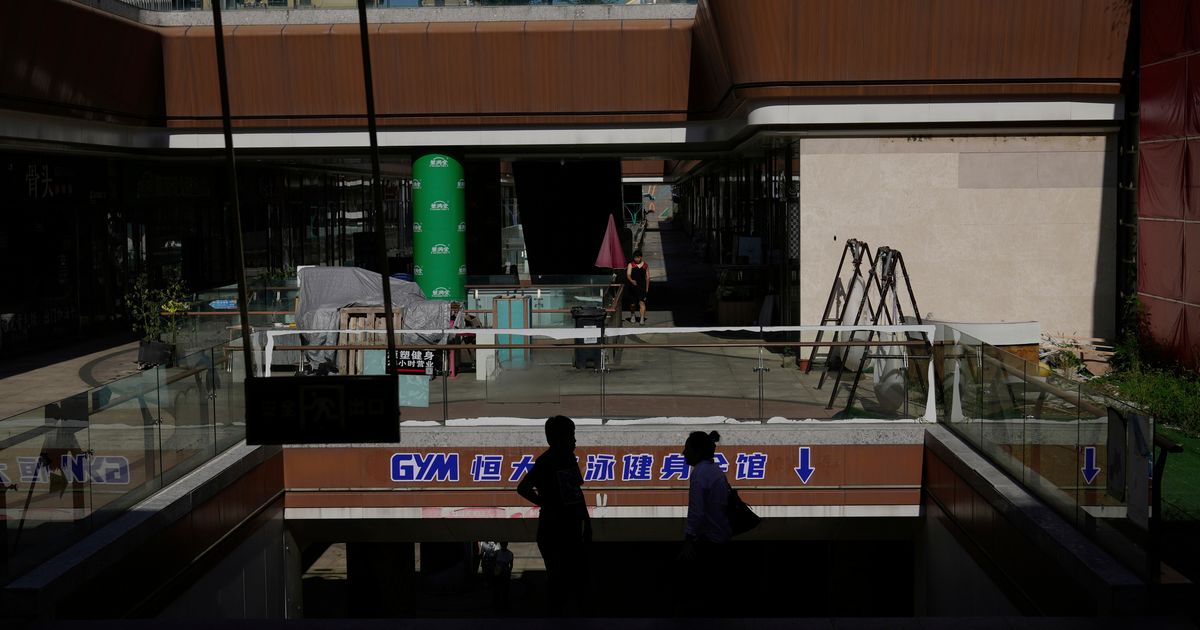
China Evergrande founder Hui Ka Yan pleaded guilty to charges including illegal absorption of public deposits, fraud, corporate bribery, illegal lending and disclosure violations. The case underscores the collapse of Evergrande, which had more than $300 billion in liabilities when it was ordered into liquidation in 2024 and was later delisted in Hong Kong in 2025. The article reinforces ongoing stress in China’s property sector and the broader credit backdrop for highly leveraged developers.
This is less about one collapsed developer and more about the state using a marquee case to reset bargaining power across the whole distressed-property stack. The key second-order effect is that this increases the expected recovery haircuts on offshore creditors and weakens any lingering assumption that political protection sits behind private-sector capital structures; that should keep China property credit risk premiums elevated even if default headlines fade. The medium-term loser is the broader refinancing channel: banks, trust products, and wealth-management distributors will likely stay conservative because enforcement risk has become more salient than liquidity support.
The market implication is asymmetric across capital structure. Equity is already a stranded-asset story, but the more interesting pressure point is subordinated and quasi-sovereign-sensitive credit, where legal finality can improve recoveries for domestic claimants while impairing offshore holdout value. That dynamic can also accelerate asset-fire-sale behavior among still-surviving developers, because management teams will prioritize cash preservation over project completion leverage, which is negative for land banks, suppliers, and construction-linked local economies over the next 6-18 months.
The contrarian read is that this may be incrementally positive for long-term China credit hygiene if it marks the start of cleaner resolutions rather than zombie extensions. In that sense, the near-term pain may be front-loaded: once the market concludes that the government prefers punishment + restructuring discipline over broad rescues, weaker developers can clear faster and stronger sponsors may eventually reprice with lower tail risk. But until there is evidence of orderly restructuring frameworks with credible creditor treatment, the default stance remains to fade any rally in China property risk assets.
Catalyst-wise, the next 1-3 months matter for sentencing, asset preservation, and whether the case bleeds into broader policy signaling. A harsh judgment or explicit linkage to other developer cases would be a fresh negative for Hong Kong-listed China property credits and Macau/China consumer-exposed equities via wealth-effect channel. Conversely, if authorities pair the case with more explicit completion-funding support, the market could distinguish between punishment of bad actors and systemic backstopping, which would be the only credible reversal.
AI-powered research, real-time alerts, and portfolio analytics for institutional investors.
Request TrialOverall Sentiment
extremely negative
Sentiment Score
-0.90
