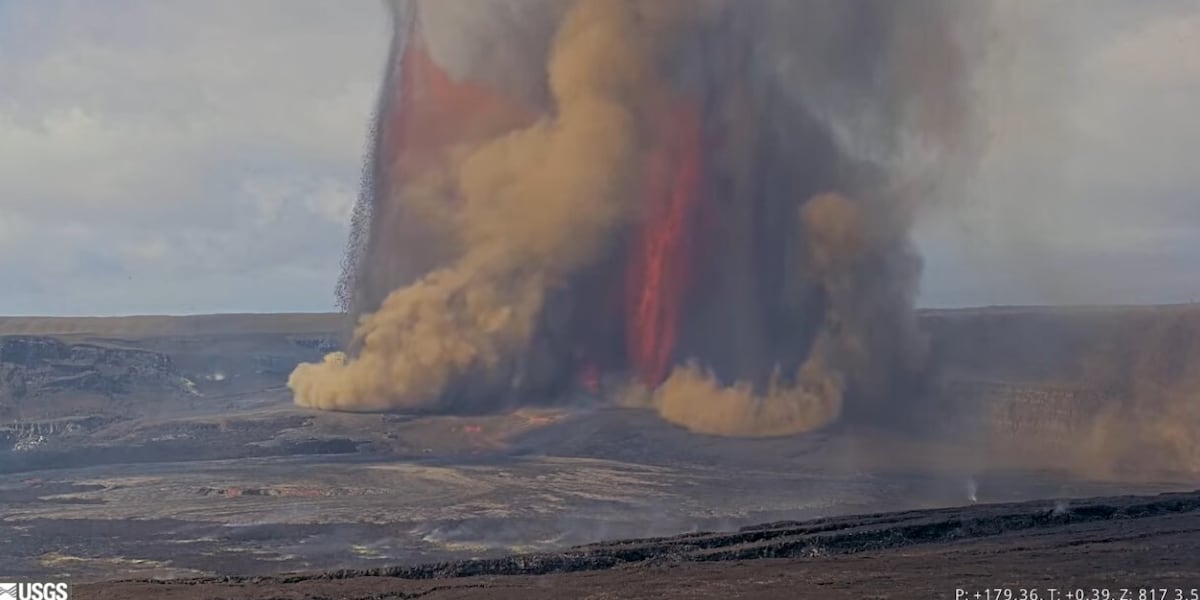
Episode 43 of the Kilauea eruption produced nine hours of continuous fountaining, depositing more than a quarter-inch of tephra within 90 minutes, with fallout up to football-sized and a plume rising to ~25,000 ft. Highway 11 and the Kilauea summit were closed, a shelter opened in Pāhala, multiple schools and park facilities were closed for cleanup, and Hilo Medical Center treated at least one asthma patient linked to ash exposure. Expect localized transportation and visitor disruptions and property/health-related clean-up costs; no material wider market impact indicated.
Localized volcanic episodes create concentrated, non-linear economic frictions: transient demand collapses in travel & leisure and simultaneous spikes in repair/cleanup spend. Expect a rotation of near-term cashflows away from discretionary services (hotels, tours, airlines serving the island) into capex-lite categories — building supplies, PPE, short-term equipment rental — with impacts materializing over days and normalizing over 2–6 weeks unless episodic activity recurs.
Critical second-order supply-chain effects are timing mismatches rather than volume destruction: port and road disruptions force re-routing and inventory hoarding upstream, producing short-duration freight rate volatility and slot reallocation costs. Logistics players with regional exposure will see margin compression from idling assets and surge-priced drayage; conversely, national big-box distributors and HVAC/air-filtration manufacturers capture an outsized share of the cleanup wallet because of scale and same-day availability.
Healthcare impact is concentrated and front-loaded: urgent-care and ED volumes tick up for respiratory and ocular complaints, creating modest knock-on billing upside for regional providers and higher short-term claim frequency for local insurers/reinsurers. A prolonged sequence of episodes, however, is the real tail risk — it would shift visitor demand elasticities and insurance pricing, creating multi-quarter revenue drag for tourism-dependent businesses and potential re-rating of regional property exposures.
Watch triggers: (1) recurrence frequency (more than one similar episode within a month) that forces multi-week closures, and (2) evidence of infrastructure damage to potable-water catchments or major highways that extends cleanup timelines. Those are the binary events that convert a transient trading opportunity into a multi-quarter structural trade.
AI-powered research, real-time alerts, and portfolio analytics for institutional investors.
Request DemoOverall Sentiment
mildly negative
Sentiment Score
-0.20
