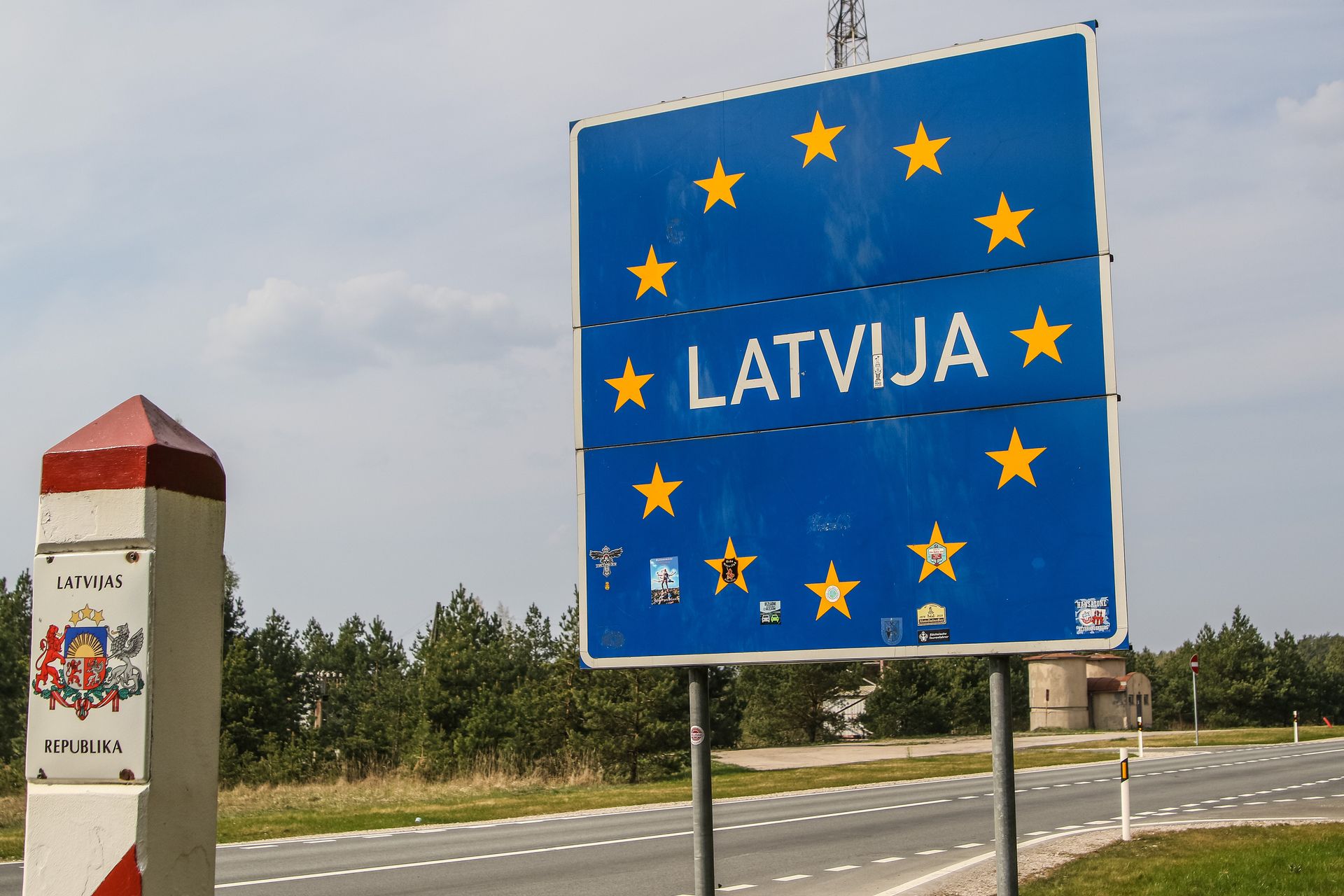
Latvia reported an unidentified drone in its airspace on May 21, triggering air alerts across several regions and the deployment of NATO fighter jets. The incident is the third straight day of drone-related alerts in the Baltic states, underscoring escalating regional security risks tied to suspected Russian jamming and redirecting of drones. Latvia has already strengthened eastern border air defenses, while similar incidents in Estonia and Lithuania suggest rising defense and geopolitical tensions across NATO’s eastern flank.
The market implication is not the drone itself but the normalization of low-cost, high-frequency airspace violations along NATO’s eastern flank. That shifts Baltic defense from a contingency expense to a recurring operating requirement, which should support a multiyear re-rating of local air defense, EW, counter-UAS, and base-protection budgets even if headline spending remains capped. The second-order winner is not just prime defense contractors, but the sensor, interceptor, and command-and-control layers that can be procured and deployed faster than traditional aircraft or armored systems.
This also raises the probability of political spillover in fragile coalition governments, especially where incidents are being linked by voters to public safety and state competence. That creates a near-term asymmetry: even a single successful incursion or civilian casualty could trigger emergency procurement, expanded border deployments, and accelerated EU/NATO funding, while any de-escalation in Ukraine would only partially unwind the need because jamming and misdirection are now part of the threat model. The vulnerability is infrastructure concentration — airports, oil depots, power assets, and logistics corridors become higher-value targets for accidental or deliberate spillover, increasing insurance and resilience capex demand.
The consensus may be overemphasizing the chance of a direct NATO-Russia kinetic escalation and underestimating the persistence of “gray-zone” stress on budgets and political capital. That argues for treating this as a slow-burn defense and resilience trade rather than a one-day risk event. The biggest mistake would be to fade defense suppliers on the assumption that the market has already priced in Ukraine; the marginal buyer here is Eastern Europe, and its procurement cycle is just starting to inflect.
AI-powered research, real-time alerts, and portfolio analytics for institutional investors.
Request DemoOverall Sentiment
moderately negative
Sentiment Score
-0.35
Near term, the highest-beta reaction should be in European defense names with air-defense exposure and in contractors tied to border surveillance and electronic warfare. Over 3-12 months, look for follow-on spending in civil defense, infrastructure hardening, and critical asset protection, which is broader than traditional defense and could benefit industrial security and energy infrastructure names as well.
