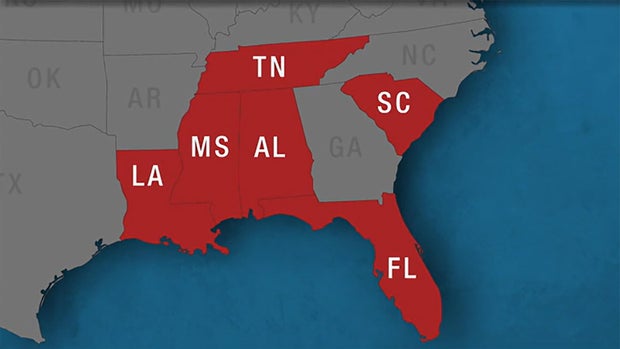
The Supreme Court's 6-3 Louisiana v. Callais ruling makes it harder to draw majority-Black congressional districts, accelerating efforts by Republican-controlled states to redraw maps before the 2026 elections. The decision could reduce Black representation in Congress and intensify legal and political fights over race-conscious redistricting. While not a direct market driver, it is a significant policy and governance development with potential implications for the balance of power in Washington.
The investable impact is less about constitutional theory and more about how quickly map changes can convert marginal districts into durable incumbency. In the near term, the biggest beneficiaries are not just Republicans in targeted states, but any operator whose vote share is geographically efficient and whose base is highly localized; that favors hard-partisan campaign infrastructure, direct-mail vendors, and media-adjacent spending in states likely to redraw before the next election cycle. The loser is the “crossover coalition” model: districts that relied on racial bloc voting protections now face higher volatility, which should increase turnover risk in a handful of House seats even if the national popular vote is unchanged.
The second-order effect is that this adds another tailwind to the already high-value House majority because it lowers the probability that swing-state suburban improvements translate into seats. That creates a self-reinforcing spending loop: parties will spend more on legal challenges, voter-contact, and turnout microtargeting, while outside groups shift budgets toward a smaller set of truly competitive districts. Expect the clearest market signal in 6-18 months as states finalize maps and campaign vendors lock in ad buys; the legal overhang means the path is volatile, but the direction of travel is toward fewer competitive races and more posturing around a narrower battlefield.
The consensus may be overestimating the direct market impact and underestimating the litigation premium. Many of the economic beneficiaries of heightened electoral uncertainty are not obvious “political” names but firms with exposure to compliance, legal services, data analytics, and field operations; those revenues tend to be sticky and recur every cycle. The real reversal risk is a court injunction or federal legislative response that slows implementation, but that is a multi-quarter process, so the near-term trade is into rising election-adjacent spend rather than a directional bet on any single party outcome.
AI-powered research, real-time alerts, and portfolio analytics for institutional investors.
Request DemoOverall Sentiment
mildly negative
Sentiment Score
-0.15
Ticker Sentiment
