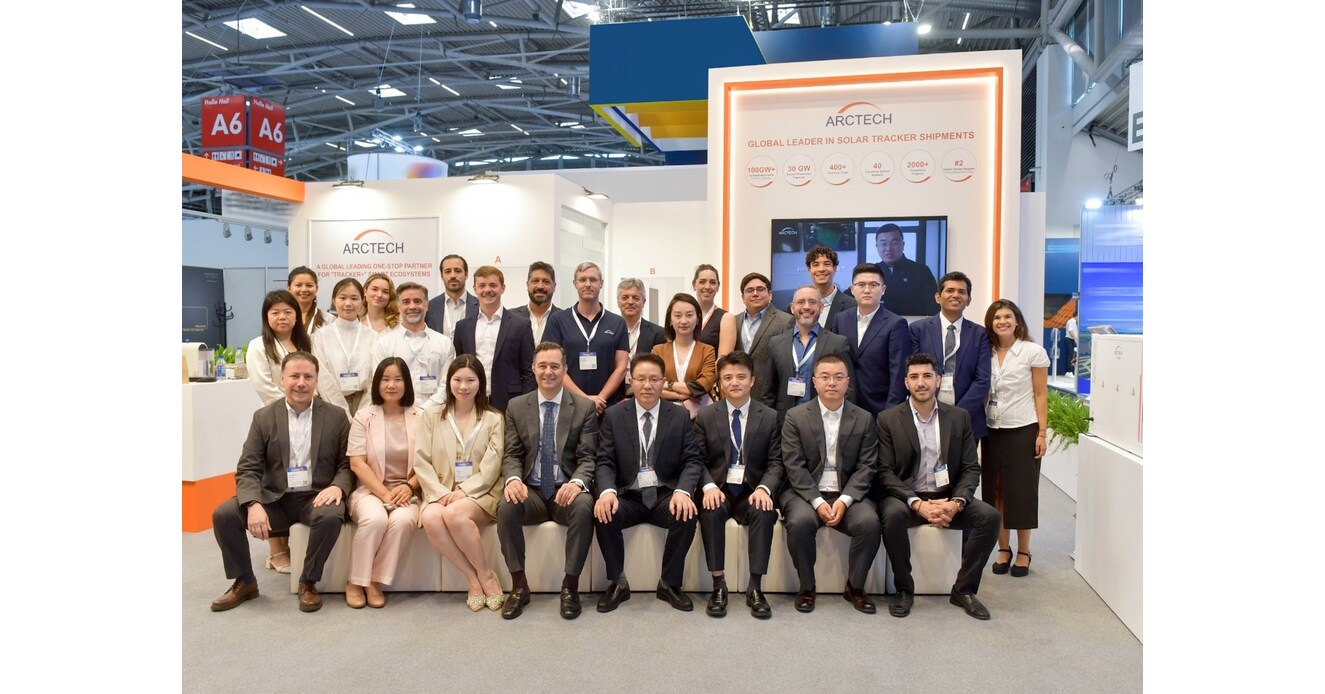
Arctech a présenté à Intersolar Europe 2026 son écosystème « Tracker+ » (adaptabilité et optimisation du rendement, dont SkySmart II avec protection contre le vent et optimisation basée sur l’IA). L’entreprise cite des réalisations en Europe sur des projets de 342 MW et 67 MW en Roumanie, 266 MW en Grèce et 52 MW en Pologne, et annonce de nouveaux contrats totalisant 132 MW en Turquie et en Zambie. Le message est globalement positif pour la traction commerciale et la différenciation technologique, avec un impact attendu plutôt modéré sur les marchés financiers.
This reads more like competitive signaling than a fundamental inflection. The economically important question is not whether Arctech can show up at European trade fairs, but whether its localized validation and terrain-specific products force incumbents to defend price or concede share in the higher-margin segment of European tracker awards. If that happens, the first-order loser is not solar demand itself but tracker ASPs and aftermarket economics, which matters most for vendors with weaker balance sheets and less service attach.
The second-order effect is that Europe’s migration toward uneven terrain, high-wind, and agrivoltaic sites increases the value of engineering depth, wind-stow software, and local certification. That should favor the best-capitalized tracker vendors over commodity hardware players, but only if they can maintain pricing discipline; otherwise, the addressable market grows while margin pools shrink. Public-market read-through is mostly on NXT, ARRY, and to a lesser extent FTCI, with the bigger issue being Europe mix and execution quality rather than headline order counts.
The contrarian view is that investors may overstate the significance of incremental project wins announced at conferences. The real bottleneck in Europe remains interconnection, permitting, and financing, so a stronger product pitch does not automatically translate into accelerated shipments. If the next 1-3 quarters do not show higher European backlog conversion or stabilizing gross margins, this should be treated as noise; the thesis is falsified by any evidence that pricing remains rational despite rising competition.
AI-powered research, real-time alerts, and portfolio analytics for institutional investors.
Request DemoOverall Sentiment
mildly positive
Sentiment Score
0.25
