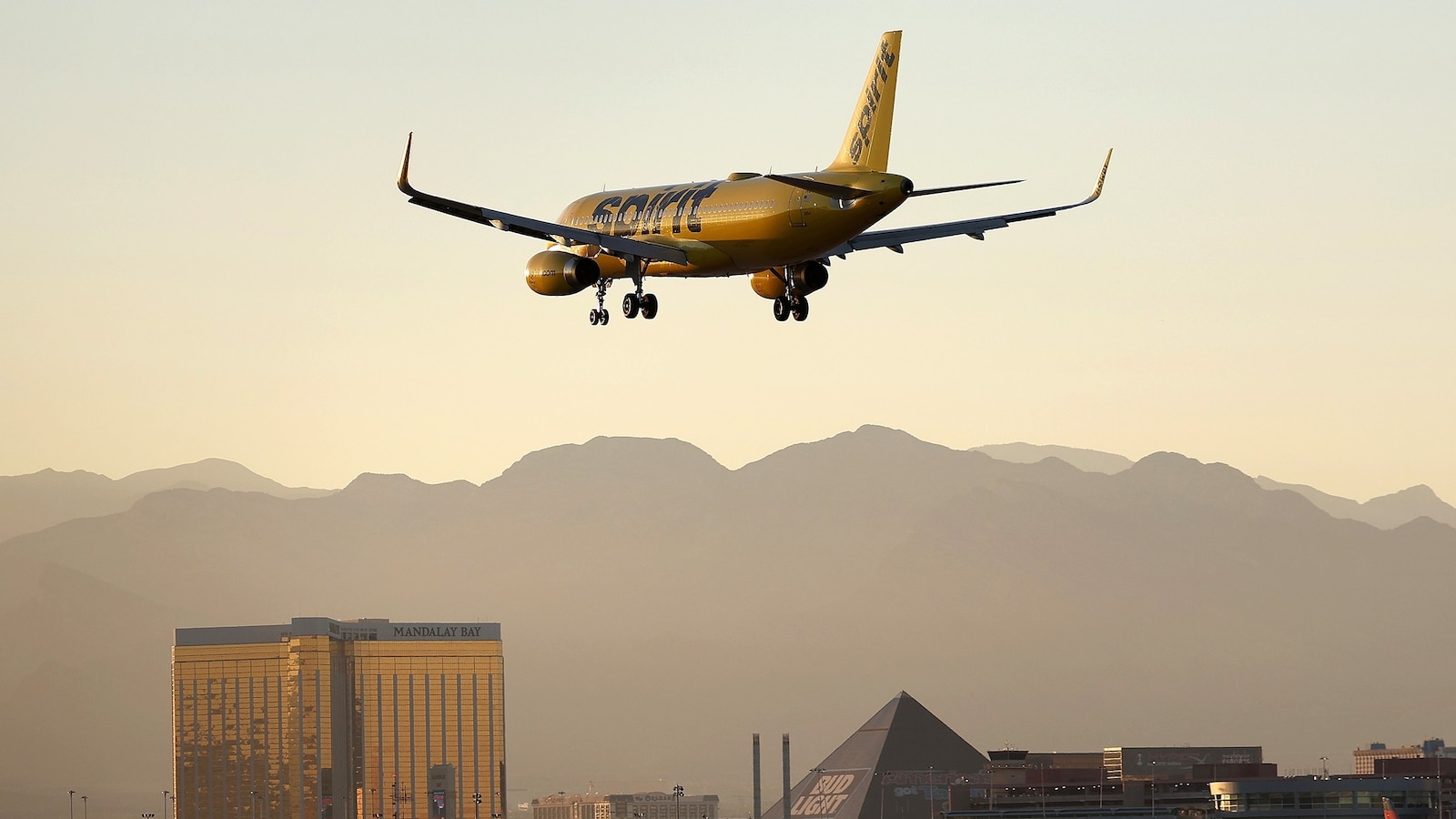
Spirit Airlines said it has started an orderly wind-down of operations effective immediately, canceling all flights including its scheduled 277 flights for Saturday. The airline’s final flight landed after midnight, and it is working to get more than 1,300 crew members home while passengers are being offered refunds or rebooking options through other carriers. The shutdown follows a second bankruptcy filing, a failed $500 million rescue discussion, and severe pressure from higher jet fuel prices and weak financials.
Spirit’s collapse is less about one carrier and more about a rapid re-pricing of the ultra-low-cost demand stack. The near-term winners are the incumbents with dense overlap on Spirit routes, but the bigger second-order effect is that the low-fare anchor disappears first, then fare dispersion widens across the whole leisure network over the next 1-2 quarters. That matters because Spirit was not just a competitor; it was the market-clearing price setter in several leisure-heavy city pairs, so removing it should lift realized yields for peers even if headline load factors dip.
The immediate trade is on capacity absorption, not macro travel demand. UAL and AAL should see the cleanest benefit because they can redeploy bigger-gauge aircraft and capture stranded bookings on routes Spirit under-served; the earnings lift is modest in the next 30-60 days but can compound if competitors don’t add back capacity quickly. BA is more indirect: any sustained reduction in narrowbody demand from a smaller ULCC ecosystem is a negative over 12+ months, but the bigger issue is that airline fleet discipline may improve, which could support pricing on used aircraft and narrowbody utilization.
The key risk is policy intervention and rapid competitor share-grab. If regulators or major airlines push aggressive rescue fares for more than a few weeks, Spirit’s share loss could be partially transferred rather than monetized, compressing the duration of the margin tailwind. The contrarian read is that consensus may be underestimating how slowly consumers normalize to the new fare floor; once the lowest-priced option vanishes, pricing power tends to persist for multiple booking cycles, not just a few days.
A separate catalyst is fuel. Higher jet fuel prices amplify the damage to ULCC economics because their model has the least room to absorb input-cost shocks; if crude remains elevated for another quarter, the industry may be forced into a capacity rationalization that further benefits larger legacy carriers. The market likely prices the bankruptcy as a one-off, but the more important signal is that financing is now too expensive for structurally weak airlines, raising the probability of more consolidation or exits.
AI-powered research, real-time alerts, and portfolio analytics for institutional investors.
Request DemoOverall Sentiment
extremely negative
Sentiment Score
-0.96
Ticker Sentiment
