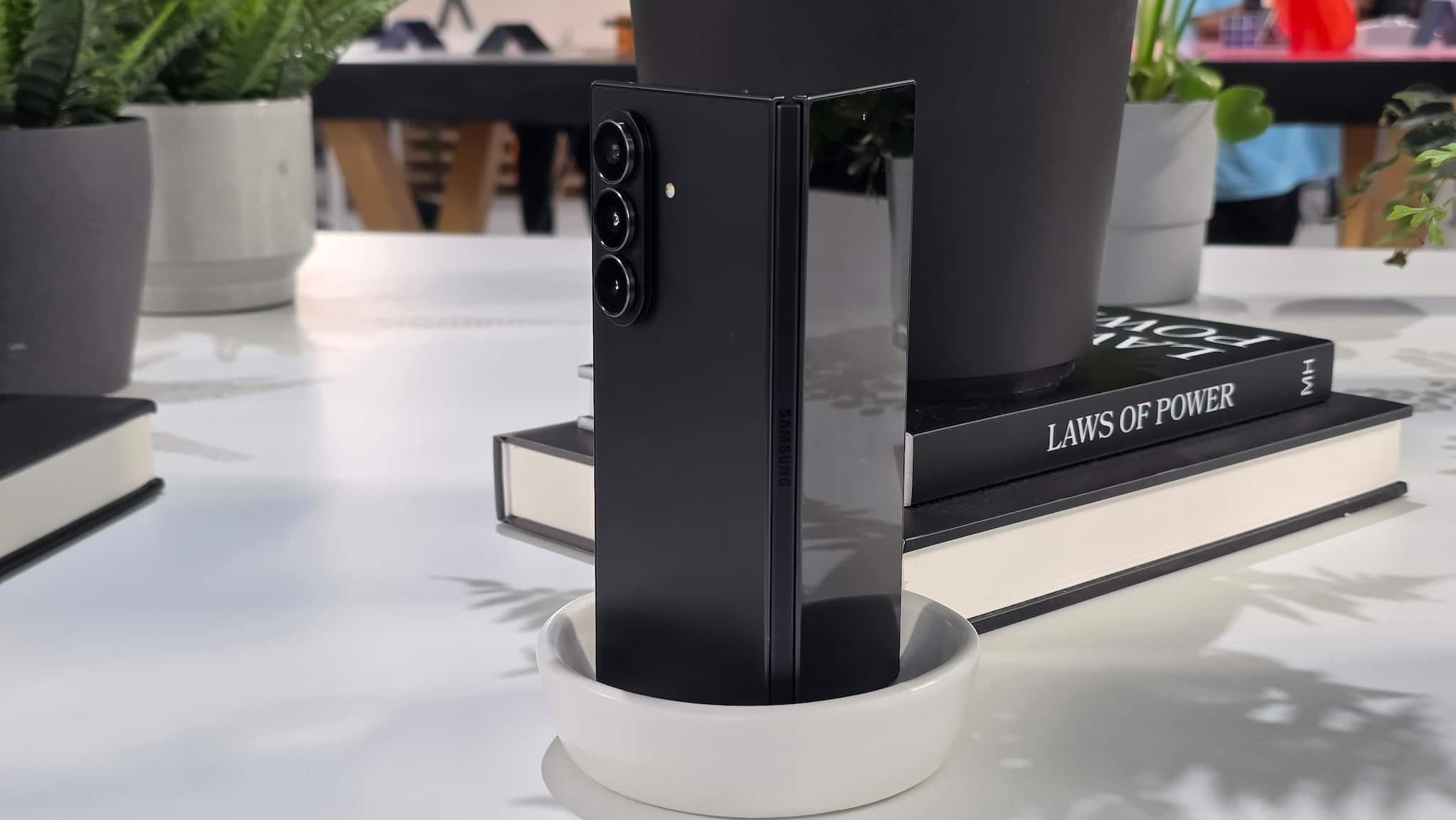
The article profiles five flagship foldable smartphones that defined the 2025 segment through hardware and software differentiation: Samsung's Galaxy Z Fold 7 (July) trims weight with a titanium backplate to 215g, retains an 8.0-inch inner and 6.5-inch cover display, adds a 200MP main camera, Snapdragon 8 Elite for Galaxy and a 4,400mAh battery but no built-in S Pen slot. Vivo's X Fold 5 (July) emphasizes battery leadership with a 6,000mAh silicon-carbon cell and 80W wired/40W wireless charging plus IPX8/IPX9 ratings and a Zeiss triple 50MP sensor array; Google's Pixel 10 Pro Fold (Oct) focuses on AI longevity with Tensor G5, on-device Gemini Nano and a seven-year update promise with IP68; Samsung's Galaxy Z Flip 7 targets clamshell productivity with DeX, a 4.1-inch FlexWindow, 6.9-inch inner display, Exynos 2500 and a 4,300mAh battery. These product advances signal intensifying competition and feature-driven differentiation in the premium smartphone market, but contain limited near-term direct impact on financials or market-moving catalysts.
Market structure: Winners are chipset and AI-platform owners (GOOGL for on-device Gemini, QCOM for Snapdragon variants, TSM for wafers) and specialist component suppliers (SONY sensors, select battery suppliers) because foldables trade at ~30–50% ASP premium and demand higher-density batteries and advanced cameras. Losers include low-end slab OEMs and accessory makers that rely on uniform slab form factors; pricing power shifts to OEMs that control both hardware and AI stacks. Supply/demand: expect tightness in silicon‑carbon cell supply and periscope modules into H1 2026, which can sustain component makers’ revenue growth 10–20% above sector baseline.
Risk assessment: Tail risks include accelerated antitrust action against GOOGL within 6–12 months that could cap platform monetization, a handset demand shock if macro slows (smartphone premium segment down 15–25% in a downturn), or manufacturing yield issues for foldables that inflate costs 5–10%. Near term (days–weeks) watch product-cycle news and holiday preorders; short term (3–9 months) watch supply constraints and promotional pricing; long term (12–36 months) adoption curve (if foldables remain <8% of global smartphones by end-2026, hardware suppliers’ growth will disappoint). Hidden dependency: software stickiness (updates, DeX/Gemini) is the real moat, not hinge tech.
Trade implications: Actionable direct plays: establish 2–3% long GOOGL for a 12‑month horizon (target +15–25%, stop -8%), and 1–2% long QCOM for mobile SoC demand (target +12%, stop -10%). Tactical pair: long GOOGL / short SSNLF (Samsung Electronics ADR) sized 1:1 to express software AI win vs incumbent hardware-heavy margins; trim if Samsung reports >5% sequential ASP improvement. Options: buy 9–12 month GOOGL LEAP call spreads to cap premium; consider 3–6 month QCOM calls into handset seasonality.
Contrarian angles: The market underestimates software/service monetization from long update promises (Google’s 7-year pledge creates multi-year ARPU upside) while overrating immediate hardware adoption — foldables may follow a 3–4 year S‑curve, not instant mass market. Unintended consequence: bigger batteries and faster charging increase regulatory/thermal risks that could trigger recalls and margin hits; monitor supplier concentration thresholds (single-supplier share >40%) as a trigger to hedge. Historical parallel: phablet rise took several cycles—don’t pay full multiples unless adoption metrics (install base growth, attach rates for services) clear 2–3 consecutive quarters.
AI-powered research, real-time alerts, and portfolio analytics for institutional investors.
Request DemoOverall Sentiment
mildly positive
Sentiment Score
0.35
Ticker Sentiment
