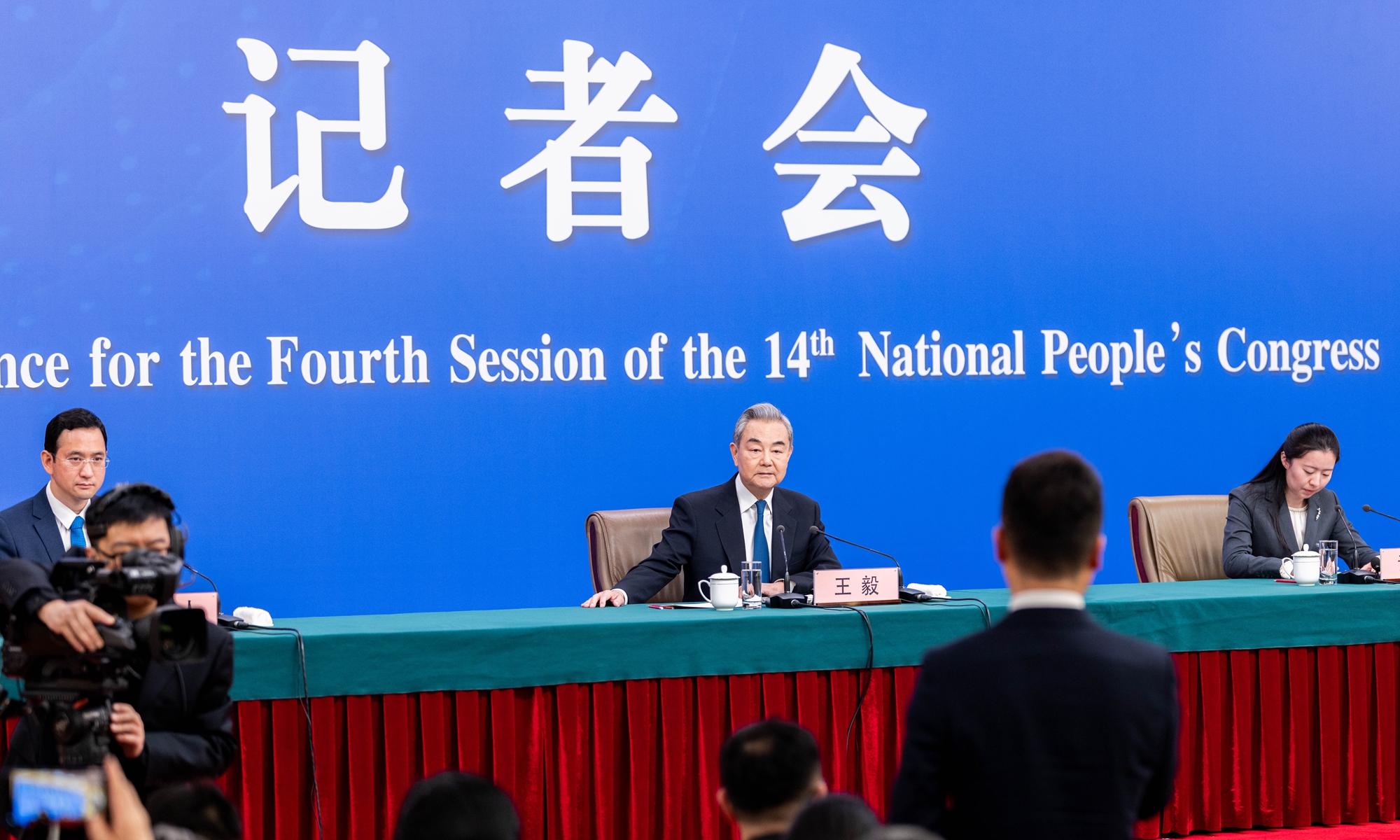
Wang Yi held a ~90-minute press conference on March 8, 2026 addressing 21 questions and signaling a stabilization-oriented diplomatic stance ahead of an expected China–US summit later this month. He touted China’s four global initiatives and the 2025 Global Governance Initiative (GGI), which he said was echoed by over 150 countries and organizations, and emphasized multipolarity while rejecting a China–US co-governance model. Implication for portfolios: the calmer diplomatic messaging modestly reduces near-term bilateral escalation risk but is unlikely to move markets materially; monitor summit outcomes for any concrete policy or security impacts.
Beijing’s calibrated public diplomacy — stability signaling to Washington while doubling down on Global South leadership — will compress a portion of the geopolitical risk premium but simultaneously harden policy vectors that drive regional rearmament and infrastructure deals. In the event the expected US-China summit goes ahead, anticipate an immediate 1–3 week reduction in volatility: China equity implied vol could fall by ~15–25% vs realized vol, and USD/CNH downside pressure could reappear as capital flows normalize.
Second-order demand shifts matter more than headline rhetoric. A sustained push into Global South infrastructure and governance frameworks tends to re-route marginal trade and project flows toward BRI-connected corridors, lifting demand for copper, bulk shipping and steel over 12–36 months (a reasonable uplift is +5–15% incremental commodity offtake for targeted corridors). Conversely, hardening historical narratives toward Japan/Taiwan increase the odds of multi-year defense procurement cycles in Northeast Asia that favor prime contractors and specialist electronics suppliers.
Key near-term catalysts to watch are (1) the US-China summit outcome (days–weeks), (2) any large-scale security shock around Taiwan/Japan or the Middle East (days–weeks), and (3) announced BRI/Global Governance Initiative MOUs and financing packages (months). Tail risks — targeted sanctions, a summit collapse, or a cross-strait incident — can reverse sentiment quickly; position sizing should assume a 20–40% drawdown scenario within 30–90 days for concentrated geopolitical trades.
AI-powered research, real-time alerts, and portfolio analytics for institutional investors.
Request DemoOverall Sentiment
mildly positive
Sentiment Score
0.15
