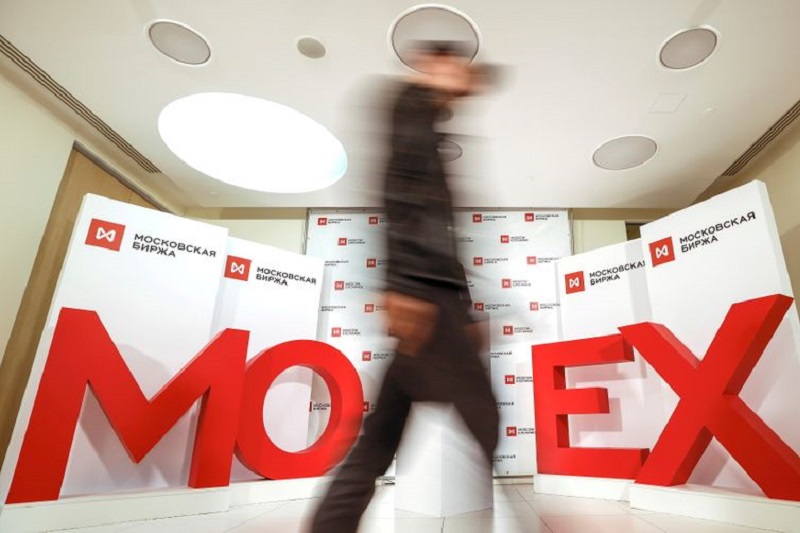
U.S. strikes on Iranian military sites after an attack on a cargo ship underscore escalating geopolitical risk, with immediate spillovers into commodities and FX. Crude oil fell 2.34% to $70.24 a barrel and Brent dropped 2.62% to $73.52, while gold rose 1.37% to $4,103 an ounce. The MOEX Russia Index gained 0.97%, but the broader tone is risk-off and volatile given the conflict backdrop and sharp moves in USD/RUB (+4.45% to 79.23) and EUR/RUB (+4.14% to 89.81).
The key market signal is not the headline itself but the divergence across asset classes: local equities are rallying even as oil sells off and FX weakens sharply. That combination usually means equities are being priced as a relative-value carry trade rather than a pure geopolitical hedging instrument — investors are assuming the shock is contained, while the currency market is repricing sanctions, capital controls, and external financing risk over a longer horizon.
Energy beneficiaries in Moscow are likely seeing a second-order bid from domestic policy expectations, not just crude exposure. If the state leans harder on upstream taxes or forces quasi-fiscal support for the budget, the upside in oil names can fade quickly; upstream cash flow gains may be partially offset by future tax capture within 1-2 quarters. The more durable winner is likely any exporter with hard-currency revenue and limited import intensity, while highly domestic and utility-like balance sheets remain exposed to financing stress if FX volatility persists.
The bigger contrarian point is that the strongest medium-term signal may be the move in the currency, not the index. A sustained RUB devaluation tends to compress real household incomes, tighten local credit, and eventually pressure domestic-demand sectors even if headline inflation lags by several months. That creates a setup where the first reaction is risk-on for commodity names, but the second-order trade is defensive: short domestic cyclicals, long hard-currency earners, and own downside protection on the currency path rather than the equity index alone.
Near term, the geopolitical risk premium can reverse quickly if the response is perceived as symbolic or if commodity markets decide supply disruption is unlikely. But if the situation broadens into shipping or insurance constraints, the current move may be underpricing a 2-6 week repricing in freight, insurance, and sanctions-sensitive equities. The market is still treating this as an event risk; the better trade is to position for policy and FX spillovers that persist after the headline fades.
AI-powered research, real-time alerts, and portfolio analytics for institutional investors.
Request DemoOverall Sentiment
neutral
Sentiment Score
-0.05
