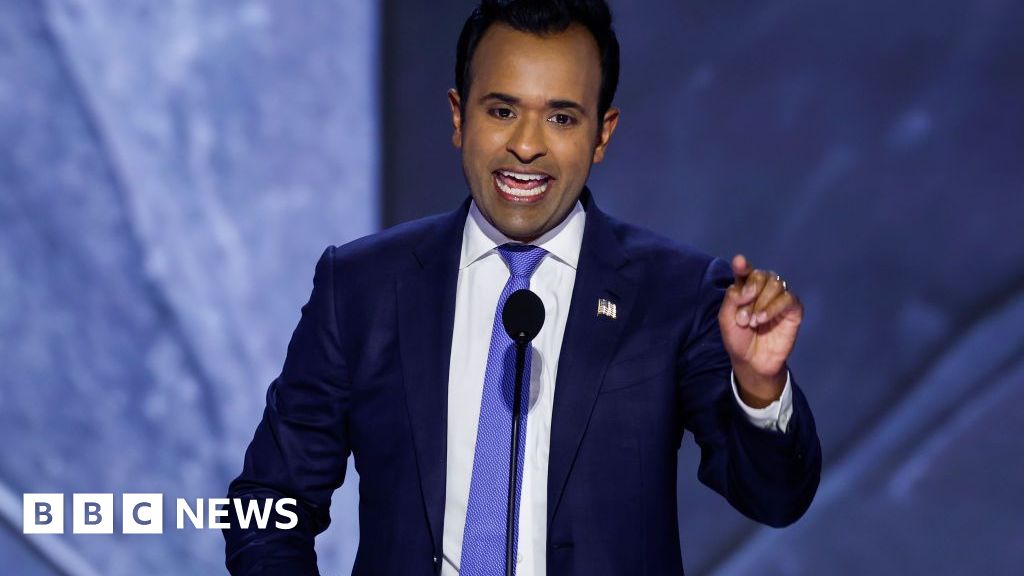
Vivek Ramaswamy won the Republican nomination for Ohio governor, advancing to a general election matchup with Democrat Amy Acton. The race is likely to center on the political fallout from Covid-19 policies, including masking, school closures, and Ohio's pandemic response under Mike DeWine. The article also notes Republican primary challenges in Indiana over Trump's redistricting push, highlighting broader intra-party tensions.
Ramaswamy’s win matters less as a gubernatorial update than as a signal that Ohio Republican politics are consolidating around a Trump-aligned, nationalized message. That lowers the odds of a messy primary and raises the probability of a disciplined, high-spend general election centered on culture-war and pandemic backlash themes, which tends to help media, consulting, and digital ad names more than traditional field operations. The more interesting second-order effect is on governance: a potential Ramaswamy administration would likely be more aggressive on agency rollback, school policy, and public-health bureaucracy, which could improve the regulatory backdrop for Ohio-based healthcare, education, and industrial employers over a 12-24 month horizon.
The tradeable catalyst is not the nomination itself but the campaign’s framing. If the race stays anchored to COVID-era grievances, the message is effective with Republican turnout but weak among suburban independents; that creates a path for volatility rather than a clean red-wave trade. The risk to that thesis is that Acton remains a known quantity to moderates and DeWine’s defense of her blunts the strongest attack line, potentially making the race more competitive than the early media narrative implies. In that scenario, GOP-aligned local governance expectations could get repriced lower as the market discounts a closer-than-expected result.
Contrarian angle: the consensus likely overestimates the benefit to Ramaswamy from name recognition and underestimates fatigue with pandemic-era politics. Ohio has become redder, but gubernatorial races still reward managerial credibility; if the campaign becomes a referendum on identity politics rather than services and inflation, margins can compress fast. The bigger market implication may be in donor and lobbying flows: a credible Ramaswamy path likely pulls capital toward national GOP infrastructure and away from state-level issue advocacy, with more benefit for digital platforms and event-driven political spend than for legacy consultants.
AI-powered research, real-time alerts, and portfolio analytics for institutional investors.
Request DemoOverall Sentiment
neutral
Sentiment Score
0.05
