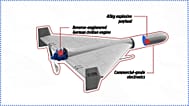
Greece and France are deploying military assets to Cyprus after Iranian-made drones struck RAF Akrotiri; Greece has sent four F-16s and two frigates are en route, while France will dispatch a warship plus land-based anti-drone and anti-missile systems, and Germany has signalled positive response to sending a warship. The drones, which Cyprus says were launched from Lebanon and likely linked to Hezbollah, caused only minor damage, but the buildup increases regional security risk and could raise short-term risk premia for defense exposures and Mediterranean geopolitics.
Market structure: Immediate winners are defense manufacturers and naval/aircraft maintenance providers — expect a 3–8% re-rating for listed large-cap defense names in the EU/US over 1–3 months as governments fast-track ship/air deployments and anti-drone kit procurement. Losers in the short run are Eastern Med tourism, regional airlines and insurers exposed to military escalation; seat-capacity/utilization could compress 5–15% domestically over weeks if flight corridors are restricted.
Risk assessment: Tail risks include a wider Lebanon–Israel/Iran escalation or a strike on NATO-linked assets that would push oil +5–15% and equities into risk-off (VIX +30–80%) within days; probability low (<15%) but market-impact high. Over 3–12 months, sustained procurement budgets (defense capex) are more likely than full regional war, implying structural upside for defense revenues but policy/regulatory risks around export controls.
Trade implications: Tactical trades favor defensive long exposure via ETFs and selective sovereign-capable primes, plus short/put protection on European travel and regional airlines for a 1–3 month hedge. Cross-asset: buy USD/CHF or USD (expect safe-haven flows), add 0.5–1% GLD allocation as convex insurance; consider buy-write or call-spread structures to reduce premium on defense longs.
Contrarian angle: Consensus may over-rotate to big US primes (LMT, RTX) while underpricing European mid-caps (LEONARDO LDO.MI, BAE BA.L) who can capture fast EM/EU orders; also anti-drone tech vendors (KTOS, LDO.MI) are overlooked. Market may overshoot risk-off; a 10–15% sell-off in cyclical travel names would create re-entry opportunities after a defined geopolitical news trough (look for 72–96-hour lull).
AI-powered research, real-time alerts, and portfolio analytics for institutional investors.
Request TrialOverall Sentiment
moderately negative
Sentiment Score
-0.35
