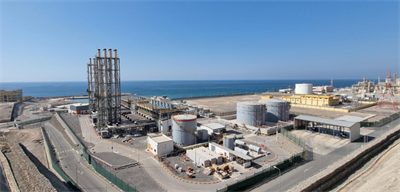
Wärtsilä has secured a seven-year extension to its operation & maintenance agreement with Musandam Power Company (Oman), building on eight years of support and an order booked in Q2 2025. The Musandam plant—comprising 15 Wärtsilä 34DF dual-fuel engines with 120 MW net capacity and >99% availability—is the region’s main grid source, underpinning recurring service revenues and lifecycle contracts. The deal reinforces Wärtsilä’s service footprint in a market pursuing a 2050 net‑zero target and highlights the company’s role in enabling flexible gas-to-cleaner-fuel generation while supporting predictable cashflows.
Market structure: The seven-year O&M extension reinforces Wärtsilä’s annuity revenue model and benefits aftermarket-heavy OEMs (Wärtsilä WRT1V, Siemens Energy SIE.DE) and IPPs that prefer outsourced operations; expect 100–300bps uplift to service-margin multiples for best-in-class providers over 12–24 months. Losers are standalone temporary/merchant peakers and local third‑party service providers competing on price; pricing power shifts to incumbents who can guarantee >99% availability. The transaction signals steady regional demand for flexible gas/diesel dual‑fuel capacity while leaving commodity (LNG/gas) demand structure largely unchanged in the near term.
Risk assessment: Tail risks include a faster-than-expected Omani/ GCC policy push to retire gas plants (stranding risk over 5–15 years) and a major operational failure that would impair Wärtsilä’s reputation and contract renewals; assign low-probability but high-impact (30–50% contract churn) scenarios. Near-term (days–months) impact is minimal to equities; medium-term (quarters) upside accrues via visible backlog and recurring revenue; long-term (3–10 years) exposure depends on fuel-transition pathways (hydrogen/biogas readiness). Hidden dependencies: O&M economics hinge on gas availability, FX-denominated contracts and sovereign counterparty credit; catalysts include regional IPP renewals and Wärtsilä service‑book disclosures in next 60–90 days.
Trade implications: Direct play is a modest long in WRT1V to capture annuity re-rating (target +15–25% in 12 months) and buying 12–18 month call spreads to limit premium. Pair trade: long WRT1V / short regionally-exposed merchant generator (e.g., ACWA on Tadawul/OTC equivalents) to isolate service annuity vs merchant power risk for 6–12 months. Rotate portfolio +200bps towards industrials/services (OEM aftermarket) and trim pure-play merchant thermal generators by 50% over the next quarter.
Contrarian angle: Markets may underweight the high retention value of regional O&M footprints — this can produce a 10–30% re-rating if Wärtsilä converts installations to fuel‑agnostic (H2-ready) assets and upsells storage/controls. Historical parallel: Caterpillar/ABB aftermarket re-ratings after multi-year service contracts; downside is overpaying for perceived annuity if renewals slip (<70% retention) or if sovereign policy accelerates decarbonisation faster than forecast.
AI-powered research, real-time alerts, and portfolio analytics for institutional investors.
Request DemoOverall Sentiment
mildly positive
Sentiment Score
0.30
