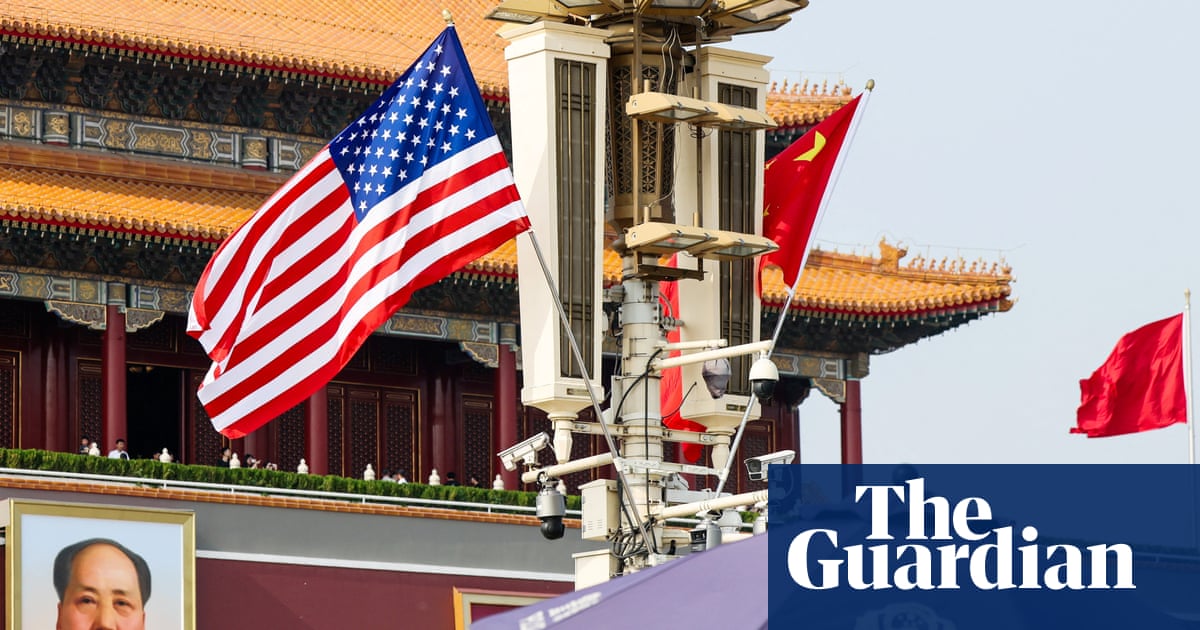
The article portrays Trump’s Beijing visit as a symbol of a more confident China and a more strained US-China relationship, with ordinary Chinese expressing skepticism about any lasting diplomatic progress. It notes heightened security in Beijing and references Taiwan tensions as a key point of friction ahead of the Xi-Trump meeting. The piece is largely geopolitical commentary with limited direct market implications.
This is less about a single summit and more about a gradual repricing of China’s political risk premium. The market implication is that Beijing is likely to tolerate a longer period of strategic friction rather than seek a near-term reset, which argues for persistent de-risking of China-facing cyclicals and higher sensitivity to headline-driven volatility in EM proxies over the next 1-3 months.
The more interesting second-order effect is that nationalism can partially offset weak domestic demand by supporting “policy pride” consumption, but it also makes concessions to the US harder. That means any improvement in bilateral tone is likely to be cosmetic and short-lived unless accompanied by concrete trade or tech outcomes, so rallies in China beta may fade faster than in prior cycles. Exporters with US revenue exposure are also vulnerable to abrupt rhetoric shifts, especially in semis, industrials, and consumer hardware.
The contrarian angle is that the market may be overestimating how much this matters for broad risk assets outside China. A performative summit can reduce near-term tail risk without changing the structural rivalry, which may paradoxically support a temporary squeeze in underowned Chinese equities or EM FX. But that’s a trade, not an allocation shift: the underlying regime remains one of low-trust coexistence, with policy headlines likely to dominate price action more than fundamentals for weeks.
Catalyst-wise, watch for any language on Taiwan, tariffs, or technology controls in the 24-72 hours after the meeting; those are the variables that can turn a symbolic visit into a genuine market event. The bigger time horizon is 6-12 months: if rhetoric hardens into new export restrictions or secondary-sanction threats, the real losers will be supply chains that depend on China final assembly but sell into the US consumer. Until then, the path of least resistance is elevated volatility rather than a one-way selloff.
AI-powered research, real-time alerts, and portfolio analytics for institutional investors.
Request DemoOverall Sentiment
neutral
Sentiment Score
-0.05
