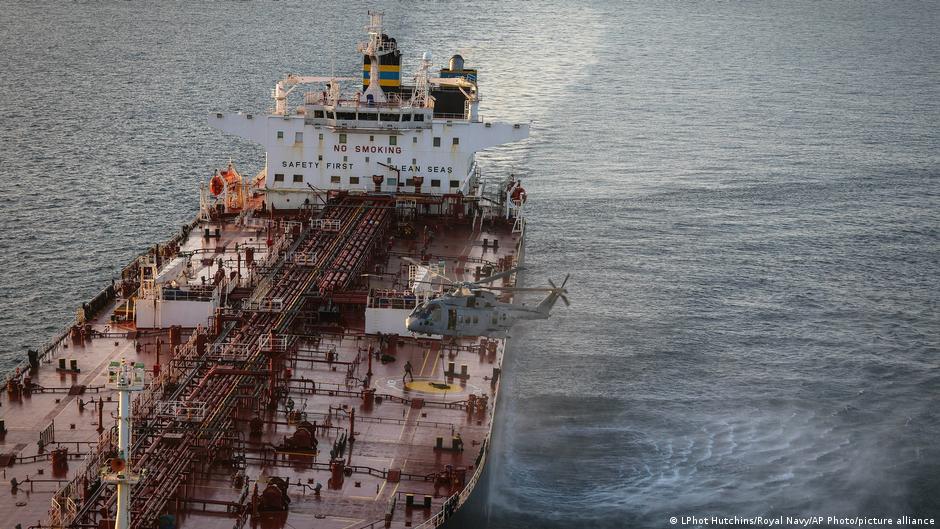
The UK seized the sanctioned Russian tanker SMYRTOS in the English Channel in its first UK-led shadow fleet interdiction, marking a new escalation in enforcement against Russia-linked oil shipments. The vessel, believed to be part of Russia's shadow fleet, will be moved to an anchorage off the South Coast of England and monitored under domestic and international law. The action is intended to reduce Russia's war-funding capacity, but the broader market impact is likely limited to energy/shipping risk sentiment rather than direct price effects.
This is less about one tanker and more about a regime shift in enforcement: the UK is signaling it is now willing to convert sanctions from paper pressure into physical seizure risk. That matters because shadow-fleet economics are already thin; any incremental friction from boarding risk, delay risk, insurance scrutiny, or cargo title uncertainty can erase margins on long-haul crude and refined product runs, especially for vessels operating on opaque ownership structures and non-G7 insurance.
The second-order winner is not just European security posture but the compliance stack around it: marine insurers, ship brokers, vetting firms, port service providers, and satellite/IMO tracking vendors should see higher demand as counterparties try to avoid accidental exposure. The loser set extends beyond Russian logistics to any distressed tanker tonnage that depends on jurisdictional arbitrage; a tighter enforcement template in the Channel can quickly propagate to the Med and Baltic, pushing shadow-fleet operators into slower, costlier routes and reducing effective transport capacity by more than the single-ship seizure suggests.
The key catalyst risk is replication. If the UK can sustain a cadence of interdictions over the next 4-12 weeks, freight rates for sanctioned-adjacent cargoes should reprice higher and escrow/insurance frictions could become self-reinforcing. The contrarian risk is political: one high-profile incident causing environmental damage, detentions being challenged in court, or allied coordination slipping would likely blunt the signal; the market will care more about follow-through than the headline because one seizure alone does not change Russia’s export volume materially.
From a positioning standpoint, the cleanest expression is long compliance/enforcement beneficiaries versus short exposed shipping optionality: the trade is asymmetric because the upside is a structural rerating in enforcement intensity while the downside is limited to a policy fade. I would avoid outright longs in broad tanker names unless they have minimal sanctions exposure; the more attractive trade is to own names that monetize complexity and monitoring rather than physical carriage. If escalation persists, the real P&L comes from the hidden tax on shadow-fleet logistics, not from the seized hull itself.
AI-powered research, real-time alerts, and portfolio analytics for institutional investors.
Request DemoOverall Sentiment
mildly negative
Sentiment Score
-0.20
Ticker Sentiment
