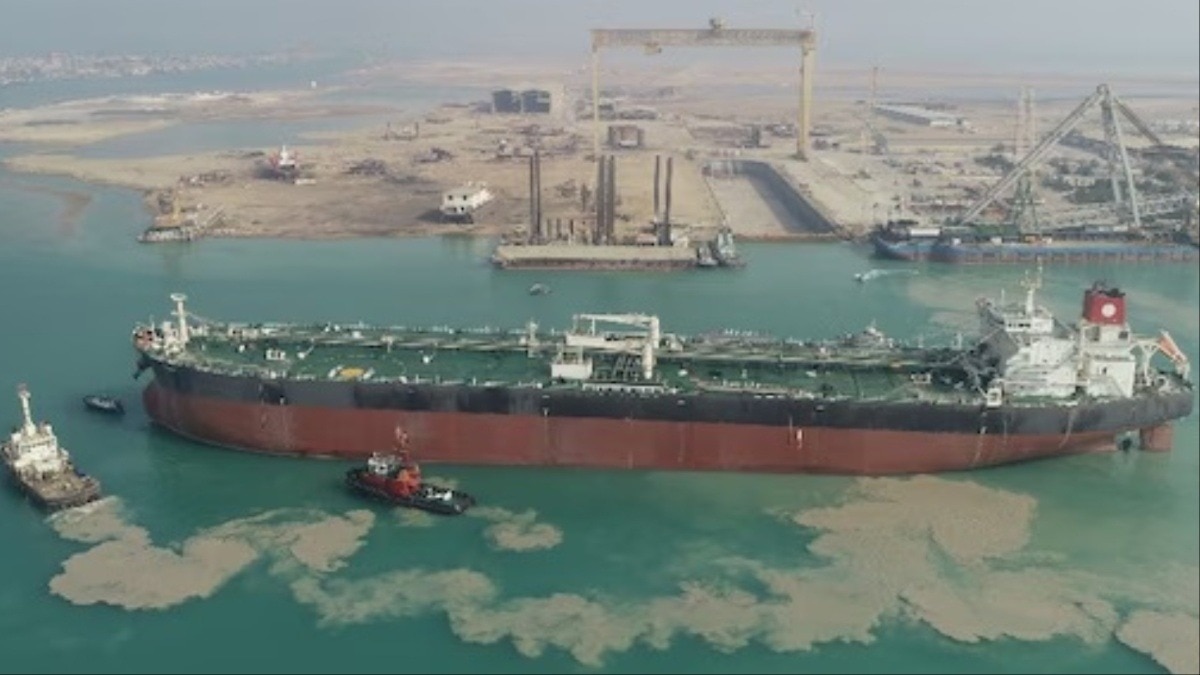
Satellite imagery shows multiple oil slicks in the Strait of Hormuz and wider Gulf, including a spill covering more than 120 square kilometres near Kharg Island. The article links the spills to US-Iran strikes on oil facilities and ships, highlighting added disruption to a corridor that carries about one-fifth of global oil and gas flows and remains critical to India's crude supplies. The situation is likely to support oil prices while raising geopolitical, shipping, and environmental risks across the region.
The market is likely underpricing how a localized maritime contamination event can cascade into a broader logistics shock. Even if the physical oil loss is modest, the bigger variable is vessel behavior: when route confidence drops, tankers slow, reroute, demand higher war-risk premia, and effectively remove capacity from the market, which tightens prompt barrels far more than the headline spill volume suggests. That creates a near-term bullish skew for crude and refined products, but a more ambiguous setup for shippers and insurers as earnings volatility rises with every incident.
The second-order winner is not just upstream energy; it is any asset tied to “clean” supply optionality. Refiners with secure non-Hormuz feedstock, LNG exporters outside the Gulf, and US Gulf Coast logistics assets gain relative advantage as buyers hedge against a corridor-disruption tail risk. Conversely, India- and Asia-linked importers face a hidden margin tax: higher freight, higher inventory carry, and potentially more working capital tied up in precautionary stockpiling over the next 1-3 months.
A key contrarian point: the setup is more inflationary than recessionary at first. Historically, the initial response to a Gulf shock is not demand collapse but precautionary accumulation, which can keep prompt prices bid even if macro data later weaken. The event is also ESG-negative in a way that matters for policy, because visible ecological damage raises the odds of tougher maritime monitoring, sanctions enforcement, and tighter insurance underwriting, all of which extend the disruption beyond the immediate conflict window.
The market may be overestimating how quickly supply normalizes once the shooting stops. Even if physical flows resume, risk premia tend to linger for weeks because counterparties reprice route risk slowly; that argues for owning volatility rather than outright directional exposure. The bigger downside risk to the trade is a credible de-escalation package or a rapid restoration of shipping confidence, which would compress freight and oil volatility before outright crude prices fully mean-revert.
AI-powered research, real-time alerts, and portfolio analytics for institutional investors.
Request DemoOverall Sentiment
strongly negative
Sentiment Score
-0.55
