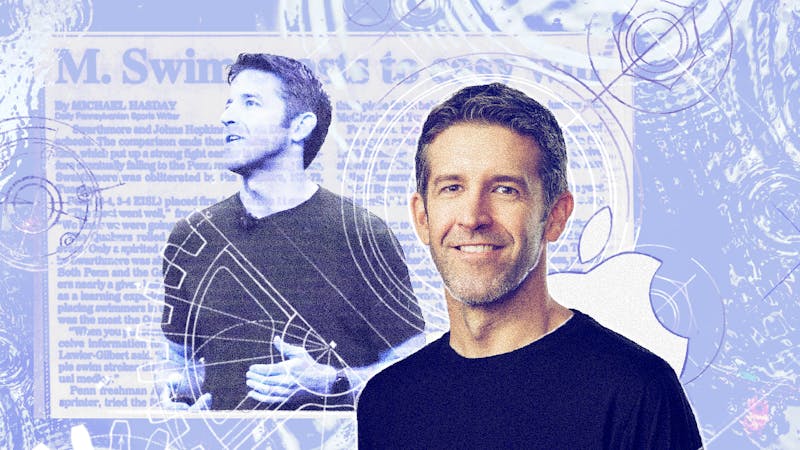
Apple named John Ternus, its senior vice president of hardware engineering, as Tim Cook’s successor, with the transition set for September. The article emphasizes Ternus’ 25-year Apple track record, engineering background, and leadership traits, portraying a steady, well-regarded internal succession rather than a disruptive change. Market impact is likely limited, but the appointment reinforces continuity in Apple’s management and hardware strategy.
A leadership transition at Apple after a long operating run is usually not a thesis breaker, but it does raise the probability of a subtle style shift: from capital-allocation and services optimization toward a more hardware-centric, engineering-led cadence. That matters because Apple’s multiple increasingly reflects confidence that the company can still create product-cycle torque without relying on a single category; a hardware engineer at the top may improve execution around product launches and supply-chain discipline, but it also increases scrutiny on whether the next 12-24 months produce true new-category or AI-era differentiation rather than incremental refreshes.
The second-order read-through is to suppliers and rivals. If the new regime emphasizes tighter design integration and cost discipline, it can compress the economics of lower-tier component vendors while favoring the highest-spec, most embedded partners. The market may initially reward this as a quality signal, but over time the bigger question is whether Apple can accelerate feature depth fast enough to keep premium pricing intact as the broader consumer-electronics cycle normalizes; if not, the appointment risks being interpreted as a governance-safe choice rather than a growth inflection.
The contrarian angle is that the stock may be underappreciating how much of Apple’s near-term upside is already tied to management continuity, not just leadership optics. If investor expectations drift toward a “no surprises” transition, the bar for upside on the name actually rises: you need evidence of sustained margin resilience and product-cycle acceleration within the next 2-3 quarters, or the market will likely fade the narrative. The most likely failure mode is not strategic disruption; it is a slow erosion in excitement that keeps the multiple capped while peers with clearer AI monetization stories pull relative capital.
AI-powered research, real-time alerts, and portfolio analytics for institutional investors.
Request DemoOverall Sentiment
mildly positive
Sentiment Score
0.30
Ticker Sentiment
