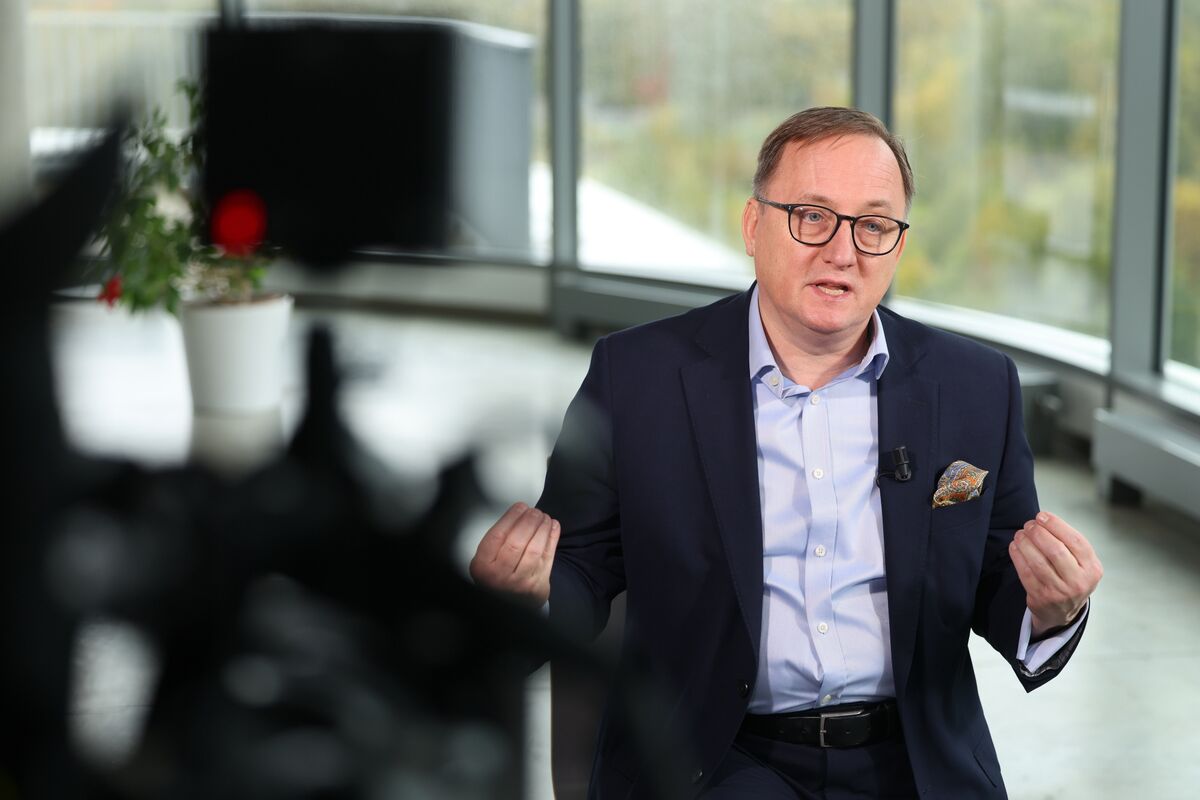
ECB Governing Council member Martins Kazaks said it is not a given that the ECB’s next rate move will be a hike, even as he still sees no reason to challenge market expectations for two cuts this year. He emphasized that policymakers have time to assess the economic damage from the Iran war before deciding on the next policy step. The remarks keep rate-cut/rate-hike expectations open and underscore a cautious, data-dependent ECB stance.
The key shift is not the direction of ECB policy but the widening distribution of outcomes. By explicitly keeping a hike as only one scenario, the Council is buying optionality: that tends to cap the front end from fully pricing a clean tightening path and leaves rate volatility elevated. In practice, this helps curve steepeners more than outright duration shorts because the market is being told to pay for both a hawkish path and a delay/risk-premium path tied to geopolitics.
The second-order effect is that banks and cyclicals face a more fragile funding backdrop than headline rate expectations suggest. If war-related damage spills into growth or energy prices, the ECB can still hike less even while keeping policy restrictive in rhetoric; that mix usually hurts rates-sensitive credit before it shows up in equities. The more vulnerable pocket is European small caps and levered domestic credits, where refinancing risk can reprice faster than earnings.
Consensus risk is overconfidence in a clean two-hike sequence. The market is likely underpricing how quickly an external shock can force the ECB to pause after delivering only partial tightening, which would squeeze crowded euro duration shorts and short-EUR positioning. The setup favors owning convexity rather than linear directional bets: if growth deteriorates, front-end yields can fall sharply, while if inflation reaccelerates, the path is still not straight enough to support tight risk positioning.
Over the next 2-8 weeks, the most tradeable expression is in rates vol rather than spot rates. The path dependency also argues for caution on European financials: they benefit from higher rates only if the growth impulse holds, and that linkage is now weaker. Any resolution or de-escalation in the geopolitical backdrop would mechanically unwind part of the risk premium, making the hawkish scenario reprice faster than the dovish one.
AI-powered research, real-time alerts, and portfolio analytics for institutional investors.
Request TrialOverall Sentiment
neutral
Sentiment Score
-0.05
