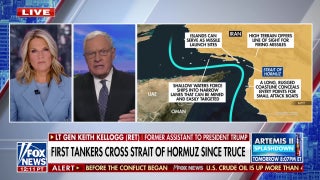
House Democrats have revived discussion of invoking the 25th Amendment after more than a year, with Minority Leader Hakeem Jeffries scheduling a caucus briefing hosted by Rep. Jamie Raskin and House Judiciary Democrats; this follows President Trump announcing a two-week ceasefire with Iran. A Democratic resolution to curb the president’s war powers in Iran was blocked by House Republicans on Thursday; removing a president via the 25th would require the vice president and a majority of the Cabinet or, if contested, two-thirds votes in both the House and Senate, making success unlikely given current alignments.
Public discussion of extreme governance remedies materially raises political-risk premia even when the underlying removal probability remains small; absent unanimous executive-branch cooperation the operational chance of involuntary removal stays below ~10% over the next 3 months, but uncertainty alone can lift realized volatility and risk premia across asset classes. Expect a 15–30bp lift in equity implied vol for headline-sensitive sectors (defense, energy, airlines) around major hearings or cabinet rumors, and a persistent 5–10bp increase in the term premium if brinkmanship accelerates.
Second-order commercial effects concentrate in three channels: (1) defense primes can capture incremental spending or contract re-pricing quickly because backlog converts to revenue in 6–12 months, implying a 5–15% re-rating if procurement narratives intensify; (2) maritime insurance and freight forwarders see margin compression and tariff pass-throughs within 1–3 months if passage risk perceptions rise, pressuring container lines and small-cap logistics names; (3) short-term oil-price realized volatility (not structural price) can rise 2–6% on shipping-route headline risk, creating tactical trading windows rather than a sustained commodity shock.
Catalysts to watch with precise windows: resignations or public Cabinet statements (days), formal congressional hearings or votes (1–8 weeks), and any credible operational escalation in a regional chokepoint (real-time). These events will determine whether market moves are transitory headline squeezes or persistent regime changes; monitor five names (defense primes, large airlines, GLD, short-term VIX) and set alerts for those trigger windows to time option purchases or pair rebalances.
AI-powered research, real-time alerts, and portfolio analytics for institutional investors.
Request DemoOverall Sentiment
neutral
Sentiment Score
0.00
