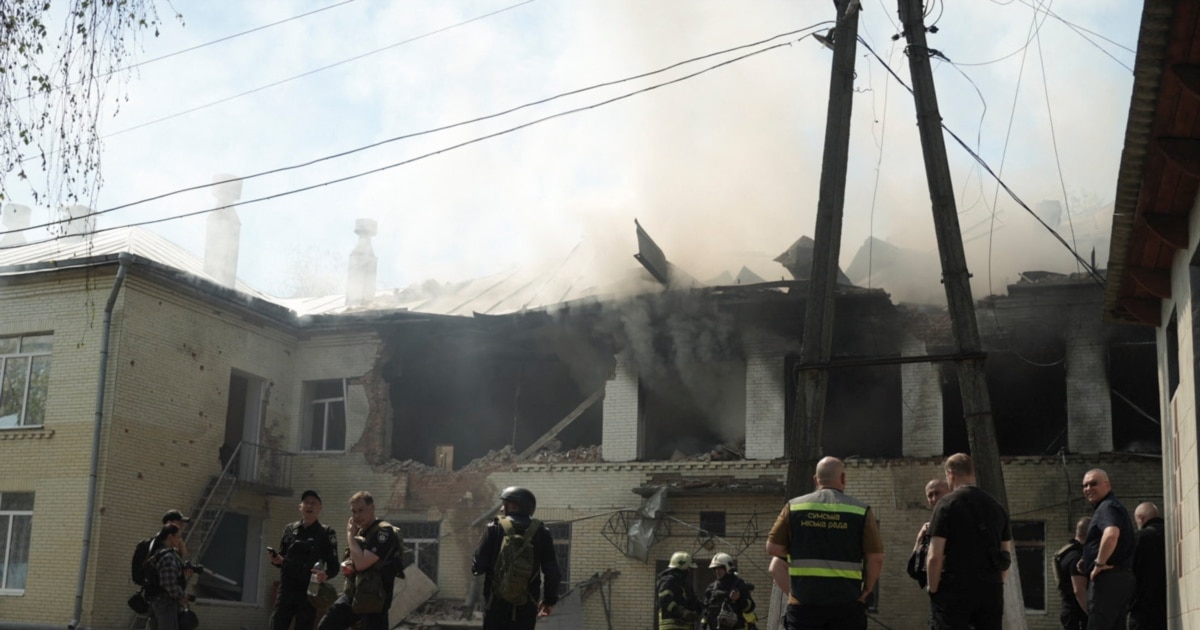
Russian strikes hit a kindergarten in Sumy and another round of more than 110 drones and missiles was launched across Ukraine, while Ukraine said it struck a Russian weapons factory more than 1,200 kilometers from the border using its Flamingo cruise missile. At least two people were killed in the kindergarten attack, and local authorities said two died at the VNIIR-Progress plant, though damage there was unclear. The escalation comes as Zelenskyy proposed a cease-fire starting at midnight May 6 and the Kremlin did not publicly respond.
The market consequence here is not the headline casualty count; it is the demonstrated ability of both sides to keep widening the attack envelope. That raises the probability of a prolonged drone-interdiction regime over the next 3-12 months, which is structurally negative for eastern European logistics, selective industrial uptime, and any reconstruction timeline that depends on credible air-defense coverage rather than static cease-fire language.
The more important second-order effect is industrial learning curve: Ukraine’s long-range strike on a missile-navigation supplier suggests the conflict is moving from attritional volume to targeting inputs that degrade Russia’s future precision-strike capacity. If that trend persists, the supply chain for Russian guided munitions becomes the bottleneck, which matters more than near-term launch rates because it can reduce strike quality with a lag. That would favor defense spend in air defense, EW, and interceptor stockpiles over offensive munitions exposure.
The cease-fire optics are now a catalyst cluster, not a resolution path. The next 1-3 weeks around Victory Day and retaliation cycles are the highest-volatility window; the tail risk is an escalation that broadens targets beyond Ukraine into Russian urban symbolism, which would likely harden NATO defense procurement expectations and keep regional risk premia elevated. The contrarian view is that markets may already be pricing a permanent war discount, but they still underestimate how quickly munitions stocks and interceptor inventories can tighten if this becomes a higher-intensity drone contest rather than a static front.
From a trading perspective, the cleanest expression is long air-defense beneficiaries versus exposed industrial/logistics names in Europe. The asymmetry is strongest where revenue is tied to urgent replenishment cycles and multi-year backlogs, while downside is limited by already-high order visibility. Any peace headline would likely be a short squeeze rather than a durable fundamental reset unless it changes strike capability on both sides, which currently looks unlikely.
AI-powered research, real-time alerts, and portfolio analytics for institutional investors.
Request DemoOverall Sentiment
strongly negative
Sentiment Score
-0.75
