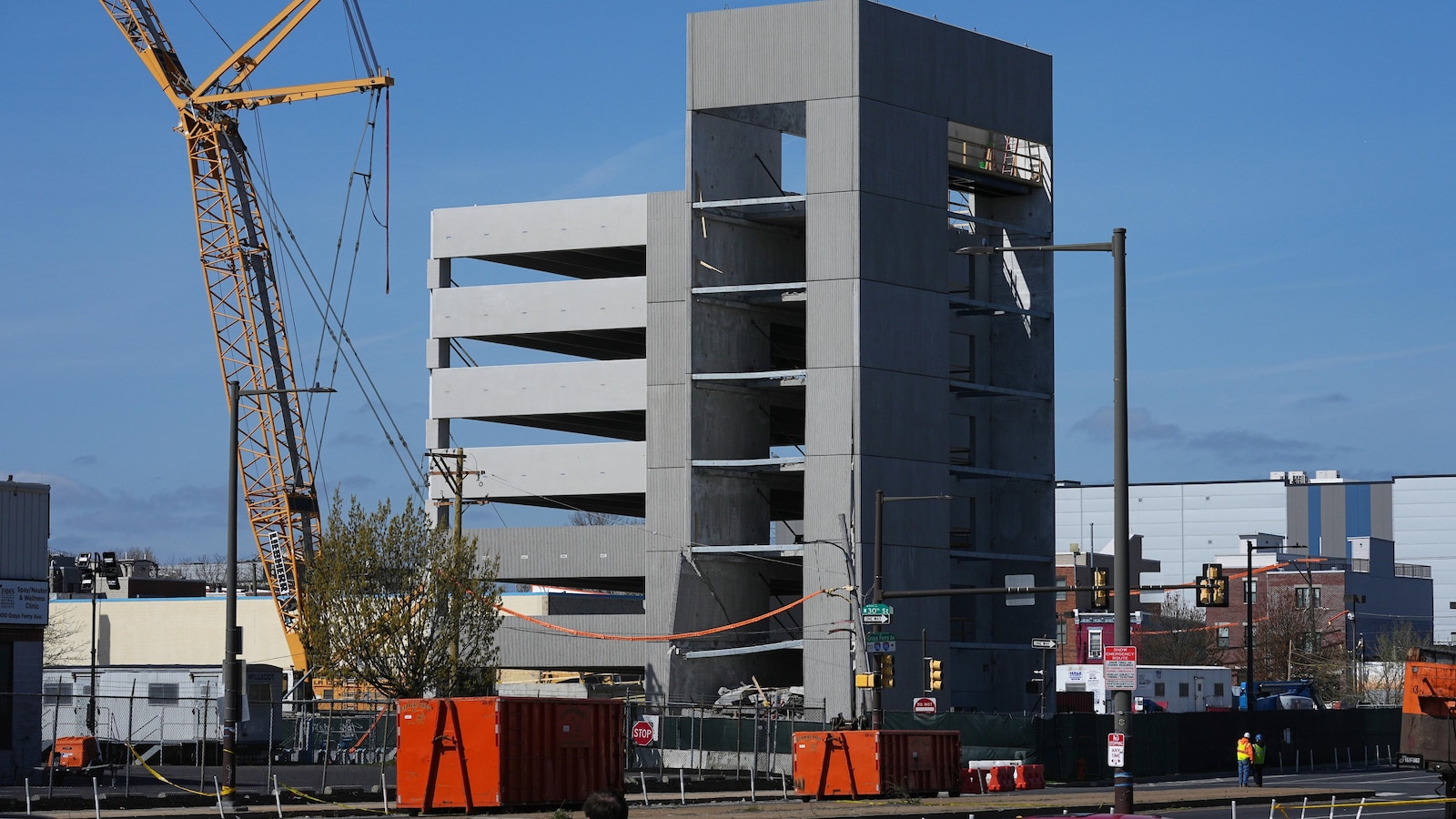
Two workers were recovered dead after a stairwell roof collapse at a parking garage under construction at Children’s Hospital of Philadelphia, following an earlier collapse that injured three workers and left one dead. Crews spent days stabilizing the structure before recovery operations began, and city officials said the law department will investigate the incident. The event is a serious safety and legal matter, but it is likely to have limited direct market impact.
This is not an event with direct public-market earnings sensitivity, but it does raise the probability of a multi-quarter spillover into liability, insurance, and project-delay claims around large urban construction. The first-order hit is to the developer/construction stack; the second-order effect is that insurers and surety providers may tighten terms on projects with complex staging, especially where excavation, temporary shoring, or partial-structure demolition are involved. In practice, that means higher bonding costs and slower underwriting on similar jobs over the next 1-2 quarters, even if headline claims are still being quantified. The more interesting tradeable angle is governance and litigation overhang rather than the local real-estate asset itself. If the investigation identifies contractor, engineering, or oversight failures, the eventual loss allocation can widen from the site operator to subcontractors, design firms, and their insurers, creating a longer tail of reserve pressure. That tends to show up first in casualty lines and specialty construction risk carriers before it becomes visible in broader indices. The consensus will likely underprice the duration of disruption. Recoveries and investigations usually produce a short burst of sympathy-driven selling, but the real economic damage is delayed: schedule slippage, change-order disputes, and harder financing for comparable projects can persist for months. The key contrarian point is that a single incident rarely moves broad construction demand, but it can re-rate risk appetite for the entire category of vertically complex projects, which matters more for insurers and publicly traded contractors than for local property exposure.
AI-powered research, real-time alerts, and portfolio analytics for institutional investors.
Overall Sentiment
strongly negative
Sentiment Score
-0.70
