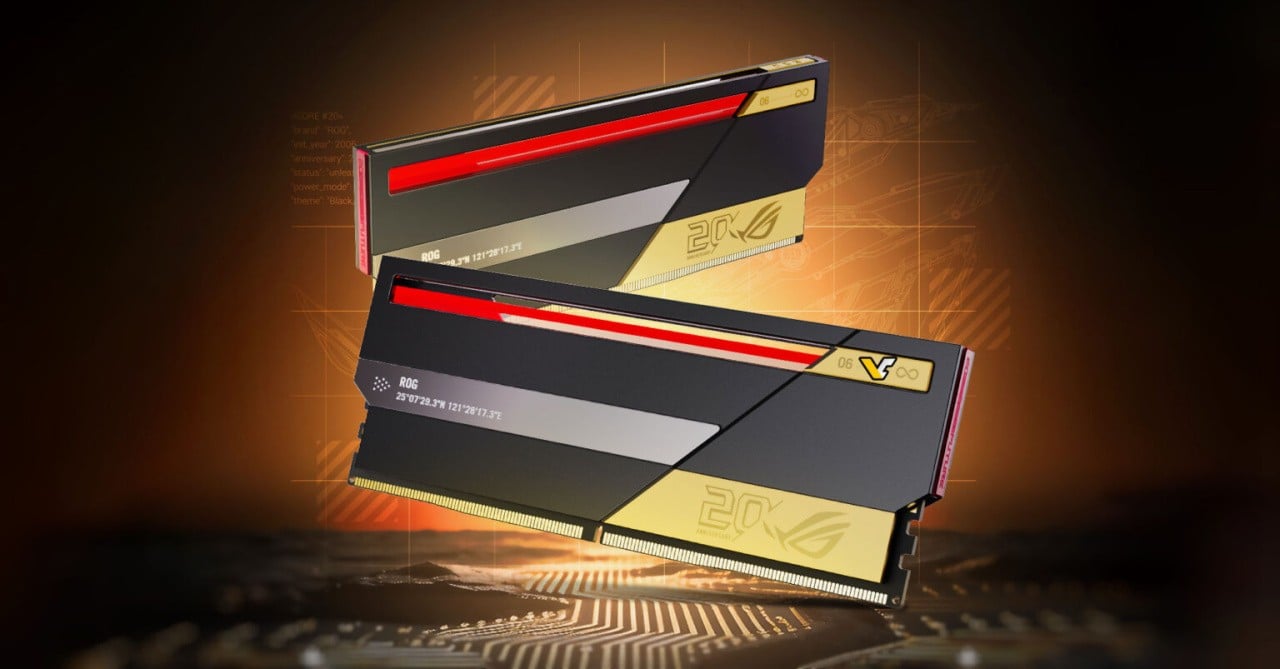
Asus unveiled its first branded RAM kit, a 48GB dual-channel ROG Edition 20 product priced at about $880/£660 (5999 CNY) and rated for DDR5-6000 CL26, with an optional ROG mode pushing speeds to DDR5-8000. The kit supports Intel XMP and AMD EXPO, includes RGB/Aura Sync, and is set to ship in late June with a lifetime warranty. The launch is notable for Asus motherboard owners, but it is likely to have limited market impact.
This is less a standalone memory jog than a signaling event about where the gross margin pool is moving in the enthusiast PC stack. The economic value is not in the DRAM die itself but in the validated overclocking profile, branding, and board-level tuning ecosystem: that shifts a slice of the premium from standalone memory vendors toward the OEM/platform owner. For Intel and AMD, the near-term read-through is mixed but modestly positive because high-speed certified kits reinforce the upgrade cycle around Z790/X870-class boards; the bigger winner is the motherboard ecosystem that can monetize compatibility and presets rather than pure component spec.
Second-order, this is a subtle channel check on ASPs in high-end gaming/creator builds. If premium kits at the top of the stack are still clearing at very elevated prices, it suggests the enthusiast buyer is elastic on aesthetics and certification, not just raw capacity, which supports continued mix-up in motherboard, PSU, and chassis attach rates. That favors companies with ecosystem leverage and hurts undifferentiated memory assemblers, especially if the branded overlay pulls demand away from generic high-end modules without expanding the total TAM.
The main risk is that this is a niche halo product, so the revenue contribution will be immaterial in the next 1-2 quarters unless it becomes a broader licensing/partner program. The more important catalyst is whether Asus’ certification expands to third-party kits: if that happens, it could create a de facto premium standard and gradually commoditize the memory branding layer, capping margin capture for any single manufacturer. Over 6-12 months, the market will care more about whether this improves board attach and platform share than about unit sales of the RAM itself.
AI-powered research, real-time alerts, and portfolio analytics for institutional investors.
Request DemoOverall Sentiment
neutral
Sentiment Score
0.15
Ticker Sentiment
